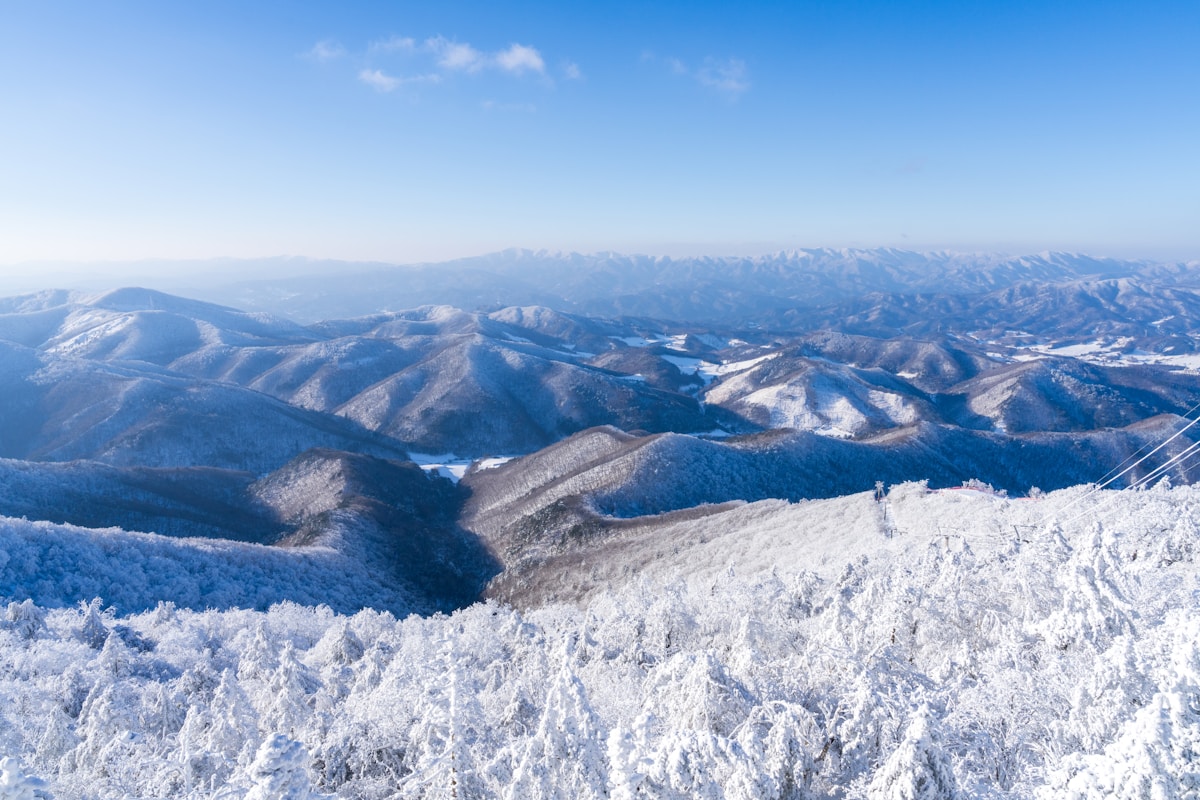
South Korea’s ski culture is larger and more developed than most international visitors expect. The country has over a dozen active ski resorts, four of which rank among the best-equipped in Asia, and the 2018 PyeongChang Winter Olympics brought global attention to the quality of the mountain terrain in Gangwon-do province. For travellers visiting in winter, a ski day trip or weekend from Seoul is one of the more rewarding experiences the season offers - good snow, excellent facilities, reasonable costs, and efficient transport connections.
This guide covers the three most visited resorts for international travellers - Yongpyong, Vivaldi Park, and High1 - plus practical tips on equipment rental, ski school, and making the most of a limited winter sports window.
South Korean Ski Season
The Korean ski season runs from approximately late November to mid-March, with January and February being the core winter months. Gangwon-do province, where most major resorts are located, sits in a climate zone influenced by cold air from Siberia - winters are reliably cold and dry, with most snowfall coming from brief but intense weather systems rather than sustained snowfall.
Snow reliability: Korean resorts rely heavily on snowmaking technology. At major resorts like Yongpyong and High1, snowmaking systems cover most runs and ensure consistent surface conditions even in years with light natural snowfall. This makes the season more predictable than comparable Asian ski destinations.
Best weeks to ski: The 2–3 weeks either side of Korean Lunar New Year (usually late January to mid-February) are busy, as domestic travel peaks. The first three weeks of January and the first week of March typically offer better lift-line conditions and comparable snow quality.
Temperature: Expect -5°C to -15°C during January days at most resorts. Wind chill at altitude can push effective temperatures significantly lower. Proper base layers and face coverings are essential.
Yongpyong Resort (Dragon Valley)
Location: Bongpyeong-myeon, Pyeongchang County, Gangwon-do. Approximately 2.5 hours from Seoul.
Yongpyong is South Korea’s largest ski resort and the most prestigious - it hosted the Alpine skiing slalom and giant slalom events at the 2018 PyeongChang Winter Olympics. The resort sits at an elevation that tops out around 1,458 m at Dragon Peak, with a vertical drop of approximately 660 m across 31 pistes.
Runs and Terrain
Yongpyong divides into two main ski areas: Dragon Valley (the main area, site of the Olympic runs) and Phoenix Park (a separate nearby resort often bundled in combined ticket deals).
Slope breakdown at Yongpyong:
- Beginner: approximately 15%
- Intermediate: approximately 50%
- Advanced/Expert: approximately 35%
The Gold Medal Run used in the 2018 Olympics is accessible to intermediate and advanced skiers and is clearly signed. The Gondola (approximately KRW 18,000 round trip as of 2026) accesses the highest terrain.
The resort is more geared toward intermediate and advanced skiers than beginners. If you have never skied before, the beginner areas exist but you will get more out of your time and money at Vivaldi Park or Elysian Gangchon.
Getting There
By shuttle bus: Yongpyong operates direct shuttle services from East Seoul Bus Terminal. Departure times vary by season; check the resort website for the current schedule. Fare approximately KRW 25,000–30,000 one way as of 2026.
By car: Take the Gyeonggang Expressway from Seoul - approximately 2.5 hours depending on traffic. Parking at the resort is approximately KRW 5,000–10,000 per day. Driving is particularly useful if you want to combine multiple resorts or travel with a group - compare car hire prices for South Korea to find the best rate for your dates.
By public transport: Take a train to Jinbu Station (on the Gyeonggang Line from Seoul Cheongnyangni, approximately 70 minutes) then a free resort shuttle from the station.
Lift Pass Prices (approximate, as of 2026)
| Pass Type | Adult | Youth (under 18) |
|---|---|---|
| Half day (afternoon) | approx. KRW 58,000 | approx. KRW 48,000 |
| Full day | approx. KRW 95,000 | approx. KRW 78,000 |
| Night skiing | approx. KRW 52,000 | approx. KRW 43,000 |
Night skiing is available at Yongpyong until approximately 22:00 and is worth considering - slopes are illuminated, temperatures are manageable, and queues for lifts are shorter than during peak afternoon hours.
Vivaldi Park (Hanwha Resort Vivaldi Park)
Location: Hongcheon, Gangwon-do. Approximately 1.5–2 hours from Seoul.
Vivaldi Park is part of the Hanwha Aqua Planet resort complex in Hongcheon and is specifically well-suited to families and beginner skiers. It is the closest major resort to Seoul, making it the most practical choice for a single-day trip without an overnight.
Runs and Terrain
Vivaldi Park has 21 runs across several interconnected zones:
- Beginner: approximately 30%
- Intermediate: approximately 45%
- Advanced: approximately 25%
The resort is notably flat in its mid-section compared to Yongpyong - a deliberate design choice that creates wide, forgiving runs ideal for those learning. The Peak Zone at the top of the resort has more challenging terrain.
Ski School
Vivaldi Park’s ski school is one of the most foreigner-friendly in Korea, with English-speaking instructors for group and private lessons. Group lessons for beginners run approximately 2 hours and cost KRW 50,000–70,000 per person as of 2026. Private lessons are approximately KRW 100,000–150,000 per hour.
Getting There
By shuttle: Buses run from Hongdae Station and Gangnam (Sinnonhyeon) in Seoul. Check the resort website for current schedules; times shift throughout the season. Fare approximately KRW 12,000–18,000 each way as of 2026.
By car: Seoul to Vivaldi Park takes approximately 1.5 hours on the Gyeongchun Expressway.
Lift Pass Prices (approximate, as of 2026)
| Pass Type | Adult | Youth |
|---|---|---|
| Half day (4 hours) | approx. KRW 70,000 | approx. KRW 55,000 |
| Full day | approx. KRW 90,000 | approx. KRW 72,000 |
| Night (from 18:00) | approx. KRW 48,000 | approx. KRW 39,000 |
High1 Resort
Location: Jeongseon, Gangwon-do. Approximately 2.5–3 hours from Seoul.
High1 is South Korea’s highest altitude resort, with runs topping out at approximately 1,340 m and a vertical drop of 830 m - the largest of any resort in the country. It is the most physically demanding of the three major resorts and is best suited to intermediate and advanced skiers who want genuine mountain skiing rather than a day trip.
Runs and Terrain
High1 has 18 runs with a breakdown weighted toward intermediate and advanced terrain:
- Beginner: approximately 20%
- Intermediate: approximately 44%
- Advanced: approximately 36%
The main Olympic Downhill course (not the 2018 site, which was PyeongChang - but High1 has hosted World Cup events) gives a sense of the resort’s ambition for experienced skiers.
Getting There
High1 is served by the O-Train and Rail Bike gondola connections that make the approach itself part of the experience - travellers take the Mugunghwa train from Cheongnyangni Station to Jeongseon, then the gondola to the resort. Journey time approximately 3 hours. A High1 package that includes rail + gondola + lift pass is available on the resort website.
Lift Pass Prices (approximate, as of 2026)
| Pass Type | Adult | Youth |
|---|---|---|
| Half day | approx. KRW 62,000 | approx. KRW 49,000 |
| Full day | approx. KRW 100,000 | approx. KRW 80,000 |
| Night | approx. KRW 55,000 | approx. KRW 43,000 |
Closest Ski Resort to Seoul
For travellers asking “which ski resort is closest to Seoul” — the answer depends on how you are travelling:
- By public transport: Elysian Gangchon is the easiest option (Gyeongchun Line train from Gangbyeon Station, approximately 70 minutes, then a short shuttle to the resort). No advance shuttle booking required.
- By shuttle bus: Vivaldi Park runs direct shuttles from Hongdae Station and Gangnam — approximately 1.5–2 hours, with return times built in to the resort schedule.
- By car: Vivaldi Park and Elysian Gangchon are both approximately 1.5 hours from central Seoul by road in light traffic, though weekend traffic on the Gyeongchun Expressway can add 30–60 minutes.
For a half-day or single-day trip from Seoul without needing a shuttle booking, Elysian Gangchon is the most accessible. For a fuller ski day with better facilities and terrain, Vivaldi Park is worth the slightly longer journey.
Other Notable Resorts
Elysian Gangchon: Closest major resort to Seoul (approximately 1.5 hours from Gangbyeon Station on Gyeongchun Line - a 60-minute train journey). Best for single-day beginners who want easy access without pre-booking a shuttle.
Bears Town: Another accessible Gyeonggi-do resort, smaller than the Gangwon-do options but within 90 minutes of Seoul by shuttle.
Muju Deogyusan Resort: In North Jeolla Province, far from Seoul but excellent terrain. Best for travellers already travelling through the central or south of Korea.
Beginner Tips for Skiing in Korea
Rent, don’t buy. Equipment rental at all major resorts is well-organised and good quality. Rental packages (skis/poles/boots or snowboard/boots) cost approximately KRW 30,000–50,000 per day as of 2026. Helmets are available for approximately KRW 8,000–15,000 and should be worn, particularly by beginners.
Take a lesson. Korean ski instructors at major resorts typically have English language support available. A two-hour beginner group lesson dramatically reduces the time spent falling and speeds up the learning curve for anyone new to skiing or snowboarding.
Layer up. Korean resort shops sell thermal base layers and neck warmers, but prices are elevated compared to buying before arrival. Bring a warm base layer, mid layer, and waterproof outer layer.
Peak hour lift queues: At Yongpyong and Vivaldi Park, Saturday afternoon (13:00–16:00) sees the longest lift queues. Arrive early and ski the first runs before the crowds build.
Après-ski and facilities: All three major resorts have accommodation, restaurants, hot spring facilities, and convenience stores on site. After skiing, a hot spring bath (jjimjilbang) at the resort is the standard Korean post-ski ritual and is generally included or low-cost for resort guests.
Packages: Weekend ski packages bundling transport, accommodation, and lift passes are available through the resort websites and through GetYourGuide. These consistently work out cheaper than booking each component separately, particularly for overnight trips.
Booking Ski Packages from Seoul: Named Operators and What’s Included
The most practical route for foreign visitors is a day trip package that bundles return transport from Seoul with a lift pass. Booking each component separately (shuttle + lift pass) rarely saves money and removes the certainty of a guaranteed seat on the return bus.
GetYourGuide South Korea lists operators running direct packages from central Seoul to both Vivaldi Park and Yongpyong. These are operated through licensed Korean tour companies — look for operators with 100+ verified reviews. Typical prices as of 2026:
| Package | Approximate price per person | Includes |
|---|---|---|
| Vivaldi Park day trip (from Hongdae or Gangnam) | KRW 85,000–110,000 | Return bus + full-day lift pass |
| Yongpyong day trip (from Seoul) | KRW 100,000–130,000 | Return bus + full-day lift pass |
| High1 rail + gondola + lift package | KRW 110,000–145,000 | Train, gondola, lift pass |
Equipment rental (skis or snowboard, boots, poles) adds approximately KRW 30,000–45,000 per person and can usually be added to the package at booking or paid separately at the resort rental counter.
What packages typically exclude:
- Ski lessons: group lessons at major resorts cost approximately KRW 50,000–70,000 for a 2-hour session; private lessons KRW 100,000–150,000 per hour
- Locker hire: KRW 3,000–5,000 at the rental desk
- Meals on the mountain: resort restaurants and convenience stores, KRW 10,000–20,000 per meal
Klook and Trazy are the other major platforms with Korean ski packages. Klook’s listings occasionally include a rail-based Yongpyong option (Gyeonggang Line from Seoul Cheongnyangni to Jinbu Station, then the free resort shuttle) — useful if you want the scenic train approach over a bus.
Booking lead times: Weekend packages in January and February typically sell out 1–2 weeks in advance. Saturday slots fill faster than Sunday due to return bus competition with weekend domestic traffic. The first two weeks of January and the final week of February usually have more availability than the mid-January peak around Korean school holidays.
Resort-direct packages: Yongpyong, Vivaldi Park, and High1 all sell accommodation + lift pass bundles directly via their own websites (in Korean — use browser translation). A weekend overnight package starts from approximately KRW 200,000–350,000 per person and is the most cost-effective option for a 2-night stay. International Visa and Mastercard cards are accepted at all three resort booking sites.
For those driving — compare car hire prices for South Korea — a car gives flexibility to combine resorts or stop at Gangneung’s Jumunjin seafood market on the return, where grilled squid (ojingeo gui) costs approximately KRW 15,000–25,000 per portion.
Book guided tours and activities in South Korea through GetYourGuide.
Related Guides
Ski season peaks in January and February - both monthly guides include resort conditions and public holiday booking warnings. The Gangneung travel guide covers the east coast, where Yongpyong and High1 are located; Gangneung is also the city closest to the Olympic venues used in 2018. For broader winter activity planning, the best time to visit South Korea covers all seasonal highlights beyond the ski season.