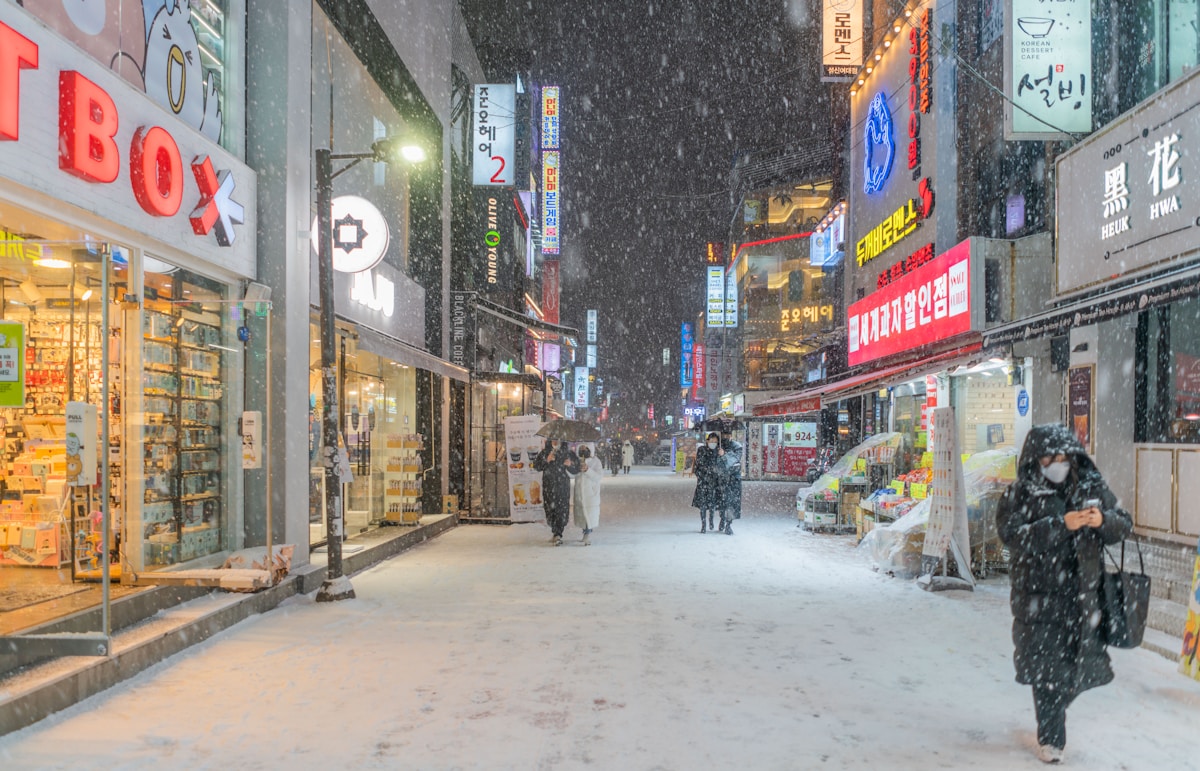
February is the coldest month by average temperature in some parts of South Korea, though the chill in Seoul is comparable to January. Ski conditions are typically at their best in February, and the Seollal (Lunar New Year) holiday brings the country’s largest domestic movement of people - affecting accommodation availability and creating a particular cultural atmosphere.
Weather
Seoul averages daytime highs around 3–5°C in February, with nights regularly below freezing at -5°C or colder. The cold is dry and clear rather than wet, which makes it more tolerable than similarly cold destinations with higher humidity. Busan and the south coast are milder at 8–12°C. Jeju is comfortable, often reaching 12–15°C on clear days.
Late February brings the first signs of seasonal change - temperatures begin to rise toward month’s end, and the first tentative warmth of early spring can sometimes be felt in the south. Plum blossoms, the earliest spring flowers, occasionally appear on Jeju and along the south coast in the final days of the month.
What to Pack
Similar to January requirements:
- Heavy winter coat for Seoul and central Korea
- Thermal layers for outdoor activities
- Waterproof boots with grip - icy pavements remain a concern
- Lighter jacket sufficient for Busan and Jeju
- Hand warmers from convenience stores are inexpensive and effective
Seollal Holiday
Seollal - the Lunar New Year - is one of South Korea’s most significant cultural events. Families travel nationwide to gather with relatives, often in ancestral home villages. The holiday lasts 3 days officially, but transport and accommodation availability is affected for several days either side.
For travellers, this means:
- Train and bus tickets sell out weeks in advance - KTX tickets for the Seoul-Busan corridor are particularly competitive
- Some restaurants and smaller businesses close for 2–3 days
- Major tourist attractions often have extended hours and traditional performances
- Street food and market stalls may reduce operations in the immediate holiday days
Experiencing Seollal in Korea is genuinely memorable - traditional games like yut (a board game played on the floor), ancestral rites (jesa), and specific holiday foods like tteokguk (rice cake soup, eaten for the new year) are all part of the period. The palaces in Seoul - Gyeongbokgung, Changdeokgung, and Deoksugung - host Seollal cultural programmes with free hanbok (traditional dress) rental, folk game demonstrations, and traditional music performances. These are some of the few times the palaces feel like living cultural spaces rather than museum pieces.
Things to Do in February
Ski resorts - February is peak ski season. Conditions at Alpensia, Vivaldi Park, High1, Yongpyong, and other Gangwon Province resorts are generally at their best, with full snowpack and cold temperatures maintaining quality. Yongpyong has the most vertical drop and challenging runs; Vivaldi Park is the closest major resort to Seoul and tends to be crowded on weekends. Booking accommodation near the resorts in advance is essential during February school holiday weeks.
Winter seafood - February is a good month for certain seafood in Korea. Cheongeo (herring) and gajami (flounder) are in season, and east coast fish markets in Pohang and Sokcho are active. Oyster season extends through February - Tongyeong on the south coast is the oyster capital, and the raw oyster served at the harbour markets there is exceptional.
Lantern festivals - various regions hold winter lantern events through late January and February. Check local schedules for exact dates, as these shift annually.
Indoor cultural activities - palace visits, museum days, and traditional craft workshops are well-suited to February weather. The National Museum of Korea in Seoul is free and has world-class collections spanning from prehistory to the Joseon dynasty. The Leeum Museum of Art (Samsung foundation) and the National Museum of Modern and Contemporary Art at Deoksugung are also good cold-weather options.
Korean food culture - February is a strong month for Korean comfort food. Dakgalbi (spicy stir-fried chicken, a Chuncheon speciality), budae-jjigae (army stew), and sundaeguk (blood sausage soup) are all hearty dishes suited to cold weather. The Noryangjin Fish Market in Seoul operates year-round and is particularly atmospheric in winter.
Book tours and activities for your trip through GetYourGuide.
Compare travel insurance with EKTA before you travel.
Crowds and Prices
February is generally low season for international visitors. Outside the Seollal period, accommodation is easier to find and generally cheaper than spring or autumn rates. Flights to Korea tend to be less expensive than in peak spring. The exception is ski resort accommodation, which maintains premium pricing through the season, especially on weekends.
See our ski resorts in South Korea guide for a full breakdown of the main resorts, equipment hire, lift passes, and how to get there from Seoul. Other monthly guides: January | March | Best time to visit
Search hotels in Seoul on Booking.com
Plan Your Trip
✈️ Book your flights to South Korea 🛡️ Get travel insurance 📱 Stay connected with an eSIM 🚗 Rent a car