Busan is South Korea’s second city and its most dramatic one — a coastal port built across mountains that drop directly into the sea, with a personality shaped by its role as the country’s largest seaport, its status as the only major city not captured during the Korean War, and its decades as the preferred destination of South Korean domestic tourism. The guided tours here work with the city’s physical character: the steep hillside villages, the seafront temples, the live seafood markets, and the long sandy beaches.
These are the tours that make the most of Busan’s coastal, cultural, and culinary character. All are bookable through GetYourGuide with free cancellation on most options.
1. Gamcheon Culture Village Walking Tour
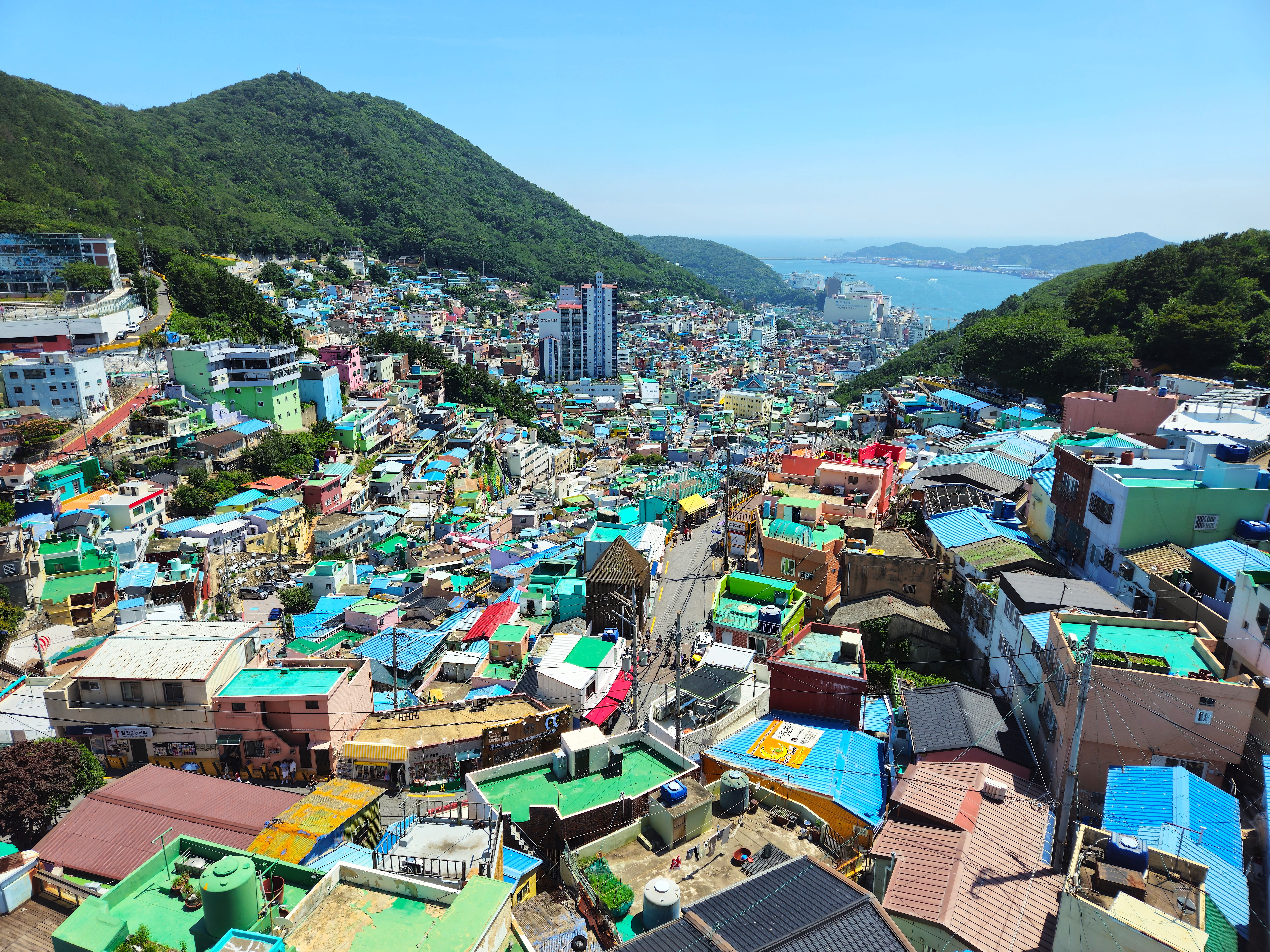
Gamcheon Culture Village is Busan’s most photographed place — a densely built hillside neighbourhood in the Saha district where pastel-coloured houses cascade down terraced alleyways toward the port. The visual character is real, but the backstory makes it more interesting than it looks.
The village was built in the 1950s as emergency housing for refugees from the Korean War, predominantly followers of the Taegukdo religious movement who built their homes rapidly across the steep hillside terrain. By the 2000s it had become economically depressed and was subject to potential demolition. A 2009 government arts regeneration project — the “Miro Miro Project” — introduced murals, sculptures, and public art installations throughout the alleyways, inviting Seoul art schools and local artists to use the village as a permanent outdoor gallery. The project worked: Gamcheon became one of Busan’s primary tourist sites within a decade.
A guided Gamcheon Culture Village walking tour covers the key alleyway routes, explains the art installations (many have specific historical references that are not obvious without context), and includes the elevated viewpoints over the tiered rooftops. Most tours also stop at the “Little Prince” sculpture stamp point — a replica of the Antoine de Saint-Exupery character that became Gamcheon’s most-photographed spot. From approximately $20 per person as of 2026.
Duration: 2-3 hours | Difficulty: Moderate — steep hills, uneven steps | Best time: Weekday mornings to avoid crowds; spring and autumn for cool temperatures
2. Haedong Yonggungsa Sea Temple Tour
Haedong Yonggungsa is the most unusual Buddhist temple in South Korea — not because of its architecture (which follows standard Joseon-era conventions) but because of its location. While almost every other Korean Buddhist temple is built in the mountains, Yonggungsa sits directly on coastal rocks overlooking the East Sea, with the main shrine buildings accessible down 108 stone steps carved into the cliff. On sunny mornings, the view from the lower gate looking back up at the temple buildings against the sky above the sea is one of the most compelling in the country.
The temple was originally built in 1376 by the monk Naong Hyegeun during the Goryeo dynasty, destroyed during the Japanese invasions of 1592-1598, and rebuilt in its current form in 1930. The 108 steps represent the 108 earthly desires in Buddhist teaching — walking them down is traditionally considered a form of prayer. The stone zodiac animals along the entrance path are focal points for specific prayers; the pig statue in particular is associated with wealth and financial luck.
A guided Haedong Yonggungsa temple tour typically combines with the coastal village of Cheongsapo (just south of the temple, with the iconic blue Sky Capsule railway along the coast) and often includes a brief introduction to the temple’s ritual significance from a guide who can explain the prayer customs around the zodiac animals and the Haesinjeong pavilion dedicated to the sea goddess. From approximately $30 per person.
Entry: Free | Duration: 2-3 hours | Best time: Sunrise is dramatic; lunar new year and Buddha’s birthday are major festival days
3. Jagalchi Seafood Market Food Tour
Jagalchi Market is South Korea’s largest seafood market — a sprawling covered hall and outdoor waterfront along the Namhang Bridge area of Busan’s old city, running continuously since the market’s formal establishment in the 1950s. The vendors — predominantly middle-aged and older women (known as jagalchi ajeomma) — operate the live-tank stalls selling everything from flatfish and sea cucumber to live octopus, crab, and sea urchin. The market has its own restaurant floors above the stalls where vendors take customers to have the fish they’ve chosen cooked immediately.
The market works independently — signage is adequate and the seafood selection is self-evident — but a food tour adds two things that are genuinely hard to replicate solo: ordering confidence and species identification. Korean raw seafood (hoe) culture is specific about preparation, dipping sauces (doenjang, gochujang, and sesame oil mixtures), and the accompanying side dishes, and knowing what you’re eating matters when the selection runs to 40+ species arranged in live tanks.
A guided Jagalchi seafood market food tour covers the market floor, includes a guided tasting of the key species, and typically includes a set meal of hoe (raw sliced fish) with doenjang jjigae (fermented soybean soup) and banchan. From approximately $50-70 per person including food as of 2026.
Duration: 3-4 hours | Best time: Morning for market activity; early evening for restaurant dining | Near: Nampo-dong BIFF Square (Busan International Film Festival area) is a 5-minute walk
4. Busan Temple Stay Experience
South Korea’s templestay programme — administered by the Jogye Order of Korean Buddhism — allows visitors to spend one to two nights inside an active Buddhist temple as a paying guest, participating in the temple’s daily routine: 4am wake-up bell, morning chanting ceremony (yebul), seated meditation (chamseon), communal meals eaten in the formal monk style (barugongyang — four nested bowls, strict silence, no waste), and late-evening chanting before sleep.
Busan has two main templestay sites accessible to international visitors: Beomeosa Temple (범어사) in the forested mountains north of the city, one of the great head temples of Korean Buddhism built in 678 CE; and Gwaneumsa Temple on the slopes below Geumjeongsan Mountain, smaller and quieter. Beomeosa’s templestay programme includes the 4am ceremony, two meditation sessions, a tea ceremony with a monk, and temple cleaning.
Busan temple stay programmes run from approximately $80-120 per person for an overnight stay including meals, meditation instruction, and monk Q&A. Day programmes (morning only) run from approximately $30 per person.
Duration: Overnight (arrival 2-3pm, departure 10am) or day programme (4-6 hours) | Physical: Easy — sitting meditation on floor mats | Booking: 48 hours minimum advance booking required
5. Busan Coastal Day Tour: Haeundae, Oryukdo, and the Cliffside Walk
Busan’s eastern coastline is the city’s primary leisure zone. Haeundae Beach (해운대) — 1.8 km of white sand backed by a dense cluster of hotels, restaurants, and the Marine City high-rise district — is South Korea’s most visited beach, drawing an estimated 10 million visitors in peak summer. In shoulder season (April-June and September-October) it’s significantly calmer.
East of Haeundae, the Dongbaek Island (동백섬) causeway walk leads to the APEC House (built for the 2005 summit), and continues around the headland to views of the Nurimaru sky disc building on the island promontory. Further east, Oryukdo Island Skywalk — a glass-bottomed walkway projecting over the rocky headland above the sea — offers exposed coastal views and access to the start of the Galmaetgil Coastal Trail, an 88-km long-distance path between Oryukdo and Dadaepo Beach.
A guided Busan coastal day tour connects Haeundae, Dongbaek Island, Oryukdo Skywalk, and typically includes lunch at a coastal seafood restaurant and a stop at the Cheongsapo fishing village below the Sky Capsule route. From approximately $35-50 per person as of 2026.
Duration: 6-8 hours | Difficulty: Easy to moderate | Best time: Spring and autumn; avoid July-August peak beach season
Comparing Busan Tours
| Tour | Duration | Best for | From Price |
|---|---|---|---|
| Gamcheon Village Walk | 2-3 hrs | Street art, refugee history, views | $20 |
| Haedong Temple Tour | 2-3 hrs | Coastal temple, zodiac ritual | $30 |
| Jagalchi Food Tour | 3-4 hrs | Seafood market, hoe tasting | $50 |
| Temple Stay | Overnight | Meditation, monk routine, silence | $80 |
| Coastal Day Tour | 6-8 hrs | Haeundae, Oryukdo, full coast | $35 |
Prices per person in USD as of 2026. Most tours offer free cancellation up to 24 hours before departure; check individual listings for specific policies.
For more context on getting around and what to prioritise in Busan, see our Busan city guide. Browse all Busan tours on GetYourGuide.