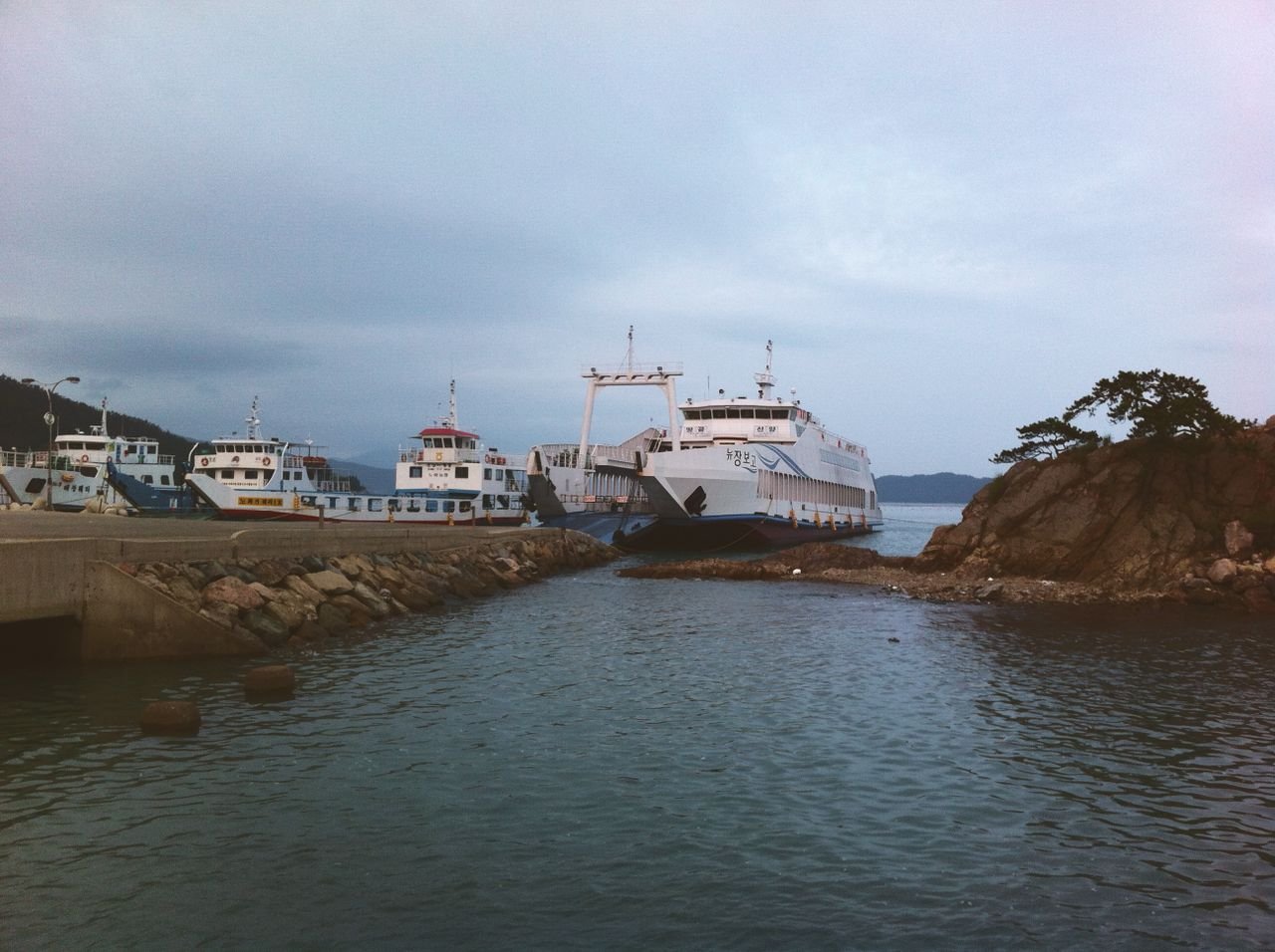
Jeju sits about 90 km off South Korea’s south coast, and there is no bridge or tunnel. Almost everyone arrives by air; a smaller number take a ferry from the south-western ports of Wando and Mokpo. This guide covers every real route from Seoul, Busan and the mainland, with fares and times, so you can pick the one that fits your trip. Once you land, our Jeju transport guide and car rental guide take over.
Quick comparison
| Route | Time | Typical one-way cost (as of 2026) | Best for |
|---|---|---|---|
| Gimpo (GMP) to Jeju (CJU) flight | About 1 hour | KRW 30,000-80,000 | Most travellers from Seoul |
| Incheon (ICN) to Jeju flight | About 1 hour 5 minutes | KRW 40,000-90,000 | Connecting from an international flight |
| Gimhae (PUS) to Jeju flight | 50-55 minutes | KRW 30,000-80,000 | Busan and the south-east |
| Wando to Jeju ferry | About 2 hours 40 minutes | KRW 35,000-45,000 plus fuel surcharge | Travellers taking a car |
| Mokpo to Jeju ferry | About 4 hours 30 minutes | KRW 35,000-45,000 plus fuel surcharge | Ferry enthusiasts, KTX from Seoul |
| Busan to Jeju ferry | Not operating | - | Fly instead |
Fares move with the season. Spring blossom weeks, the summer school holidays, Chuseok and Seollal push flight prices to the top of the range or beyond and sell out weeks ahead.
Seoul to Jeju by flight
Gimpo Airport (GMP) is the one to use. It sits on the western edge of Seoul, reached by subway lines 5 and 9 and the AREX airport railroad, and it has a dedicated domestic terminal. The Gimpo to Jeju route is one of the busiest in the world, with departures roughly every 20 to 30 minutes from early morning until late evening. Korean Air and Asiana are the full-service options, while Jeju Air, Jin Air, T’way, Air Seoul and Eastar run the low-cost flights. Block time is about an hour.
Budget fares start from approximately KRW 30,000 one-way on weekday midday flights booked a few weeks out. Expect KRW 60,000-80,000 on Friday evenings, Sunday returns and public holidays. Cabin baggage allowances are strict on the low-cost carriers, so check weights, and add checked baggage when booking because it costs more at the airport.
Incheon Airport (ICN) has fewer Jeju departures. It matters if you are arriving on an international flight and want to connect directly, since you skip the cross-city transfer to Gimpo. Our Incheon airport transfer guide covers the ground options if you decide to go via Gimpo instead, which is usually cheaper and has more flights.
For the best fares, compare dates across carriers on Aviasales rather than checking each airline one at a time. Passengers from outside Korea should also look at the Korea flights guide for international routing.
Arrival is at Jeju International Airport (CJU), about 15-20 minutes from Jeju City by taxi (KRW 6,000-9,000). If you are renting a car, the main rental counters shuttle you from the terminal; booking ahead is essential in peak weeks. You can compare Korea car hire prices here.
Busan to Jeju
There is no direct ferry from Busan to Jeju at present. The overnight passenger service that older guides mention stopped running, and we have taken the references to it off our own pages. Your options are:
- Fly from Gimhae (PUS): 50-55 minutes, similar fares to Gimpo (KRW 30,000-80,000), operated by Air Busan, Jeju Air, Jin Air and others. This is the best choice by a wide margin. Gimhae is on the Busan-Gimhae light rail and a short airport transfer from central Busan.
- Bus plus ferry: An intercity bus from Busan to Wando or Mokpo takes approximately 4 to 5 hours, followed by the ferry. You spend most of a day to save very little. It only makes sense if you are travelling by road along the south coast anyway.
Our Busan vs Jeju comparison helps you decide how to split your time between the two, and the Seoul to Busan guide covers the KTX leg if you are chaining the three.
Ferries to Jeju from Wando and Mokpo
Two south-western ports have regular passenger sailings to Jeju Port in Jeju City.
Wando to Jeju is the faster crossing, about 2 hours 40 minutes on the high-speed boat, with roughly two to three sailings a day. Economy fares run from approximately KRW 35,000-45,000 one-way plus a fuel surcharge of around KRW 5,000-6,000 as of late 2026. Wando is a long way from Seoul: buses from Seoul’s Nambu Terminal and from Gwangju take several hours, so allow a full day.
Mokpo to Jeju takes about 4 hours 30 minutes on the fast ferry, usually with one daily departure. Mokpo has the advantage of a KTX station, so you can ride from Seoul in roughly 2.5 to 3 hours (see the KTX and Korail Pass guide) and walk or taxi to the terminal.
Why bother? Mainly for taking a car to Jeju without paying rental rates, or for the experience of arriving by sea. Vehicle fares are priced by length, so ask the operator for a quote. The negatives are real: sailings are cancelled in typhoon season (July to September) and in rough winter seas, timetables change, and you add 4 to 8 hours of overland travel compared with a one-hour flight. Foot passengers must carry a passport, and booking sites in Korean can be awkward for foreigners, so many visitors buy at the terminal or via an agent.
For current timetables use the operators’ own sites and the official Visit Jeju travel information.
Which route should you pick?
- First-time visitor on a standard trip: Fly Gimpo to Jeju. Cheapest and by far the easiest.
- Chaining Seoul, Busan and Jeju: Seoul to Busan by KTX, then fly Gimhae to Jeju, and fly Jeju back to Gimpo or Incheon. This avoids backtracking.
- Driving the south coast with your own car: Wando ferry.
- Travelling slowly on a Korail Pass: KTX to Mokpo and the ferry, but only if you have a spare half day.
Allow for weather: low cloud and strong wind from typhoons can ground flights too, and Korean domestic carriers cancel more often than international ones on those days. Build one buffer day if you have a tight international departure after Jeju, and consider the travel insurance guide for cover against delays.
After you arrive
Jeju City and Seogwipo are the two bases. Our where to stay in Jeju guide compares the areas, or you can search Jeju hotels on Booking.com directly. Most visitors then combine a few self-drive days with a guided day out; browse Jeju tours on GetYourGuide for island tours that remove the driving. The Jeju island guide lists everything else, from Hallasan hiking to the best beaches, and you can fit all of it into one of our Jeju itineraries.
Airport and flight information for Gimpo and Jeju is published by the Korea Airports Corporation.