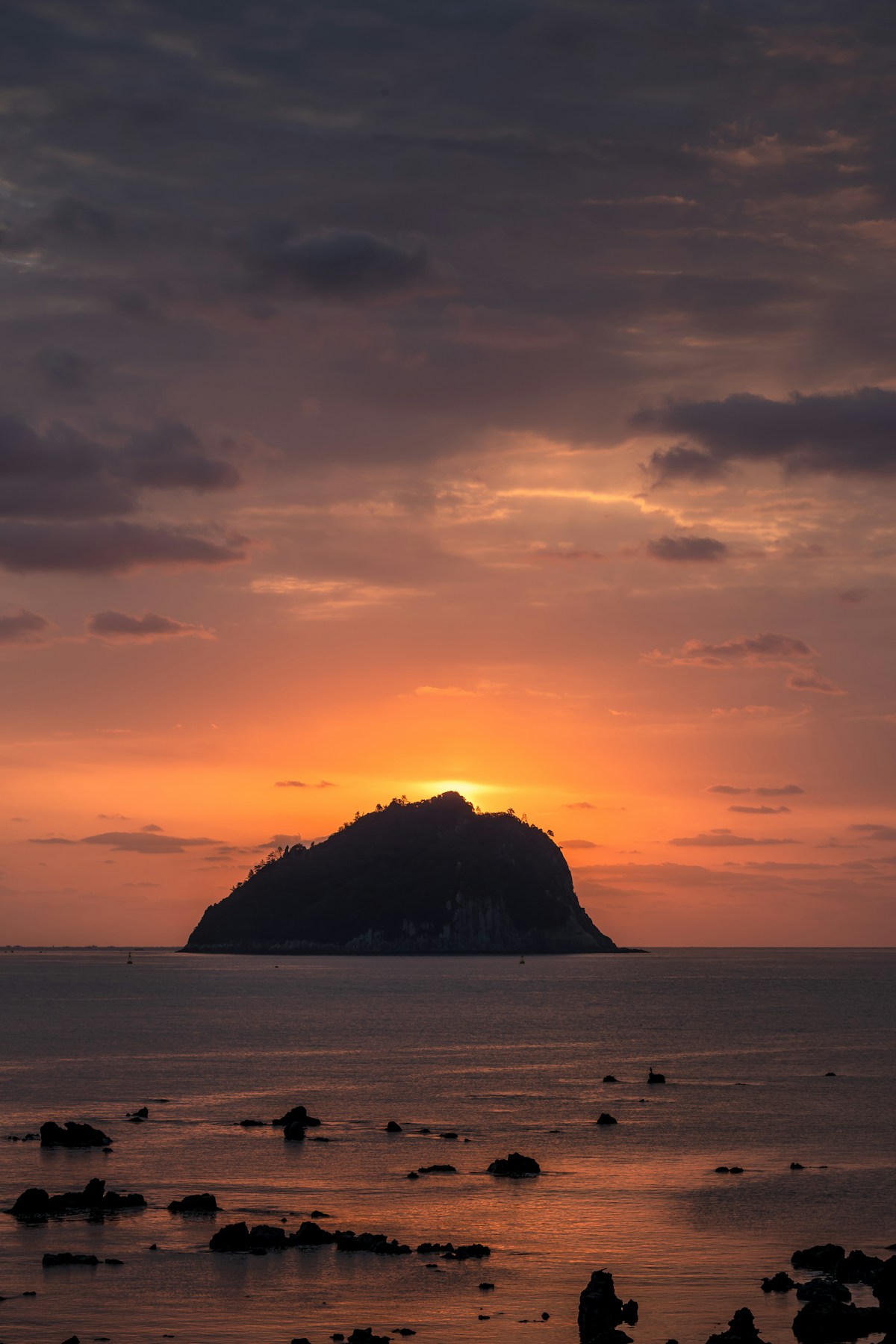
Hallasan is the highest mountain in South Korea at 1,950m and sits at the geographic centre of Jeju Island - its shield volcano shape defines the island’s silhouette. The summit holds the crater lake Baengnokdam, and the mountain’s slopes pass through five distinct vegetation zones from coastal lowland to subalpine shrub. Two routes reach the summit; three shorter trails explore the middle slopes without going to the top.
The Reservation System
Since 2022, summit trail access requires advance reservation. The system was introduced after trail damage from overcrowding during peak periods.
How to book:
- Go to hallasan.go.kr (Korean and English available) or reservation.knps.or.kr
- Create an account or log in
- Select your trail (Seongpanak or Gwaneumsa), date, and party size
- Confirmation comes by email
Book at least one day in advance. During autumn (late September to November) and public holidays, slots fill within minutes of opening. Same-day cancellations are re-released - refresh the booking page from 07:00 on your target day if you missed the initial booking.
The Eorimok, Yeongsil, and Donoeko trails do not require reservation and are accessible on a walk-up basis year-round (within opening hours).
Summit Trails
Seongpanak Trail (성판악 코스)
Length: 9.6 km one way | Elevation gain: 1,310m | Typical time: 4–5 hours up, 3.5–4.5 hours down Entry cutoff: 12:00 (summit direction); 14:00 from Jindallaebat shelter upward
Seongpanak is the standard summit approach - a longer but more moderate climb through dense evergreen forest transitioning to subalpine scrub on the upper slopes. The path is well-signposted, consistently wide, and has multiple shelter points with toilets.
Key waypoints:
- Skeoniyo Shelter (4.1 km, 1,000m) - first rest point, toilet facilities. 1.5–2 hours from the start.
- Jindallaebat Shelter (7.3 km, 1,500m) - last shelter before the summit. 3–3.5 hours from the start. In azalea season (early May), the slopes around this shelter turn pink.
- Baengnokdam Summit Shelter - the final arrival point at the crater rim. Warm drinks and basic snacks are sold.
Trailhead access: The Seongpanak entrance is on Route 516, which connects Jeju City and Seogwipo. From Jeju City Bus Terminal, take bus 181 to Seongpanak (approximately 55 minutes, KRW 1,400). From Seogwipo Intercity Bus Terminal, the same bus runs in the opposite direction (approximately 50 minutes). A taxi from Jeju City costs approximately KRW 25,000–35,000 (USD 19–26).
Gwaneumsa Trail (관음사 코스)
Length: 8.7 km one way | Elevation gain: 1,580m | Typical time: 4–5 hours up, 3–4 hours down Entry cutoff: 13:00 (summit direction)
Gwaneumsa is steeper and more technical than Seongpanak. The trail passes through mixed forest with more exposed root terrain and involves a scramble section on the upper ridge before emerging onto the summit plateau. The views from the upper section - particularly along the Tamna Valley - are more dramatic than Seongpanak’s forest corridor.
Key waypoints:
- Samgakbong Rest Area (3.3 km) - toilet facilities, basic shelter. 1.5 hours from start.
- Yongjindong Rest Area (5.8 km, 1,440m) - last water point, toilet. 3–3.5 hours from start.
- Gwaneumsa Shelter (7.7 km, 1,800m) - close to the summit. Some hikers camp here (separate permit required via the reservation system).
Trailhead access: The Gwaneumsa entrance is north of the mountain, near Jeju City. From Jeju City, take bus 475 (Hallasan natural reservation route) to Gwaneumsa (approximately 45 minutes, KRW 1,400). Taxi from Jeju City: approximately KRW 18,000–22,000 (USD 13–16).
One-Way Traverse (Recommended)
The most efficient approach for fit hikers is Seongpanak up, Gwaneumsa down - or the reverse. This avoids retracing the same trail and gives access to both approaches.
Logistics: You arrive at one trailhead and finish at the other. Plan transport from both ends - either arrange a taxi pickup in advance (KRW 25,000–35,000 from Gwaneumsa entrance to Jeju City), or check current bus timing for the evening return. The last buses from each trailhead to Jeju City leave in the late afternoon.
Non-Summit Trails (No Reservation Needed)
Eorimok Trail (어리목 코스)
Length: 4.7 km one way to Witseoreum Shelter | Time: 2 hours each way | No reservation required
Climbs to Witseoreum Shelter at 1,700m - one of the best viewpoints on the mountain with panoramic views across Jeju. Particularly good for the autumn foliage contrast between the lower forest and the bare upper slopes. The trail is well-maintained and suitable for hikers of moderate fitness.
Trailhead: Route 1100 near Eorimok Visitor Center. Bus 240 from Jeju City (approximately 40 minutes, KRW 1,400).
Yeongsil Trail (영실 코스)
Length: 3.7 km one way to Witseoreum Shelter | Time: 1.5 hours each way | No reservation required
The shortest route to high elevation on Hallasan. Climbs through the Yeongsil (Spirit Forest) volcanic rock formations - a series of basalt columns known as Obaek Janggun (Five Hundred Generals). Strong visual payoff for relatively low effort. Trail starts at 1,280m due to a car access road, reducing the effective elevation gain.
Trailhead: Bus 240 from Jeju City (1 hour 10 minutes, KRW 1,400), alight at Yeongsil.
What to Bring
Year-round essentials:
- 2+ litres of water (refill points exist but intervals between them are long)
- High-energy snacks - the mountain shelters sell drinks and instant noodles but limited solid food
- Rain jacket (weather changes quickly above 1,500m)
- Trekking poles (recommended for Gwaneumsa descent on steep sections)
- Sunscreen - above the treeline the UV exposure is significant
Winter additions (December to March):
- Microspikes or crampons - mandatory for the upper sections which are iced
- Insulated mid-layer and gloves
- Gaiters if hiking post-snowfall
Trail conditions in winter can change daily. Check the official Hallasan National Park social media (or call the park office: 064-713-9950) for current status before a winter summit attempt.
Park Entry and Hours
Entry fee: Hallasan National Park is free to enter (as of 2026). No fee at any trailhead.
Opening hours by season:
| Season | Trail open time |
|---|---|
| January–February | 06:00 |
| March | 05:30 |
| April–September | 05:00 |
| October | 05:30 |
| November–December | 06:00 |
Trails close at dusk (varies by season - roughly 18:00 to 20:00). Entry cutoffs as described above for summit trails.
Getting to Jeju
Jeju is accessible by air from Seoul (Gimpo to Jeju, approximately 1 hour, KRW 40,000–100,000+ depending on timing and carrier) and by ferry from Mokpo or Wando on the mainland (approximately 1–2 hours by fast ferry). The air route is faster and competitive on price. Most visitors fly.
Once on Jeju, the most practical way to reach all trailheads is by rental car - public buses serve the main trailheads but require planning. A rental car for the day costs approximately KRW 50,000–80,000 (USD 37–59).