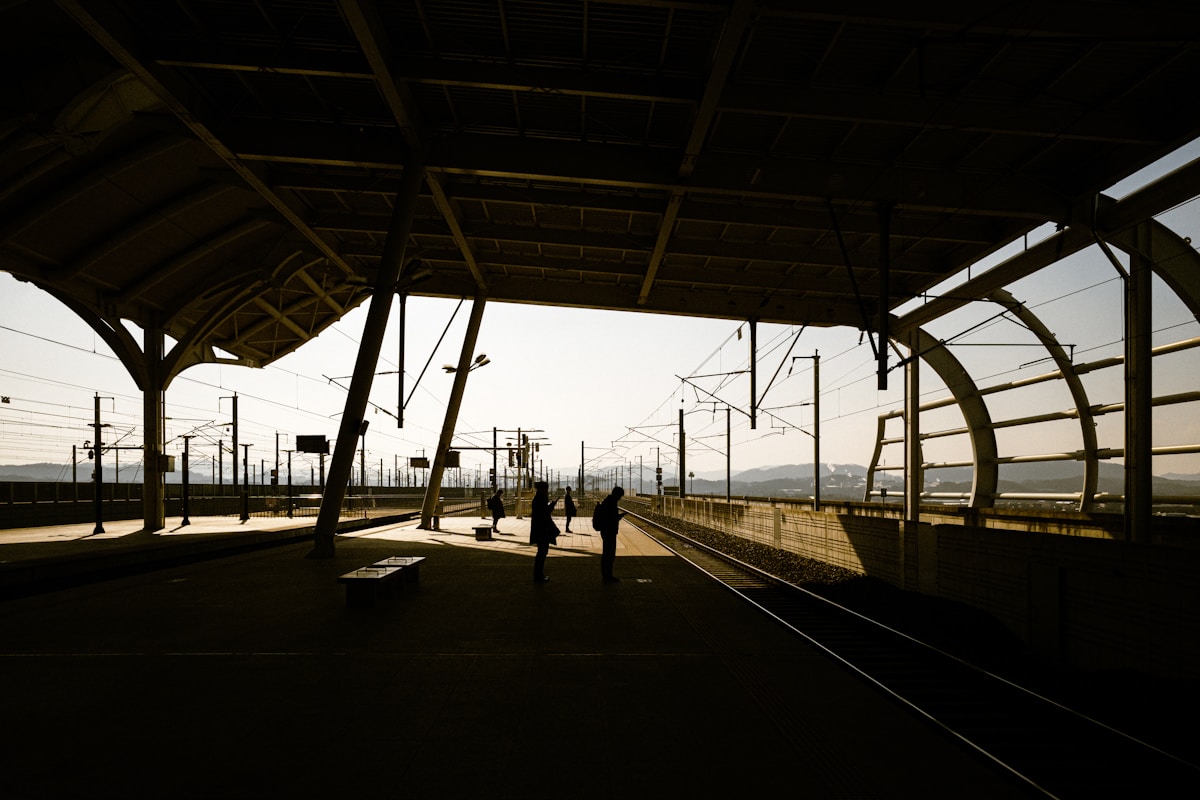
Korea’s high-speed rail network is one of the fastest and most comfortable ways to travel the peninsula. KTX trains connect Seoul to Busan in around 2 hours 15 minutes, Seoul to Gyeongju in 2 hours, and Seoul to Gwangju in 1 hour 40 minutes. For foreign visitors, the main friction is at the booking stage - the official Korail website has a reputation for rejecting overseas cards.
How to Book KTX Tickets
Option 1: Korail website and app
The official booking channel is the Korail website or the Korail Talk app. These offer the widest seat selection and the ability to choose seat numbers. The app accepts some international Visa and Mastercard cards, though failures are common. If your card is declined, try a different browser or card before giving up.
Option 2: Third-party platforms
Trazy (trazy.com) sells KTX tickets to international travellers and reliably accepts foreign cards. Prices match official rates. The trade-off is a slightly smaller seat selection and limited ability to choose specific carriage positions. For most journeys, this is the most friction-free approach.
Option 3: Station ticket counters
Every major train station in Korea has staffed counters that sell KTX tickets. Staff at Seoul Station, Suseo, and major regional stations generally have some English ability. You can pay by cash or card. Counters open from around 05:30 until the last service.
Option 4: Automated ticket machines
Station ticket machines have an English-language mode and accept most international Visa/Mastercard cards. Select “Overseas Credit Card” when prompted. Machines are faster than counters for straightforward journeys.
KTX vs SRT: Which to Take?
Both services offer similar journey times on overlapping routes, but they depart from different Seoul stations and are operated by different companies.
| Factor | KTX | SRT |
|---|---|---|
| Operator | Korail | SR |
| Seoul departure | Seoul Station / Yongsan | Suseo Station |
| Seoul–Busan | ~2h 15m | ~2h 10m |
| Price (standard) | From KRW 59,800 as of 2026 | From KRW 52,600 as of 2026 |
| KORAIL Pass valid | Yes | No |
| Booking | Korail website/app | SRT app or srail.kr |
Suseo Station is in the Gangnam area and accessible by metro line 3 (Yangjae-citizen’s forest station). If you are staying south of the Han River, SRT is more convenient; if staying in central or northern Seoul, KTX from Seoul Station is easier.
Is the KORAIL Pass Worth It?
The KORAIL Pass is marketed specifically at foreign visitors and allows unlimited KTX travel on selected days within a validity window. As of 2026, options include:
- 2-day flexible pass: approximately USD 75
- 3-day flexible pass: approximately USD 105
- 5-day consecutive pass: approximately USD 150
“Flexible” means you can use the pass on any 2 or 3 days within a 10-day window. “Consecutive” means calendar days back-to-back.
The break-even point is around three long-distance journeys. A Seoul–Busan return alone costs approximately USD 90–100 at standard rates. If your itinerary includes multiple long-distance routes - say, Seoul to Busan, Busan to Gyeongju, and Gyeongju back to Seoul - the 3-day pass saves money and removes the need to book individual tickets.
The pass does not cover SRT trains, first-class (KTX-Sancheon premium seats), or some scenic tourist trains. Seat reservations are required even with a pass, and are free to make at station counters.
Buy the KORAIL Pass online through the Korail website before departure - it cannot currently be purchased inside Korea.
Key Routes and Journey Times
| Route | Journey Time | Standard Fare (as of 2026) |
|---|---|---|
| Seoul → Busan | ~2h 15m | KRW 59,800 |
| Seoul → Gyeongju | ~2h | KRW 46,800 |
| Seoul → Yeosu Expo | ~2h 45m | KRW 52,300 |
| Seoul → Gwangju Songjeong | ~1h 40m | KRW 44,800 |
| Seoul → Jeonju (general train) | ~2h | KRW 18,200 |
| Busan → Gyeongju | ~23m | KRW 10,600 |
Note: Jeonju is not served by KTX - slower ITX or Mugunghwa trains run this route, which are not covered by the KORAIL Pass.
KTX vs KTX-Sancheon: What’s the Difference?
Many travellers see both “KTX” and “KTX-Sancheon” on the booking screen and aren’t sure which to choose. Both are operated by Korail and covered by the KORAIL Pass.
| Factor | KTX (original) | KTX-Sancheon |
|---|---|---|
| Top speed | 305 km/h | 330 km/h |
| Journey time | Slightly longer | 5–10 minutes faster on long routes |
| Seat comfort | Wider legacy seats | Newer interior, slightly narrower seating |
| Noise | Slightly louder | Quieter at speed |
| KORAIL Pass | Yes | Yes |
In practice, the difference is small. KTX-Sancheon runs on many of the same routes — Seoul to Busan, Seoul to Gyeongju, Seoul to Mokpo — and the timetable mixes both train types across the day. If you are booking individual tickets, choose whichever has the departure time that suits you. If you hold a KORAIL Pass, you can board either type; seat reservations remain free at station counters.
Practical Tips for the Journey
Boarding: Arrive at the platform at least 10 minutes before departure. KTX doors close promptly. Your carriage and seat number are printed on the ticket - follow the overhead signs and floor markings to find the right carriage.
Luggage: Large luggage racks are at the ends of each carriage. Small bags go in the overhead rack above your seat.
Convenience items: Every KTX station has CU or GS25 convenience stores on the concourse. The onboard trolley service sells drinks and snacks; prices are higher than convenience stores.
Platform confirmation: At major stations, check the departure board shortly before travel - KTX trains occasionally depart from different platforms than the one printed on tickets.
For planning your rail journey around the country, the guide to South Korea itinerary planning and the T-money card and Seoul transport guide have complementary information on getting around within cities.
Buying the KR Pass: Step by Step
Two rail passes are available to foreign visitors — the KORAIL Pass (marketed directly by Korail) and the KR Pass (sold through third-party platforms). Both cover KTX, ITX-Saemaeul, and Mugunghwa services; neither covers SRT.
The practical difference is the purchasing stage. Korail’s website accepts some foreign cards but is inconsistent. Klook’s KR Pass listing accepts international Visa, Mastercard, and PayPal reliably, and the purchase takes around five minutes. After purchase you exchange the voucher for a physical pass at the Korail Help Desk at Seoul Station (main concourse level — bring your passport). Once you have the pass, seat reservations are still required for each KTX journey, but they are made at no additional cost at any station counter.
Buy the Korea Rail Pass (KR Pass) via Klook
Options as of 2026 (approximate):
| Pass Type | Price | Best for |
|---|---|---|
| 2-day flexible (within 10 days) | from approximately USD 75 | Seoul–Busan return, one more route |
| 3-day flexible (within 10 days) | from approximately USD 105 | Three separate long-distance days |
| 5-day consecutive | from approximately USD 150 | Multi-city road-trip itineraries |
Tip for peak travel: Seat reservations on specific KTX services can fill quickly during Chuseok and Seollal. Make your seat reservations the moment you exchange your voucher at Seoul Station — the Help Desk handles both the exchange and reservation at the same counter.
Best One-Day KTX Routes from Seoul
If you are planning a pass day, these three circuits give the best return:
Seoul → Busan → Gyeongju (full circuit, one day): Depart Seoul Station at approximately 07:10 KTX, arrive Busan at 09:25 (KRW 59,800 at standard fare). Spend two and a half hours at Jagalchi Fish Market and Gamcheon Culture Village, then take the 23-minute KTX to Gyeongju (KRW 10,600). Visit Bulguksa Temple (admission KRW 6,000) and Tumuli Park (admission KRW 3,000). Return KTX from Singyeongju Station to Seoul departs approximately 18:00, arriving back around 20:00 (KRW 46,800). Total standard fares: approximately KRW 117,200 per person — above the cost of a 2-day flexible pass, making this single circuit a clear pass win.
Seoul → Gwangju (culinary day trip): Depart 08:30, arrive Gwangju Songjeong at 10:10 (KRW 44,800 one way). Gwangju’s Yangdong Market is 15 minutes by taxi — bibimbap and gukbap from approximately KRW 8,000–12,000 per bowl. The Asia Culture Centre is free to enter. Return by 20:00.
Seoul → Yeosu (south coast day trip): Arrive in 2h 45m from Seoul Station (KRW 52,300 one way). Yeosu’s cable car between Dolsan Island and the city costs approximately KRW 15,000 return. Odongdo Island is a 10-minute walk from the station. Last return trains to Seoul depart approximately 21:00.
For guided day tours that pair well with a KTX pass — covering Gyeongju’s temple circuit, Busan’s markets, and the DMZ — GetYourGuide Seoul lists licensed operators running structured itineraries from approximately KRW 65,000–120,000 per person, including local transport and admission fees.
Plan Your Trip
✈️ Book your flights to South Korea 🛡️ Get travel insurance 📱 Stay connected with an eSIM 🚗 Rent a car