Busan and Jeju Island are South Korea’s two great beach destinations, but they attract travellers for quite different reasons. Busan is a city - a big, energetic port city where beaches sit alongside fish markets, subway lines, and temple-topped hills. Jeju is an island - volcanic, forested, and ringed by coastline that ranges from black sand to turquoise coves. Choosing between them depends on whether you want a city break with a beach, or a landscape escape with a beach attached.
At a Glance
| Factor | Busan | Jeju |
|---|---|---|
| Best for | City life, seafood, Haeundae | Volcanic scenery, nature, road trips |
| Daily budget (mid-range) | 100,000–155,000 KRW | 120,000–180,000 KRW |
| From Seoul | KTX ~2h 15min, from 59,800 KRW | Flight ~1h, from ~50,000 KRW |
| Transport needed | Metro covers most sights | Rental car near-essential |
| Key beach | Haeundae, Gwangalli | Hamdeok, Hyeopjae, Jungmun |
| Key natural sight | Taejongdae Cliffs | Hallasan, Jeongbang Waterfall |
Quick verdict: Choose Busan for a city trip with beaches as a bonus. Choose Jeju for a nature-focused island escape. Busan is easier and cheaper to get around; Jeju requires more planning and a car but delivers landscapes that Busan cannot match.
Busan: City, Coast, and Culture
Busan has the infrastructure of a major city and the attitude of a beach town. The two coexist surprisingly well. Haeundae Beach runs for two kilometres along a crescent of sand with a cluster of five-star hotels on one side and a maze of seafood restaurants on the other. Gwangalli Beach, a few kilometres west, is quieter and has the Diamond Bridge lit at night as its backdrop.
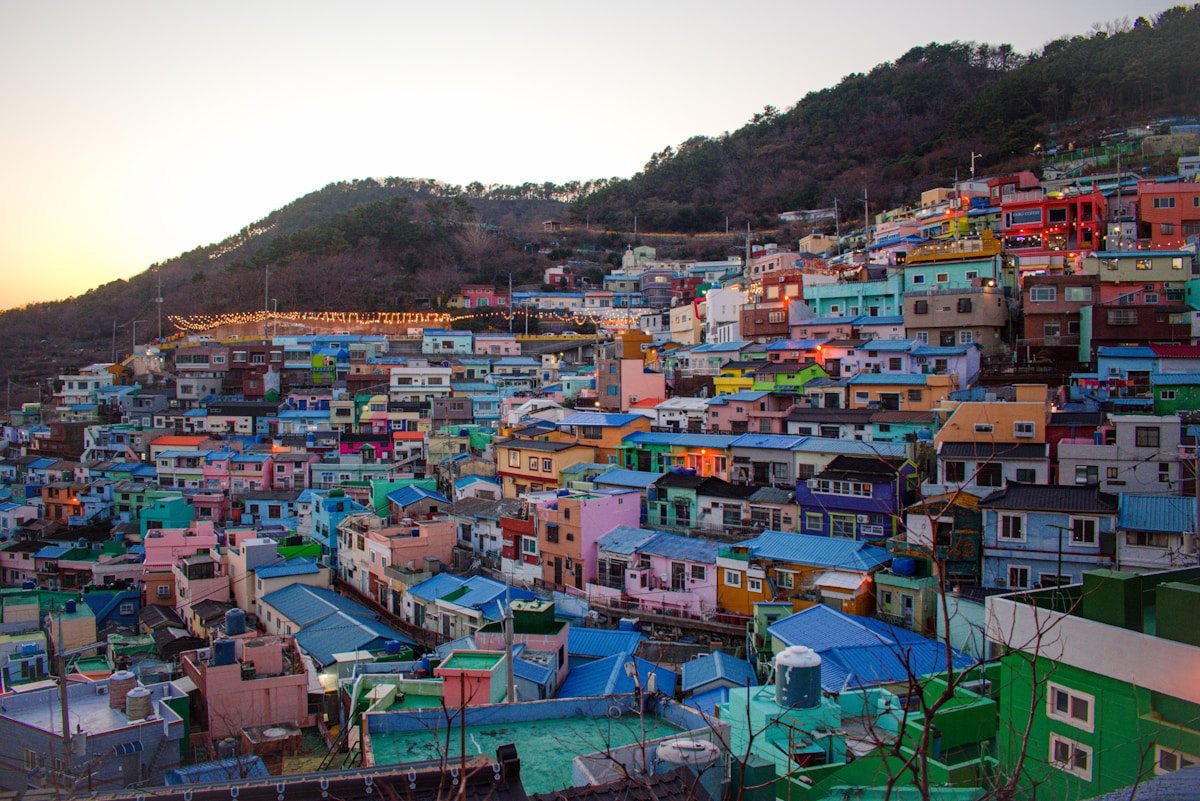
Beyond the beaches, Busan rewards exploration. The Gamcheon Culture Village - a pastel-painted hillside district built by wartime refugees in the 1950s - has become one of Korea’s most photographed neighbourhoods. Jagalchi Fish Market is the largest fish market in the country; the second floor has restaurants where you choose your fish from the stall below and have it prepared to order.
Taejongdae, a cliff park at the southern tip of the city, offers dramatic coastal walking and views that match anything on Jeju’s coastline. The Beomeosa Temple in the northern hills is a fully functioning Buddhist complex that sees a fraction of the visitors that Bulguksa Temple in nearby Gyeongju receives.
Where to Stay in Busan
- Park Hyatt Busan (Haeundae) - from approximately 350,000 KRW per night, harbour-facing tower
- Novotel Ambassador Busan (Haeundae) - from approximately 180,000 KRW, well-positioned for the beach strip
- Commodore Hotel Busan (Jung-gu) - from approximately 110,000 KRW, older property near Nampo-dong
- HiKorea Guesthouse Busan - from approximately 30,000 KRW per dorm bed, near Haeundae
Where to Eat in Busan
- Jagalchi Market (2F) - hoe (raw fish platter) from approximately 30,000–50,000 KRW for two
- Milmyeon restaurants (Seomyeon area) - Busan wheat noodles from around 8,000 KRW
- Gukje Market street food - tteokbokki, fried snacks, gimbap from 3,000–6,000 KRW per item
- Haeundae Amso Gopchang - grilled offal (gopchang) from approximately 15,000 KRW per portion
Jeju: The Volcanic Island
Jeju’s geology shapes everything. The island was formed by volcanic activity and its landscape - black lava coasts, parasitic cones (oreum) dotting the interior, caves carved by ancient lava flows - is unlike anywhere else in Korea. Hallasan, the volcanic mountain at the island’s centre, is the highest peak in South Korea at 1,950 metres. The summit crater lake is reachable on a full-day hike.
Manjanggul Cave is one of the longest lava tube caves in the world - a kilometre of the cave is open to visitors, revealing stone columns and formations created as lava cooled. Jeongbang Waterfall falls directly into the sea, which is unusual enough to have earned it minor celebrity. The Olle Trails - a network of coastal walking routes that circle the island - have become one of the most popular long-distance hiking circuits in Asia.
The coastline varies dramatically. Hamdeok, on the north coast, has shallow water in extraordinary shades of turquoise. Hyeopjae Beach on the west has black volcanic rock alongside fine white sand. The south coast at Jungmun is where the resort hotels concentrate, with broader surf and more organised infrastructure.
Where to Stay in Jeju
- Lotte Hotel Jeju (Seogwipo) - from approximately 280,000 KRW per night, large resort with multiple pools
- Shinhwa World Hotels (Andeok-myeon) - from approximately 200,000 KRW, integrated resort complex
- Jeju KAL Hotel (Jeju City) - from approximately 130,000 KRW, central business hotel
- Jeju Backpackers (Jeju City) - from approximately 30,000 KRW per dorm bed, near the ferry terminal
Where to Eat in Jeju
- Black pork restaurants (Jeju City, Doma Street) - black pig galbi or samgyeopsal from approximately 20,000–30,000 KRW per person
- Haenyeo seafood restaurants (Seogwipo fish market) - abalone porridge (jeonbokjuk) from around 15,000 KRW
- Jeju Olle Market - local vendors with mandarin products, Jeju snacks from 5,000–10,000 KRW
- Ttukbaegi Jeong (Jeju City) - galchi jorim (braised cutlassfish), a Jeju staple, from approximately 12,000 KRW
Getting Between Busan and Jeju
Domestic flights operate frequently from Gimhae International Airport (Busan PUS) to Jeju International Airport (CJU). Flight time is approximately 50–60 minutes. Budget carriers including Jeju Air, Air Busan, and Jin Air offer fares from around 30,000–80,000 KRW one-way, though prices climb significantly on peak travel dates (summer weekends, national holidays). Book at least two to three weeks in advance for reasonable fares.
A ferry operates from Busan International Ferry Terminal to Jeju, taking approximately 12 hours overnight. Prices start from around 40,000 KRW one-way for a basic berth. Only practical if you have time to spare.
Season Recommendations
Busan: Summer (July to August) for Haeundae Beach, though it gets extremely crowded. Spring and autumn are better for sightseeing. Jeju: Spring (April to May) for canola flower fields and azaleas on Hallasan, autumn (September to November) for clear hiking conditions. Summer is peak season with full resort prices; typhoon season (July to September) occasionally disrupts travel. Avoid Jeju on Chuseok and Seollal (Korean national holidays) when flights sell out months in advance.
Book guided tours and activities in Busan through GetYourGuide.
Search flights to South Korea with Aviasales.
Explore Each Destination
- Busan travel guide - Haeundae, Gamcheon, Jagalchi Market, and where to stay in South Korea’s second city
- Jeju Island guide - Hallasan hiking, Seongsan Ilchulbong, lava tubes, and the full coastal circuit
- Seogwipo guide - the best base for southern Jeju including waterfalls, the Olle Trail, and Jungmun resort
- 4-day Jeju itinerary - a structured day-by-day plan for a first visit to the island