Jeju Island Travel Guide
Jeju Island travel guide: hike Hallasan, walk the Olle coastal trails, explore Manjanggul lava tube, and reach volcanic beaches - 1 hour from Seoul by air.
Guides for Jeju City
Jeju Island is a UNESCO Triple Crown designation holder - a Biosphere Reserve, World Natural Heritage Site, and Global Geopark - and the most visited holiday destination in South Korea. It sits about 90 km off the southern tip of the Korean peninsula, separated from the mainland by the Korea Strait, and its volcanic origins give it a landscape utterly different from anywhere else in the country.
The island is built on a single massive volcanic cone - Hallasan - that last erupted about 25,000 years ago and now stands at 1,950 metres, surrounded by hundreds of smaller parasitic volcanic cones (oreum) distributed across the island. Lava flows from ancient eruptions created the island’s dramatic coastal scenery: black rock beaches, lava tube caves, hexagonal basalt column cliffs, and the circular outline of the island itself.
Getting to Jeju Island
By air: The Gimpo–Jeju route is one of the world’s busiest domestic air routes. Korean Air, Asiana, and low-cost carriers (Jeju Air, Jin Air, Air Busan) operate flights every 20–30 minutes during peak periods. The flight takes approximately 1 hour. Tickets are cheapest when booked 2–4 weeks ahead; fares spike during Korean public holidays.
International flights connect Jeju to Shanghai, Beijing, Hong Kong, and several other Asian cities, making it possible to enter South Korea via Jeju on some itineraries.
By ferry: Ferries connect Jeju to:
- Mokpo (4.5 hours, South Jeolla Province)
- Wando (2.5 hours, South Jeolla Province)
- Busan (13 hours, overnight car ferry)
- Yeosu and other ports (schedules vary)
The ferry is practical for bringing a vehicle to the island. Passenger-only travellers on a time budget almost always fly.
Getting Around the Island
Car hire: The most practical option. Rental cars are available at the airport and in Jeju City. An international driving permit is required for foreign nationals. Book in advance for spring and autumn peak periods. The island circuit road (Route 1132) takes about 2.5 hours without stops.
The Bus system: Jeju’s integrated bus network covers the coastal highway and most major tourist sites with numbered routes. It is functional but slow - rural connections can mean 30–60 minute waits between buses. The Bus app (available in English) shows real-time arrivals.
Jeju City logistics: Jeju International Airport (CJU) is approximately 5 minutes from the city centre by taxi. The ferry terminal connects to mainland ports (Mokpo, Wando, Busan). Accommodation is concentrated in central Jeju City and the Shin Jeju (New Jeju) district north of the airport, which has more modern business hotels. For travellers focused on the southern coast, basing yourself in Seogwipo is the more practical choice.
Taxis and rental scooters: Taxis are available in Jeju City and Seogwipo; less so in rural areas. Scooter hire is available in resort areas for those confident on two wheels.
When to Go
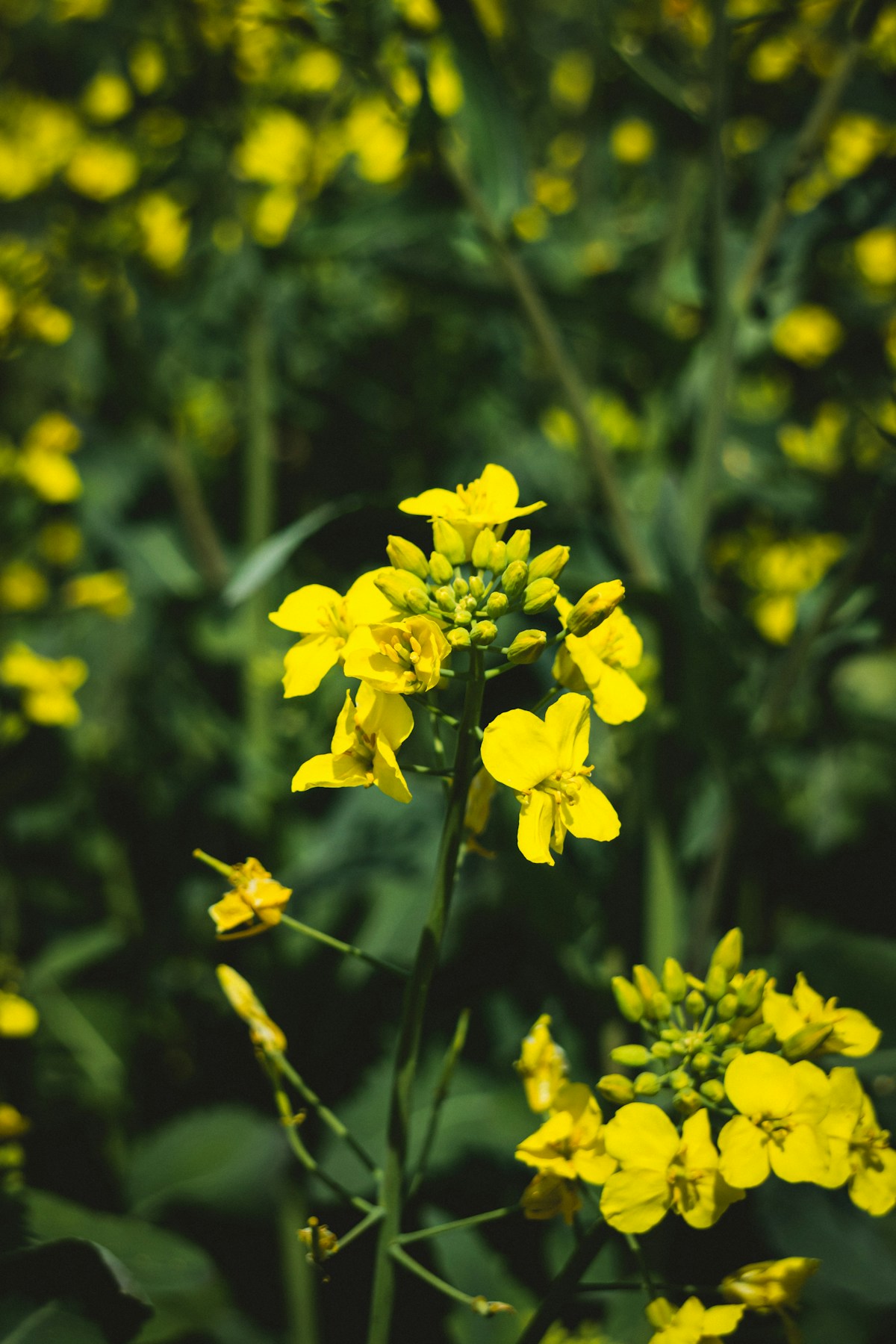
Spring (late March–May): Yellow canola fields bloom from late February through March; cherry blossoms follow in late March and April. The eastern route between Seongsan and Pyoseon has spectacular canola field roadside views. Wildflowers on Hallasan’s slopes add to the appeal. The most photogenic time of year.
Summer (June–August): Beach season. Coastal areas are crowded. Hallasan hiking in summer can be very hot at lower elevations. The island gets the highest rainfall totals in Korea during the July monsoon.
Autumn (September–November): Clear skies, comfortable temperatures, and some foliage colour on Hallasan’s slopes. October is the best weather month. Less crowded than spring.
Winter (December–February): The quietest season. Prices drop significantly, beaches are empty, and the winter light on the volcanic landscape has a particular character. Hallasan’s upper sections (above 1,000 m) accumulate snow and require careful preparation.
Hallasan National Park
Hallasan is the defining natural feature of the island. The national park covers the central mountain and its surrounding forest.
Summit trails:
- Seongpanak trail (east): 9.6 km one way, 4–5 hours to the summit crater lake (Baeknoktam). The most gradual and popular route. Summit cut-off: 09:00 from the trailhead.
- Donnaeko trail (south): 9.1 km one way. Access to Witse Oreum crater, not the main summit.
- Eorimok trail (northwest): 4.7 km to Witseoreum shelter. Does not reach the summit.
- Yeongsil trail (southwest): 3.7 km to Yeongsil shelter on a ridge. Dramatic rock formations; does not reach summit.
For a full summit, Seongpanak is the standard choice. Carry water and snacks; the mountain shelter (Jindallaebat Shelter at 1,500 m) has limited supplies.
Coastal Highlights
Seongsan Ilchulbong (Sunrise Peak) - a 180-metre tuff cone formed by an underwater volcanic eruption and now connected to the mainland coast by a causeway. A 20-minute climb to the rim rewards with views over the surrounding ocean and the green interior of the crater. A nearby haenyeo (diving women) demonstration runs at specific times. UNESCO listed.
Seopjikoji - a coastal headland of open fields and volcanic rock extending into the sea, backed by views of Seongsan Ilchulbong. The yellow canola fields here in spring are among the most photographed on the island.
Jusangjeolli Cliff - hexagonal basalt columns near Jungmun resort, formed by lava cooling rapidly in the sea. The geometric precision of the columns against the ocean is striking.
Olle Trail - a network of 26 walking routes totalling 437 km, loosely circling and crossing the island along the coast and through rural areas. The full circuit takes around 3 weeks; individual sections of 10–20 km can be walked in a day. Sections 1 (Seongsan area) and 10 (the western coast) are among the most visited.
Manjanggul Lava Tube - one of the world’s longest lava tubes, with 1 km of the 13.4 km total length open to visitors. The interior maintains a constant temperature of around 11°C year-round - a welcome contrast in summer. UNESCO listed.
Yongduam (Dragon Head Rock) - a coastal lava rock formation near Jeju City’s waterfront, shaped by centuries of wave erosion into a profile resembling a dragon emerging from the sea. The surrounding coastal path offers views back toward the airport and city. Best visited in morning light.
Hallim Park - a large private botanical garden on the western coast, about 30 km from Jeju City, with lava caves, bonsai gardens, palm-lined paths, and a folk village section. A half-day visit is typical.
Dongmun Traditional Market - the largest traditional market in Jeju City, open daily. Stalls sell Jeju-specific products: Jeju black pig portions, fresh tangerines (hallabong and other varieties), dried seafood, and haenyeo catches. The night market section is particularly active from late afternoon.
Culture and Food
Haenyeo (diving women) - female free-divers who harvest shellfish, sea urchin, abalone, and other seafood from the sea floor without breathing equipment. The tradition is centuries old and UNESCO-listed. Demonstrations are available near Seongsan Ilchulbong; working haenyeo sell fresh catches at small stalls near the coast.
Heukdwaeji (Jeju black pig) - a breed native to the island, smaller and with distinctively dark skin. Served as pork belly grilled over wood fire or charcoal. The flavour is considered richer than standard pork. Restaurants are concentrated around Dongmun Market in Jeju City and in the Seogwipo area. The Tapdong waterfront in Jeju City has seafood restaurants at varying price points, and the market’s black pig restaurant strip is an easy evening option.
Jeju tangerines (gamgyul/hallabong) - grown on the volcanic slopes, in season November through February. The hallabong variety (a cross between mandarin and navel orange) has a particularly sweet, complex flavour.
For guided tours around Jeju Island including coastal drives, Hallasan hiking with a guide, and haenyeo experiences, booking ahead is recommended during peak spring and autumn periods.
Search hotels in Jeju Island on Booking.com
Guided Tours in Jeju Island
Touring Jeju with a guide makes sense if you don’t have a rental car — the east and west coasts are 40–60 km apart with limited bus frequency on secondary roads. These are current GetYourGuide options:
| Tour | Duration | From | Covers |
|---|---|---|---|
| Jeju East UNESCO Full-Day Bus Tour (entry fees included) | 9 hours | from $43/person | Seongsan Ilchulbong (Sunrise Peak), Haenyeo diving show, Manjanggul Lava Tube, Seongeup Folk Village — all entry fees included |
| Jeju Western & Southern Sightseeing Day Tour (4.8★, 1,227 reviews) | Full day | from $52/person | Hallasan viewpoints, Jusangjeolli Basalt Cliffs, Cheonjiyeon Falls, Bomunsa Temple |
| Jeju South UNESCO Heritage & Mt. Hallasan Hiking | 10 hours | from $53/person | Actual Hallasan summit trail (Eorimok route), Cheonjeyeon Falls, Jeongbang Waterfall — best option for hikers wanting the real mountain experience |
| Jeju Sunrise Small Volcano Hike (Seongsan Ilchulbong) | 3 hours | from $56/person | Pre-dawn climb to the 182 m crater rim, sunrise views across the eastern coast, optional haenyeo diving show — suits early risers or travellers with a packed afternoon |
The east UNESCO and west/south tours cover opposite sides of the island well for non-drivers. The Hallasan hike is the pick for anyone who wants to summit Korea’s highest peak with a guide rather than navigate the mountain trails independently. The sunrise hike is a standalone morning add-on that pairs with any of the longer day tours. Prices as of 2026.
[Browse Jeju Island tours on GetYourGuide →](/go/tours-jeju)
Plan Your Jeju Trip
- Things to do in Jeju - Hallasan, Seongsan Ilchulbong, Manjanggul, and more with entry fees
- Where to stay in Jeju - Jeju City, Seogwipo, Jungmun, and the west coast compared
- Best hotels in Jeju - from budget pensions to Shilla and Lotte luxury resorts
- Jeju food guide - black pork, abalone porridge, hallabong, and haenyeo seafood
Upcoming Events in Jeju City
Jinju Lantern Festival 2026
Jinju Lantern Festival 2026 runs 3 to 12 October on the Nam River. Paper lanterns mark the 1592 Battle of Jinju: tickets, schedule, and how to get there.
Frequently Asked Questions
- How do I get to Jeju Island?
- The most common route is a domestic flight from Seoul Gimpo Airport (GMP) to Jeju International Airport (CJU) - approximately 1 hour. The Gimpo–Jeju route is one of the busiest air routes in the world by passenger volume. International flights connect Jeju to several Asian cities. Ferries run from Mokpo, Wando, and Busan, taking 4.5–13 hours depending on origin.
- Do I need a car on Jeju Island?
- A rental car gives the most flexibility for exploring the coastline, mountain trails, and rural areas. The island bus system (The Bus) covers main tourist sites but is slow on secondary routes and infrequent in rural areas. For a focused 2–3 day visit sticking to main sites, buses and taxis work. For thorough island exploration, a car is significantly better.
- Is Jeju City worth exploring in its own right?
- The city itself is mainly functional - transport, accommodation, and services. The most interesting spots are Dongmun Traditional Market, Manjanggul lava tube nearby, and the coastal walk at Yongduam. Most visitors use it as a base and arrival point rather than a destination in itself.
- When is the best time to visit Jeju Island?
- Spring (late March to May) brings cherry blossoms and yellow canola fields. Autumn (October–November) has clear skies and mild temperatures. Summer (July–August) is beach season but very crowded and hot. Winter is the quietest season with the lowest prices, though Hallasan's summit sections may be snow-covered.
- What is Hallasan and can anyone hike it?
- Hallasan is the dormant volcano at the centre of Jeju Island and the highest mountain in South Korea at 1,950 metres. Several trails access the summit; the main trails take 4–5 hours return. The Seongpanak trail (eastern approach) is the most popular summit route. There are timed entry cut-offs - hikers must start before 09:00 on the Seongpanak trail for a same-day summit return.
Book an experience
Top experiences in Jeju City
Explore the best tours and activities in Jeju City, with instant confirmation and free cancellation on most bookings.