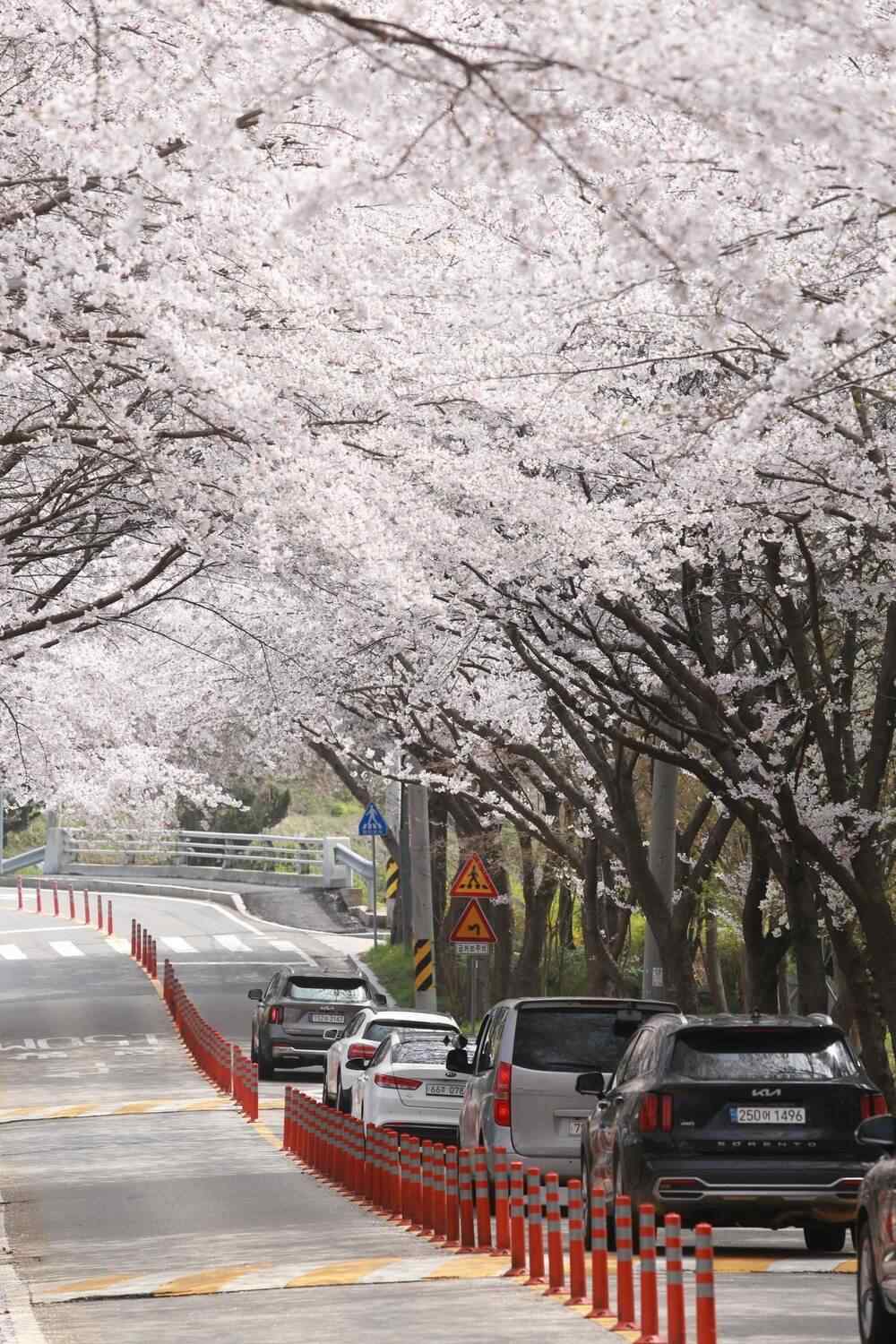
Jeju Island is the first place in South Korea where cherry blossoms appear each spring, typically one to two weeks before mainland cities. The island’s native Jeju King Cherry (왕벚나무) - believed to have originated on the slopes of Hallasan - produces blossoms that are slightly larger and sometimes more deeply coloured than the Yoshino varieties planted across the rest of the country. If you are planning a Korea spring trip around cherry blossoms, Jeju offers the longest possible window by combining an early-blooming island visit with a later mainland trip through Busan or Seoul.
For the full national forecast and a comparison of all Korean blossom destinations, see our Korea cherry blossom guide.
2027 Bloom Dates for Jeju
Jeju’s cherry blossoms typically reach first bloom around March 20–25, with peak bloom in late March - usually the final week of the month. Seogwipo on the island’s warmer south coast can bloom 3–5 days ahead of Jeju City.
The Korea Meteorological Administration publishes a Jeju-specific forecast at weather.go.kr from mid-February 2027 onwards. The forecast distinguishes between Jeju City and the southern coast, which is worth checking if you want to catch the absolute earliest blooms.
Practical note: Peak bloom lasts 7–10 days under calm conditions. Strong spring winds - common on Jeju - can end peak bloom in 2–3 days. Monitor forecasts in the week before your trip and build flexibility into your schedule.
Jeju’s Cherry Blossom Spots
Saryeoni Forest Road (사려니숲길)
Saryeoni Forest Road is Jeju’s most atmospheric cherry blossom corridor and the spot that draws the largest domestic crowds during peak bloom. The road runs through a cedar and cherry tree forest in the island’s eastern mid-section (between Jeju City and Seongsan), and in late March the cherry trees along the route form canopies above the forest road.
Getting there: Drive east from Jeju City on Route 1112. Saryeoni has two main entry points; the southern Bijarim Road entry is accessible from Jeju-si, and the eastern entry from Pyoseon. A rental car is essential - no practical bus service covers the forest road.
Walking the route: The full Saryeoni Forest path is approximately 15km. Most visitors walk the cherry blossom section, roughly 3–5km from either entry point. Allow 2–3 hours for a relaxed walk. The road surface is well-maintained.
Timing: Weekday mornings before 10:00 have the fewest visitors. On peak bloom weekends, the car parks fill by 09:30 and roadside parking becomes difficult - arrive early or take a taxi from Jeju City (approximately KRW 25,000–30,000 one-way).
Jeju National University Area (제주대학교 벚꽃길)
The road running past Jeju National University in Jeju City is the island’s most accessible urban blossom spot - a wide boulevard lined with mature King Cherry trees that create a canopy effect at peak bloom. This is the local equivalent of Yeouido: a city-centre promenade that fills with families and couples during bloom week.
Getting there: City bus 411 or 412 from Jeju Bus Terminal to Jeju National University. The blossom boulevard begins near the university’s main gate and runs along Arahanmotgil.
Evening viewing: The road is lit at night during peak bloom, making it a pleasant evening walk - cooler and less crowded than afternoon. Popular with local students.
Jeju Boramae Park (보라매공원 / Sinsan Park area)
Boramae Park (also referred to as Sinsan Park in some maps) in the Arado-dong area of Jeju City contains some of the most mature King Cherry trees on the island, producing dense blossom canopies that are striking in character from the paler mainland varieties. The park is a local neighbourhood spot, which keeps crowds manageable even on peak weekends.
Getting there: City bus 365 or 375 from Jeju City Bus Terminal, approximately 20 minutes. Or taxi from Jeju City (approximately KRW 8,000–10,000).
Seogwipo Chilsimni Food Street & Seogwipo Riverside (서귀포 칠십리 벚꽃길)
Seogwipo on the island’s south coast benefits from a warmer microclimate and typically blooms 3–5 days before Jeju City. The riverside road running alongside the Seogwipo stream system, and the Chilsimni Food Street area, see cherry blossoms framing traditional market stalls and cafés - a combination that makes for pleasant slow-paced visiting.
Getting there: Intercity bus from Jeju Bus Terminal to Seogwipo (approximately 1 hour, KRW 4,000 as of 2026), or drive south on Route 11 (approximately 35 minutes without traffic).
Blossom timing here: If the KMA forecast shows Jeju City at 3–4 days from peak, Seogwipo is likely already at peak. Plan a southern coast day ahead of the main island-wide peak if your schedule allows.
Gyeolhye Garden / Hallabong Country Roads (한라봉 농로 벚꽃)
Jeju’s rural interior is crisscrossed with minor roads lined with cherry trees, planted between tangerine orchards and farmland in the mid-elevation belt (200–400m above sea level) below Hallasan. These rural corridors bloom slightly later than sea-level spots - sometimes 3–5 days after Jeju City peak - which can extend your overall blossom-viewing window if you time it right.
There is no single named route; the roads around Aewol, Hallim, and the mid-mountain (중산간) area between Route 97 and Route 1139 are the most reliable. A rental car and willingness to explore minor roads is required. Blossom alongside rows of tangerine trees in fruit is a Jeju-specific combination unavailable on the mainland.
Getting Around Jeju for Cherry Blossoms
A rental car is strongly recommended for any serious blossom-viewing itinerary on Jeju. Public bus services are reliable between Jeju City, Seogwipo, and coastal tourist sites, but Saryeoni Forest, the mid-mountain roads, and most rural orchards are not served by practical bus schedules during blossom season.
Car hire: Available from Jeju International Airport (Jeju-si) from approximately KRW 60,000 per day for a compact car as of 2026. Book at least 2 weeks ahead during late March - rental stock sells out. Major domestic providers (Lotte Rent-a-Car, SK Rent-a-Car, KT Kumho) all have desks at the airport.
Taxi option: For Jeju City spots, taxis are practical. A day-long private taxi tour covering the main blossom spots runs approximately KRW 150,000–200,000 as of 2026 - competitive with a rental car once parking is factored in.
Combining Cherry Blossoms with Hallasan
Cherry blossom season coincides with the start of Hallasan’s spring wildflower season on the upper slopes. If you are hiking Hallasan during late March, the lower-elevation trails (below 600m) on the Seongpanak and Eorimok routes pass through Yoshino cherry trees in blossom. The summit zone (above 1,700m) is still in winter conditions at this point - layer accordingly.
Trail reservations for Hallasan are required in advance via the national park system (npark.or.kr). See our Hallasan hiking guide for current slot availability and trail cut-off times.
Accommodation During Blossom Season
Jeju hotels and guesthouses in Jeju City and Seogwipo see elevated demand during late March. Book 4–6 weeks ahead for the last week of March. Airbnb and pension-style guesthouses in the mid-mountain area offer quieter alternatives to the main city hotels and can reduce driving time to Saryeoni.
Browse accommodation options in our Jeju hotels guide.
For tours and activity bookings during your Jeju spring trip, browse options through GetYourGuide. Stay connected for maps and real-time forecast checking with an eSIM from Airalo.