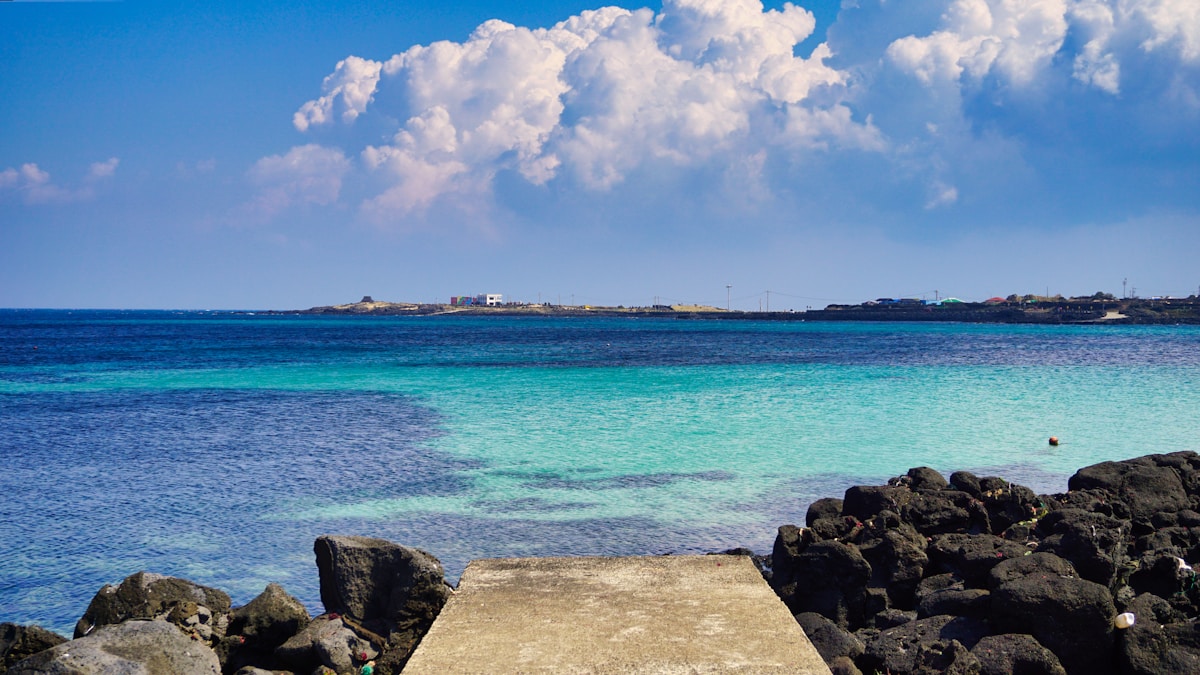
Jeju Island has more than 30 beaches spread across its coastline, and the variety is genuine — dark volcanic sand beaches, pale turquoise lagoon bays, exposed surf beaches on the south coast, and sheltered family-friendly shallows in the north and west. The island’s volcanic geology means beaches often sit between black basalt rock formations, giving them a distinctive look that differs sharply from mainland Korean beaches.
The main swimming season runs July–August when sea temperatures reach 25–27°C. Outside that window the beaches remain beautiful for walking and photography, but swimming is uncommon after October.
Hamdeok Beach (함덕해수욕장)
Location: 21 km northeast of Jeju City | Bus: Route 701 from Jeju City Bus Terminal, approximately 40 minutes, KRW 1,800
Hamdeok is consistently ranked among Jeju’s best beaches, and for good reason. The water is an unusually vivid turquoise caused by a shallow sandy shelf that extends some distance offshore — the colour is most intense on sunny mornings when the light hits it at a low angle. The swimming zone is clearly marked and shallow enough for children to stand, making it Jeju’s default family beach.
The beach stretches approximately 350 metres and is backed by a promenade with cafes, restaurants, and convenience stores. During July and August, beach umbrella and lounger sets rent for approximately KRW 20,000–25,000 per set. Showers and changing rooms are free. Parking at the adjacent car park costs KRW 2,000–3,000 depending on time of year.
A small rocky headland at the northern end — Seoubong Peak — has a short walking trail with coastal views back over the beach. The combination of the headland walk, the beach, and lunch at one of the waterfront restaurants makes for a solid half-day.
Hyeopjae Beach (협재해수욕장)
Location: 33 km west of Jeju City near Hallim | Bus: Intercity bus from Jeju City to Hallim, then local bus or 15-minute walk
Hyeopjae is Jeju’s most photogenic beach. The water colour shifts from pale aquamarine in the shallows to deep blue further out, and on clear days you can see the small volcanic island of Biyangdo sitting offshore about 3 km away. The sand is fine and pale — rare on Jeju where dark volcanic sand is more common — which enhances the colour contrast with the water.
The beach is 560 metres long and wide enough that it absorbs crowds reasonably well even during peak summer. Facilities include showers, changing rooms, and a strip of cafes and restaurants immediately behind the beach. Parking costs KRW 2,000–3,000 per entry during summer.
Biyangdo ferry: if you want to extend the visit, a small ferry runs from Hallim Port (about 2 km from Hyeopjae) to Biyangdo island. The round-trip fare is approximately KRW 9,000 as of 2026 and the crossing takes 15 minutes. The island is tiny — you can walk around it in about 90 minutes — but its volcanic cone, Biyangbong, offers the best view of Hyeopjae Beach from above.
Immediately adjacent to Hyeopjae is Geumneung Beach (금능해수욕장), which is 10 minutes on foot to the south. It is smaller, less visited, and popular with local families precisely because it avoids the commercial development that Hyeopjae has accumulated. The water colour and quality are virtually identical.
Jungmun Saekdal Beach (중문색달해수욕장)
Location: 10 km west of Seogwipo in the Jungmun Resort Complex | Bus: From Seogwipo, approximately 20 minutes
Jungmun is a different kind of beach from Hamdeok or Hyeopjae. The south coast exposure means stronger swells and waves — this is where Jeju surfers come, and several rental and lesson operators along the beach strip offer boards and wetsuits for approximately KRW 30,000–50,000 per session including instruction. The beach itself is around 560 metres of dark volcanic sand backed by high basalt cliffs that are striking in themselves.
Facilities here are among the best on the island, partly because of the surrounding resort complex. The Shinhwa Waterpark and Lotte Hotel Jeju are nearby, so the infrastructure is well-maintained. Parking costs KRW 3,000 per visit. Umbrella and lounger rental runs KRW 20,000–30,000 per set in season.
The swimming zone is marked, but the waves are larger than Hamdeok or Hyeopjae. The beach flag system (green/yellow/red) is taken seriously here — if the red flag is flying, swimming is not permitted due to rip current risk. Check conditions before entering the water, especially during or after typhoon season (July–September).
Iho Tewoo Beach (이호테우해변)
Location: 4 km west of Jeju Airport — the closest beach to Jeju City
Iho Tewoo is the most convenient beach for visitors staying in or near Jeju City. It is smaller and less dramatic than the west coast options, but its two red-and-white horse-shaped lighthouses at the water’s edge have made it one of Jeju’s most photographed spots at sunset.
The beach is approximately 400 metres long with good facilities. The water is calm, sheltered from the prevailing south winds by the island’s orientation. Swimming is safe in the marked zone. Parking is free for most of the year and costs KRW 1,000–2,000 during the peak summer period.
Sunset here is exceptional when conditions are clear — the horse lighthouses silhouette against the sky and the view across to the mainland is unobstructed.
Woljeong-ri Beach (월정리해변)
Location: 32 km northeast of Jeju City, near Gimnyeong
Woljeong-ri has become one of Jeju’s trendiest beach areas, though it remains smaller and less developed than Hamdeok nearby. The turquoise shallow water is comparable to Hamdeok, and a strip of independent cafes and wine bars has opened along the beachfront — the area has a more relaxed, younger crowd atmosphere than the big resort beaches.
It works best for a half-day visit combining a beach walk, a coffee at one of the seafront cafes, and a short drive to the nearby Gimnyeong Maze Park (entry KRW 4,000) or the Jeju Glass Castle.
Practical Notes
Getting to Jeju beaches without a car: Hamdeok and the east coast beaches are accessible by intercity bus from Jeju City Bus Terminal. Hyeopjae requires a transfer in Hallim. Jungmun is accessible from Seogwipo but taxi is easier than the bus for the final stretch. For a multi-beach day, a rental car is strongly recommended — see our Jeju transport guide.
Best beach for: families → Hamdeok | photography → Hyeopjae | surfing → Jungmun | sunset → Iho Tewoo | café culture → Woljeong-ri
Water quality: Jeju’s beaches consistently score well in Korea’s annual water quality assessments. The volcanic filtration of groundwater contributes to clarity. Jellyfish appear seasonally from July–September, especially after south winds — beach authorities post warnings when they’re present.