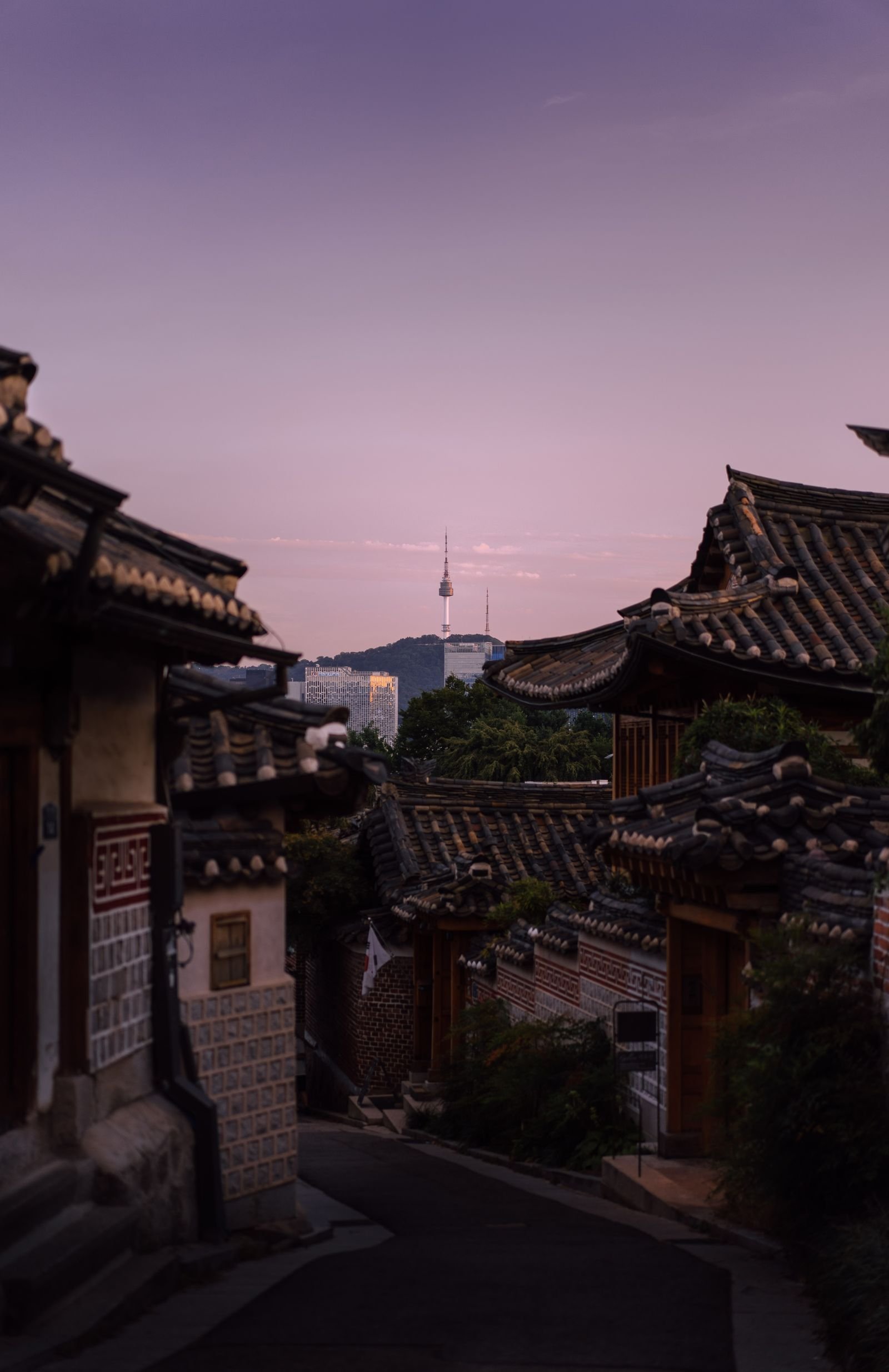
The best free things to do in Seoul are the Gwanghwamun guard-changing ceremony, the Bukchon hanok alleys, the Han River parks, the Namsan walking trails, Gwangjang Market, Gyeonghuigung Palace and the Cheonggyecheon stream. None needs a ticket. Together they cover royal history, riverside life, street food and city views in one or two days.
We built this list around places you can enter or walk through without paying, and we note where a small fee starts so you are not caught out. Prices are approximate and current as of 2026. For paid sights and a full city overview, see our Seoul things to do guide.
1. Gwanghwamun Guard-Changing Ceremony
The royal guard-changing ceremony takes place at the Gwanghwamun gate of Gyeongbokgung at 10:00 and 14:00 daily except Tuesday. Guards in Joseon-era uniforms march out with drums and flags, and you watch from the open square in front of the gate at no cost. It runs about 20 minutes and can be cancelled for heavy rain, severe dust or demonstrations.
How to get there: Gyeongbokgung Station (Line 3, Exit 5) or Gwanghwamun Station (Line 5) puts you at the gate in minutes.
Best time: The 10:00 ceremony is the busier one on weekends. Go on a weekday for a clear view.
Local tip: Arrive 15 minutes early to stand near the front, then walk into the palace afterwards only if you want the interior. The ceremony itself needs no ticket. Our Seoul palaces guide shows which of the five palaces to add and our hanbok rental guide explains the free entry that comes with wearing one.
2. Bukchon Hanok Village
Bukchon is a residential hillside of traditional tiled-roof houses between Gyeongbokgung and Changdeokgung. Entry is free, and the upper lanes give views over the rooflines toward Namsan Tower, which is why it features in so many photographs. It is a living neighbourhood, so keep your voice down and stay on the main lanes.
How to get there: Anguk Station (Line 3). The walk up to the main viewpoints takes about 15 minutes.
Best time: Early morning, before the day-tripper crowds, and the hour before sunset for warm light.
Local tip: Some alleys post signs asking for quiet before 10:00 to protect residents, so an earlier start suits photography better than a tour-group hour. Combine it with Insadong on foot for tea houses and craft shops afterwards.
3. Han River Parks
The Han River parks run along both banks, with lawns, cycle paths, fitness equipment and floating platforms, and entry is free throughout. Yeouido Hangang Park is the busiest, especially in cherry blossom season, while Banpo Hangang Park has the Banpo Bridge Rainbow Fountain, a free evening light and water show that runs on a seasonal schedule in the warmer months.
How to get there: Yeouinaru Station (Line 5) for Yeouido, and Express Bus Terminal or Sapyeong stations for Banpo.
Best time: Spring for blossom, and warm summer evenings for the fountain.
Local tip: Seoul runs on riverside food delivery. Several apps will deliver fried chicken or convenience-store food to a named park spot, so a picnic dinner costs only the meal. If you later want to see the river from the water, our Han River cruise guide covers tickets and sailing times.
4. Namsan Park and the Seoul City Wall Trail
Namsan is the green hill at the centre of Seoul, and walking it is free. The path up from Namsan’s base takes roughly 30 to 40 minutes, while the cable car costs KRW 9,500 return and the observation deck inside the tower is around KRW 21,000. The outdoor deck at the base is free and still gives wide views over the city. The old Seoul City Wall runs along the ridge on the Namsan side.
How to get there: Chungmuro or Myeongdong stations for the walking routes, or bus 05 from Chungmuro to the cable car station.
Best time: Late afternoon into sunset, when the city lights come on.
Local tip: The wall path from Jangchungdan Park toward the cable car and on to Baekbeom Square takes about 45 to 60 minutes at a relaxed pace and is free, so it doubles as the quiet alternative to the busy tower plaza. Our Seoul autumn foliage guide lists the best seasonal colour spots in the city.
5. Gwangjang Market
Gwangjang is one of Seoul’s oldest traditional markets, and browsing the stalls costs nothing. Most visitors come for the food rows, where bindaetteok (mung bean pancakes) cost about KRW 5,000 to 7,000 a portion and mayak kimbap about KRW 3,000 a set. You can walk the whole market, watch the pancakes being fried and decide what to buy.
How to get there: Jongno 5-ga Station (Line 1) or Euljiro 4-ga Station (Lines 2 and 5).
Best time: Late morning, before the lunch queues. Most stalls run roughly 08:00 to 21:00.
Local tip: Walk the whole food hall once before you sit down, because stall prices and portion sizes vary and the textile sections around the food hall show an older side of the market. For a wider food crawl, see our Korean street food guide.
6. Gyeonghuigung Palace
Gyeonghuigung is the only one of Seoul’s five royal palaces that is always free. Much of it was demolished during the colonial era and rebuilt, so it is smaller and much quieter than Gyeongbokgung. Allow 20 to 30 minutes. It is closed on Mondays.
How to get there: Seodaemun Station (Line 5) or Gwanghwamun Station, a short walk from the Seoul Museum of History.
Best time: Midday on a weekday, when you will often have the courtyards close to empty.
Local tip: Treat it as a free stop on the walk between Gwanghwamun and the Seoul Museum of History rather than a full outing. If you want more than one palace, the combined palace ticket of roughly KRW 6,000 covers four palaces plus Jongmyo Shrine, and details are in our palaces guide. Check current hours on the official Royal Palaces and Tombs Center site.
7. Cheonggyecheon Stream
Cheonggyecheon is a restored stream that runs for roughly 11 km through central Seoul, reopened in 2005 after the highway above it was removed. It is free to walk, sits several metres below street level and is lit up in the evening. It starts near Gwanghwamun, so it pairs naturally with the guard ceremony and Gyeonghuigung.
How to get there: Cheonggye Plaza near City Hall and Gwanghwamun stations, then follow the path downstream.
Best time: After dark, when the lights make it a cool walk on a summer night.
Local tip: You do not need to walk the whole length. Pick a section between two bridges, then climb the steps back up to street level when you are done.
How to Fit the List into One or Two Days
For one day, start at Gwanghwamun at 10:00, walk to Gyeonghuigung, eat at Gwangjang Market, and end on Namsan or the Han River at sunset. For a second day, spend the morning in Bukchon and Insadong, then the evening at Banpo for the fountain. Our 3 days in Seoul itinerary shows how to add paid sights around these free stops, and our T-money card guide explains the transit card that keeps the metro and buses cheap.
If you would rather have a guide explain the history behind the free sights, browse Seoul walking tours on GetYourGuide. For official visitor information, see Visit Korea.