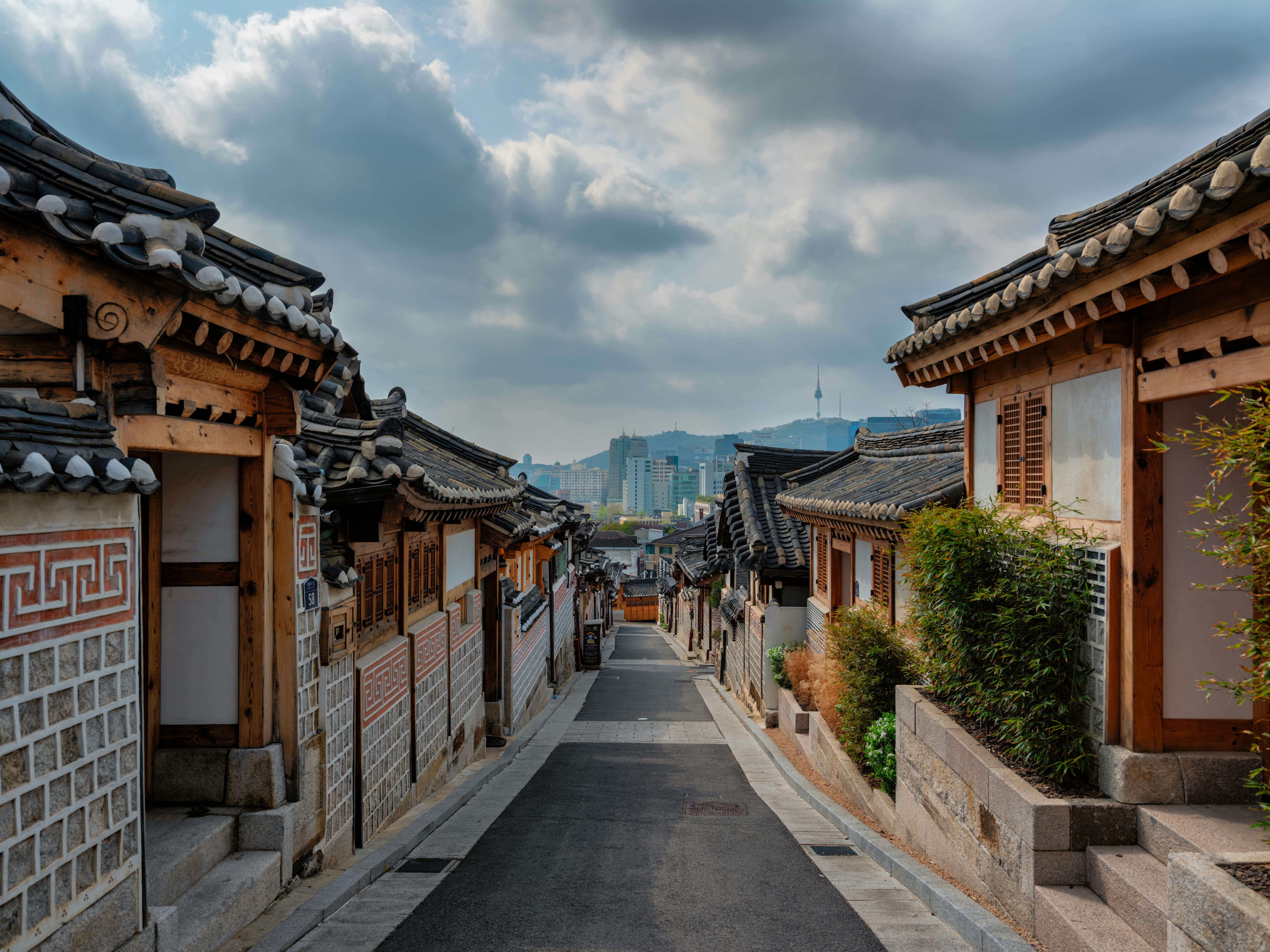
Insadong (인사동) occupies a peculiar position in Seoul — a neighbourhood that resisted modernisation not through neglect but through deliberate preservation. The district’s main street, Insadong-gil, was designated a Cultural Street in 2002, restricting the placement of foreign-brand signage. As a result, even chain cafes that operate here (like the Starbucks near Anguk Station) have used Korean script on their signage. It is a small detail that signals the broader character of the place.
Getting to Insadong
Subway: Anguk Station (안국역) on Line 3. Exit 6 opens directly onto the pedestrian street. From Gyeongbokgung Palace, the walk takes about 10 minutes southeast past the Sejong Museum garden wall. From Jongno 3-ga Station (Lines 1, 3, 5), Exit 5 enters the district from the south end — slightly less direct but viable.
From Myeongdong: The quickest route on foot is 25–30 minutes heading northeast through Tapgol Park. By subway, take Line 4 from Myeongdong to Hyehwa (1 stop), transfer to Line 3 westbound, and exit at Anguk — total approximately 15 minutes.
Insadong-gil: The Main Street
The pedestrian stretch of Insadong-gil runs approximately 700 metres from the Anguk intersection south to where it meets Uljiro. The street is closed to private vehicles on weekends from 10:00–22:00, which makes it substantially more pleasant to walk.
The character changes as you move along it. The northern third near Anguk Station has the highest density of galleries and specialty shops selling traditional crafts — celadon pottery, hanji notebooks, painted fans, and lacquerware. The middle section mixes traditional goods with street food. The southern section near the Jogyesa temple junction is more tourist-facing, with souvenir shops and a higher turnover of foreign visitors.
Do not rush the main street — the good galleries are often inside buildings, reached through small doorways that do not advertise themselves loudly. Look for stairways leading to upper-floor exhibition spaces.
Ssamziegil (쌈지길)
Ssamziegil is the focal point of the district for most visitors. This open-air complex was built in 2004 around a central courtyard with a spiral ramp connecting four floors of small shops, studios, and cafes. What makes it work is the curation — most tenants are independent designers, small-batch makers, and local food vendors rather than chains.
What to find here:
- Handmade jewellery from KRW 8,000
- Korean ceramics and tea sets from KRW 15,000
- Hanji (traditional Korean paper) notebooks and stationery from KRW 6,000
- Natural cosmetics and traditional herbal products
- Food stalls selling hotteok (KRW 2,000), yakgwa traditional cookies (KRW 4,000 per bag), and seasonal Korean sweets
Entry to Ssamziegil is free. The complex is open daily from approximately 10:00–21:00. The central courtyard occasionally hosts short performances or craft demonstrations on weekends — check the boards at the entrance for the day’s programme.
Teahouses
Insadong has a concentration of traditional teahouses (찻집, chatjip) that serve an entirely different purpose from the themed cafes of Hongdae or the specialty coffee of Seongsu-dong. These are quiet, deliberately slow spaces serving brewed Korean teas with small seasonal accompaniments.
Dawon (다원): Located within the garden wall of the Jogyesa temple complex, Dawon is arguably the most atmospheric teahouse in Seoul. A wooden hanok building set around a stone garden with a small pond. Teas from KRW 7,000 per pot; the omija-cha (five-flavour berry tea) and yujacha (citron tea) are the recommendations. Expect a wait on weekend afternoons — no reservations.
Myeongwoldang (명월당): On the upper floor of a traditional building on Insadong-gil. Slightly more formal than Dawon, with wider tea selection including aged Chinese teas. Pots from KRW 8,000–15,000. The presentation — ceramic pot, small matching cup, seasonal sweet — is carefully done.
Cha-masida (차마시다): A smaller, more relaxed house popular with students and younger visitors. Boricha (barley tea, KRW 5,000) and sikhye (sweet rice punch, KRW 5,000) alongside more elaborate tea menus. Good wifi, no seating time limit.
Galleries
Insadong has over 50 commercial galleries concentrated within a 500-metre radius. Most are free to enter and focus on Korean contemporary art, folk painting (minhwa), and ceramic art. A few worth looking for:
Sungshin Women’s University Gallery (inside Ssamziegil): Rotating exhibitions by emerging Korean artists. Free entry.
Gallery Art Side (갤러리 아트사이드): A multi-floor commercial gallery near the middle of Insadong-gil. Stronger contemporary programming than many others in the area. Free entry.
Hakgojae Gallery (학고재): One of Seoul’s most established galleries for traditional Korean art and contemporary work that references traditional forms. In a restored hanok building at the north end of the street.
Jogyesa Temple (조계사)
Jogyesa is the head temple of the Korean Jogye Order of Buddhism and the most accessible major Buddhist temple in Seoul. Entry is free. The main hall — Daeungjeon — dates to 1938, though the site has been religious since the Joseon era. The white lotus lanterns covering the temple grounds during Buddha’s Birthday season (April–May) are extraordinary.
Outside of festivals, Jogyesa is a functional working temple. Morning prayers happen around 04:30 and 10:30. Visitors are welcome to observe respectfully from the edges of the main courtyard. Remove your shoes before entering any wooden hall.
Street Food
Insadong’s street food is more traditional than Hongdae’s:
Hotteok (호떡): KRW 1,500–2,000 per piece. The green tea and sesame variety at the stalls near Ssamziegil is slightly different from the standard version found elsewhere.
Yakgwa (약과): Traditional honey cookies made with sesame oil and ginger. KRW 3,000–5,000 per bag from street stalls and specialty shops. A distinctly Korean flavour that is hard to find authentically elsewhere.
Tteok (떡): Korean rice cakes in a rainbow of flavours — mugwort, red bean, sesame, pine needle. Individually wrapped pieces from KRW 1,500–3,000 at the tteok specialty shops near Anguk Station.
Bingsu (빙수): Shaved ice dessert topped with red bean, condensed milk, and seasonal fruit. Several small shops in the alleys off the main street sell it from KRW 8,000–14,000 for a single serving (generous enough to share).
What to Buy
Insadong is the most reliable place in Seoul to buy traditional Korean crafts that are genuinely handmade:
- Celadon and white porcelain: Reproduction celadon items (tea sets, small vases) from KRW 15,000. Original contemporary ceramics run KRW 50,000–300,000+.
- Hanji products: Traditional Korean mulberry paper used in notebooks, wrapping paper, and decorative items. More durable than standard paper — notebooks from KRW 8,000.
- Handmade jewellery: Brass, silver, and natural stone pieces from KRW 10,000–40,000, mostly at Ssamziegil.
- Minhwa prints: Traditional folk paintings in flat, bright colours — scenes of tigers, carp, magpies. Original small prints from KRW 20,000, reproductions from KRW 5,000.
Combining with Nearby Sights
Insadong sits centrally between several major landmarks, making it easy to pair with a broader northern Seoul day:
- Gyeongbokgung Palace: 10-minute walk northwest (entry KRW 3,000)
- Bukchon Hanok Village: 15-minute walk northeast, past Anguk Station
- Changdeokgung Palace (UNESCO World Heritage): 15-minute walk east (entry KRW 3,000; Secret Garden tour KRW 8,000)
- Cheonggyecheon Stream: 15-minute walk south — a pleasant elevated stream walkway running through the commercial centre
For a guided exploration of the palace-Insadong-Bukchon circuit with cultural context, GetYourGuide’s Seoul walking tours include small-group and private options that cover this entire neighbourhood cluster in half a day.