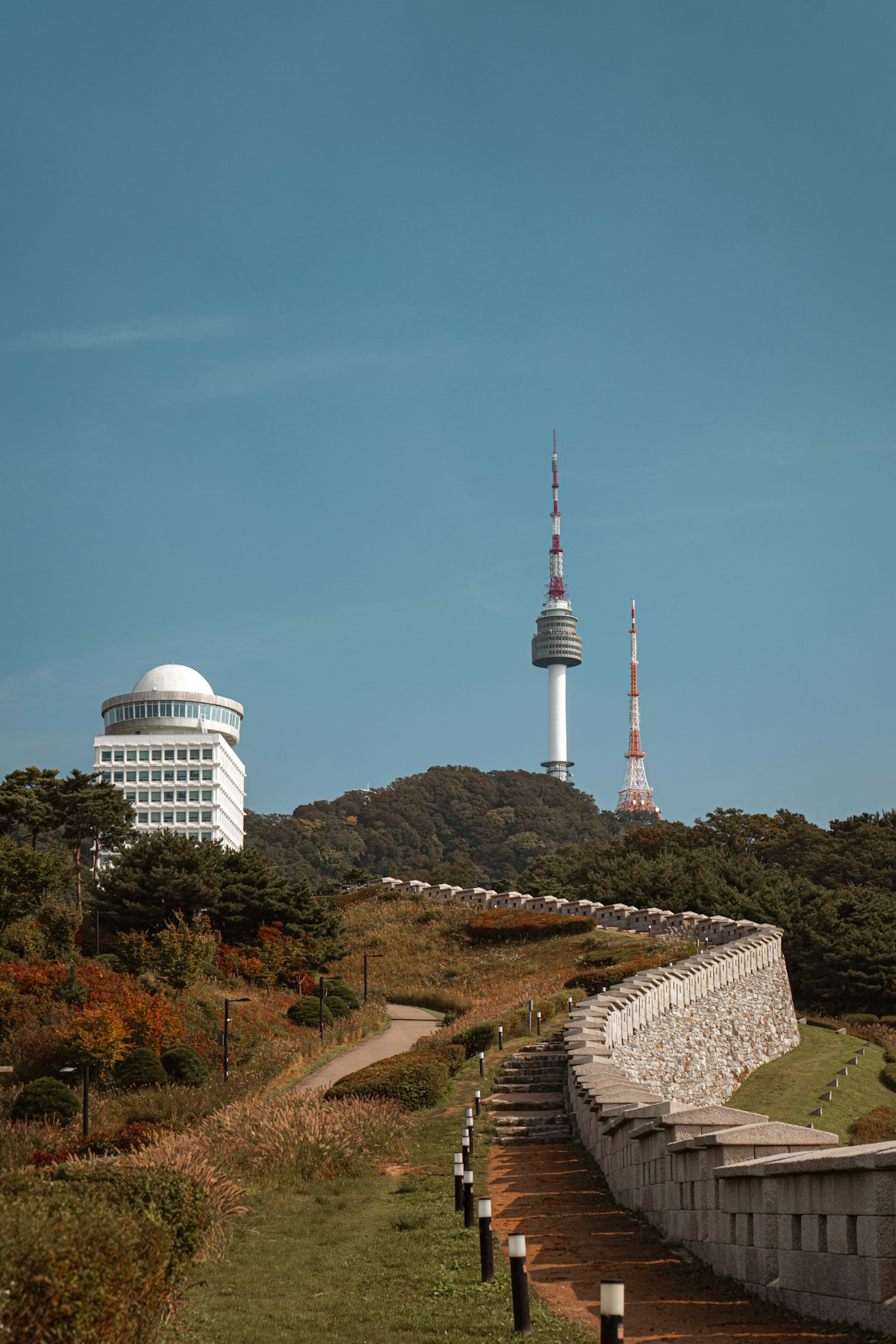
Seoul rewards a short visit. The city is dense, well-connected by metro, and its major sights cluster into walkable zones. Three days is enough to cover the historic north - palaces and hanok villages - the commercial centre, the southern Gangnam district, and a half-day DMZ excursion without feeling like a checklist exercise.
This itinerary assumes you are staying centrally, ideally near Myeongdong or Jongno. Both areas sit on multiple metro lines and keep commute times under 30 minutes to every destination listed below.
Where to Stay
Mid-range: Lotte City Hotel Myeongdong - from approximately KRW 140,000 (USD 103) per night as of 2026. Clean rooms, strong location two minutes from Myeongdong metro station (Line 4). The rooftop has Namsan Tower views.
Budget: Hotel28 Myeongdong - from approximately KRW 85,000 (USD 63) per night. Compact rooms but well-maintained, directly inside the Myeongdong shopping district. Good value for a short stay.
Upper mid-range: Glad Hotel Mapo - from approximately KRW 170,000 (USD 125) per night. Located near Hongdae, better suited if your priority is nightlife over palace access. The area has a younger atmosphere and more late-night dining options.
Day 1: Historic Seoul - Palaces, Hanok Village, and Myeongdong
Morning: Gyeongbokgung Palace and the National Folk Museum
Start at Gyeongbokgung, the largest of Seoul’s five Joseon-era palaces. The changing of the guard ceremony happens at 10:00 and 14:00 daily (except Tuesdays, when the palace is closed). Entry is KRW 3,000 (USD 2.20) per adult as of 2026. Allow 90 minutes to walk the main halls - Geunjeongjeon (throne hall), Gyeonghoeru Pavilion over the lotus pond, and the rear garden.
The National Folk Museum of Korea sits inside the palace grounds and is free with your palace ticket. It covers daily life across the Joseon Dynasty with well-labelled English displays. Budget 45 minutes.
Hanbok rental shops line the streets outside Exit 5 of Gyeongbokgung station (Line 3). Renting a traditional hanbok costs approximately KRW 15,000–25,000 (USD 11–18) for a 4-hour rental, and wearing one gets you free entry to all five palaces.
Late Morning: Bukchon Hanok Village
Walk east from Gyeongbokgung along the palace wall to Bukchon Hanok Village - approximately 15 minutes on foot. This residential area preserves several hundred traditional hanok houses on a hillside between Gyeongbokgung and Changdeokgung palaces. The main photogenic alleys are Bukchon 5-gil and 6-gil. Keep noise down - people live here. The area is free to walk.
Lunch: Insadong
Head south into Insadong, Seoul’s traditional culture street. For lunch, try Sanchon - a Buddhist temple cuisine restaurant on Insadong-gil serving a multi-course set meal of approximately 20 small dishes for KRW 35,000–45,000 (USD 26–33) per person. The food is entirely vegetarian and based on temple recipes. Alternatively, Jilsiru Tteok Cafe serves traditional rice cakes and tea from approximately KRW 8,000 (USD 6).
After lunch, walk through Insadong’s craft alleys. Ssamziegil is a multi-level courtyard of small artisan shops. Jogyesa Temple, Seoul’s chief Buddhist temple, is a 5-minute walk west - free entry, and the coloured lanterns in the courtyard are worth a brief stop.
Afternoon and Evening: Myeongdong
Take Line 3 from Anguk station two stops to Chungmuro, then walk into Myeongdong. This is Seoul’s main shopping and street food district. The street food stalls open from around 15:00 - egg bread (gyeran-bbang) costs approximately KRW 2,000 (USD 1.50), tornado potatoes approximately KRW 4,000 (USD 3), and tteokbokki (spicy rice cakes) approximately KRW 5,000 (USD 3.70).
For dinner, Myeongdong Kyoja is a Seoul institution serving kalguksu (knife-cut noodle soup) and mandu (dumplings) for approximately KRW 10,000–13,000 (USD 7–10) per dish. Expect a queue at peak hours - it moves fast.
Day 2: Namsan Tower, Itaewon, and Gangnam
Morning: Namsan Tower (N Seoul Tower)
Walk or take the Namsan cable car from Myeongdong to Namsan Tower. The cable car costs KRW 11,000 (USD 8) return as of 2026. The observation deck ticket is KRW 16,000 (USD 12) for adults. On a clear day, visibility extends to the mountains ringing the city. Go early - by mid-morning tour groups arrive in volume.
The walk up takes approximately 30 minutes from the cable car base station via the forested path. It is a pleasant route if the weather cooperates.
Lunch: Itaewon
Take Line 6 to Itaewon station. This district has Seoul’s most international dining scene. Linus’ BBQ serves American-style barbecue with Korean touches - pulled pork sandwiches from approximately KRW 16,000 (USD 12). For something more local, Passion 5 in nearby Hannam-dong is a multi-floor bakery and patisserie with a ground-floor cafe - pastries from KRW 6,000 (USD 4.40), lunch plates from KRW 18,000 (USD 13).
Walk through the Leeum Museum of Art garden (the museum requires a separate ticket at KRW 18,000 / USD 13 as of 2026) or continue south to the War Memorial of Korea - free entry, comprehensive, and often overlooked.
Afternoon: Gangnam and COEX
Take Line 6 to Samgakji, transfer to Line 4, then ride to Bongeunsa station for the southern Gangnam district. Bongeunsa Temple is directly outside the station - a working Buddhist temple surrounded by skyscrapers, free entry. Cross the road to COEX Mall, one of Asia’s largest underground shopping centres. The Starfield Library inside COEX has floor-to-ceiling bookshelves and is a strong photo stop - free and open until 22:00.
Evening: Gangnam or Return to Myeongdong
For dinner in Gangnam, Maple Tree House serves premium Korean BBQ - expect approximately KRW 35,000–50,000 (USD 26–37) per person for a full meal with pork belly and sides. Reservations recommended for weekend evenings.
If you prefer to head back north, the metro ride from COEX to Myeongdong takes approximately 25 minutes on Line 2 to Euljiro 1-ga, then a short walk.
Day 3: DMZ Tour and Hongdae Nightlife
Morning: DMZ Half-Day Tour
DMZ tours depart from central Seoul between 07:30 and 08:00. Most operators pick up from major hotels or from a central meeting point near City Hall. A standard half-day group tour costs approximately KRW 65,000–85,000 (USD 48–63) per person as of 2026, including transport, English-speaking guide, and entry to the Joint Security Area (JSA) or the Third Tunnel.
The JSA at Panmunjom is the most compelling component - you stand in the blue UN buildings straddling the border, with North Korean soldiers visible across the line. JSA access requires passport details submitted at least 3 days in advance. Dress code applies: no flip-flops, sleeveless shirts, or torn clothing.
The tour returns to Seoul by approximately 13:00–14:00.
Afternoon: War Memorial or Free Time
If you skipped the War Memorial of Korea on Day 2, the afternoon is a good slot. It is at Samgakji station (Line 4/6), free entry, and open 09:30–18:00 (closed Mondays). The outdoor exhibits include aircraft, tanks, and a naval vessel.
Alternatively, use the afternoon for shopping in Dongdaemun (Line 2/4, Dongdaemun History and Culture Park station). The large malls here - Doota, Migliore, APM - are open until late. Prices run lower than Myeongdong for clothing.
Evening: Hongdae
Take Line 2 to Hongik University station. Hongdae is Seoul’s main nightlife and live music district, centred on the streets between the station and Hongik University’s front gate. Street performers set up from around 18:00 on weekend evenings in the Hongdae Playground area.
For dinner, Menya Sandaime serves excellent tonkotsu ramen from approximately KRW 10,000 (USD 7). For Korean food, Yeonnam-dong 223-14 - a few minutes north in the Yeonnam-dong area - serves creative Korean-Western fusion plates from approximately KRW 14,000 (USD 10).
Bars and clubs cluster along the main strip. Entry to most clubs is KRW 10,000–20,000 (USD 7–15) and usually includes one drink. The area stays active until 04:00–05:00 on Friday and Saturday nights.
Budget Summary (Per Person, 3 Days)
| Category | Budget | Mid-Range |
|---|---|---|
| Accommodation (3 nights) | KRW 255,000 (USD 189) | KRW 420,000 (USD 309) |
| Food | KRW 90,000 (USD 66) | KRW 150,000 (USD 110) |
| Transport (metro + cable car) | KRW 25,000 (USD 18) | KRW 25,000 (USD 18) |
| Attractions + DMZ tour | KRW 90,000 (USD 66) | KRW 105,000 (USD 77) |
| Total | KRW 460,000 (USD 339) | KRW 700,000 (USD 514) |
Transport Tips
Purchase a T-money card at any convenience store (blank card KRW 2,500 / USD 1.80, rechargeable). A single metro ride costs approximately KRW 1,350 (USD 1) as of 2026. The card also works on buses and in convenience stores for small purchases.
Seoul’s metro operates from approximately 05:30 to midnight. Lines 1 through 9 cover the entire central city. Google Maps works for route planning, but the Naver Map app gives more accurate Korean transit times and walking directions.
Book tours and activities in Seoul through GetYourGuide. If you’re planning close to your travel dates, our last-minute tours page lists options with same-day or next-day availability.
Get an eSIM for South Korea with Airalo so you have data from the moment you land.
Book trains and buses between cities through the KORAIL website or at station ticket counters.
Before and After Seoul
The Seoul travel guide covers all the neighbourhoods, food culture, and transport links in detail. For longer visits, the 1-week South Korea itinerary extends this 3-day Seoul base into a full country circuit. Add a day trip with the day trips from Seoul guide - Suwon Fortress, Nami Island, and the DMZ are all accessible without an overnight stay.
Book Your Trip
- Flights - Find the best fares to South Korea
- Travel Insurance - Get covered before you go
- eSIM - Stay connected from landing
- Airport Transfers - Pre-book your transfer from Incheon International Airport
- Car Rental - Compare prices across providers
- Tours & Activities - Browse South Korea tours on GetYourGuide