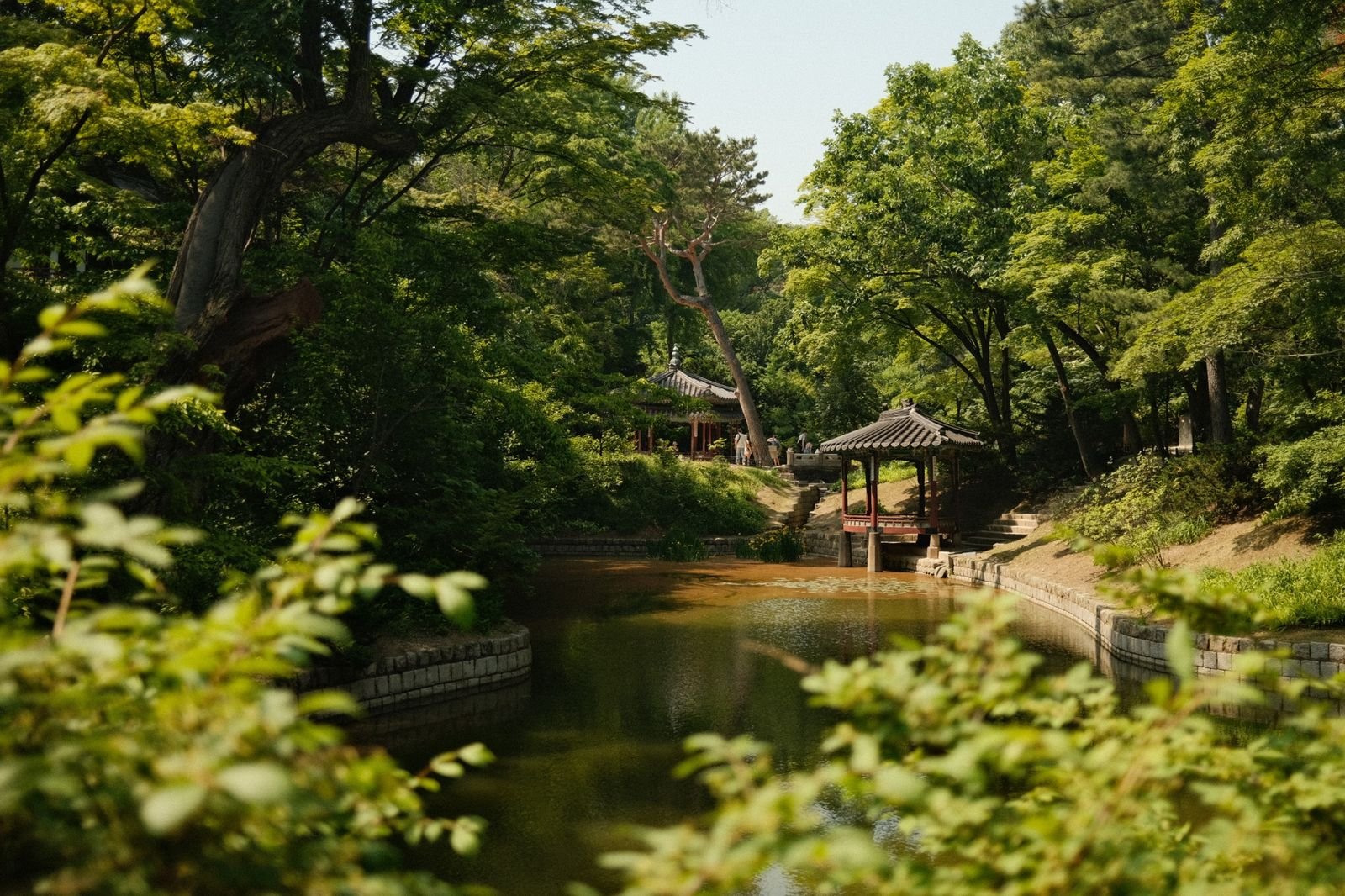
Seoul has five Joseon-era royal palaces, and they are not interchangeable. Gyeongbokgung is the one most visitors mean when they search for a palace, but Changdeokgung, Changgyeonggung, Deoksugung and Gyeonghuigung each offer something different, from a UNESCO-listed garden to a stone Western-style hall beside a Korean one. This guide covers Gyeongbokgung in detail, then the other four, with tickets, closed days, guard ceremonies and night openings, so you can decide which to visit and in what order.
Which palace to visit: quick comparison
| Palace | Best for | Admission (as of 2026) | Closed |
|---|---|---|---|
| Gyeongbokgung | First visit, guard ceremony, museums | KRW 3,000 | Tuesday |
| Changdeokgung | UNESCO buildings, Secret Garden | KRW 3,000 (Secret Garden +KRW 5,000) | Monday |
| Changgyeonggung | Quiet walk, greenhouse, evening light | KRW 1,000 | Monday |
| Deoksugung | Evening visit, stone hall, central location | KRW 1,000 | Monday |
| Gyeonghuigung | Short free stop | Free | Monday |
Prices change, and a fee increase has been discussed for 2027 but not confirmed, so check the Royal Palaces and Tombs Center before you go. With only one day, pair Gyeongbokgung in the morning with Changdeokgung or Deoksugung later. We include the palaces in our 3 days in Seoul itinerary, and our Seoul things to do page shows how they fit with the rest of the city.
Gyeongbokgung Palace
Built in 1395, Gyeongbokgung was the main palace of the Joseon dynasty and is the largest of the five, covering about 410,000 square metres. Most of what you see today is a reconstruction after destruction in the Japanese invasions and the colonial period, which is why the buildings look crisp rather than weathered. The grounds are best walked in a line from Gwanghwamun gate through to the lotus-pond pavilion at the back.
What to see:
- Gwanghwamun and Heungnyemun gates: the ceremonial entrance, with Gwanghwamun Square outside.
- Geunjeongjeon: the throne hall, raised on a two-tier stone platform. It is the building on most postcards.
- Gyeonghoeru Pavilion: a banquet hall on stone columns over a pond. Go here for the best photographs.
- Hyangwonjeong: a small two-storey pavilion in the rear garden, reached by a wooden bridge.
- National Folk Museum and National Palace Museum: both inside the grounds and free with palace admission. Allow 45 minutes for the Folk Museum.
Practical details:
- Admission: KRW 3,000 per adult as of 2026, or free in a hanbok.
- Guard-changing ceremony: at the Gwanghwamun gate at 10:00 and 14:00 daily except Tuesday. It is free to watch and can be cancelled for heavy rain, severe dust or demonstrations.
- Closed: Tuesdays. Opening hours shift with the season, roughly 09:00 to 17:00 in winter and later in summer, so confirm before you go.
- Getting there: Gyeongbokgung Station (Line 3, Exit 5) is next to the gate. Gwanghwamun Station (Line 5) is the alternative. See our T-money card guide for fares.
- Time needed: 90 minutes for the main halls, or half a day with the museums.
Arrive just before 09:00 on a weekday and you will have the throne hall mostly to yourselves before the tour groups arrive around 10:00.
Wearing a hanbok
Visitors in a hanbok enter Gyeongbokgung free, which more than covers the cost of a short rental. Shops cluster near Gyeongbokgung and Anguk stations. Our hanbok rental near Gyeongbokgung guide has prices, what is included and how to book ahead, and you can reserve a hanbok on Klook before you travel.
Changdeokgung Palace and the Secret Garden
Changdeokgung was the preferred residence of Joseon kings for much of the dynasty, and it is a UNESCO World Heritage Site. Unlike Gyeongbokgung, its buildings follow the contours of the hillside rather than a rigid axis, so it feels more organic and older. Admission is KRW 3,000 as of 2026, and the palace is closed on Mondays.
The reason many visitors choose it over Gyeongbokgung is Huwon, the Secret Garden. This rear garden of ponds, lotus pavilions and old trees is entered only on timed guided tours, around 70 minutes in English, for an extra approximately KRW 5,000. Booking opens about six days ahead and a share of places are sold at the gate, but popular slots fill in cherry blossom and autumn foliage season. The garden is excluded from the combined ticket and from free hanbok entry. Autumn is the standout time; see our Seoul autumn foliage guide.
The nearest station is Anguk (Line 3, Exit 3). It combines naturally with Bukchon Hanok Village and Insadong on foot.
Changgyeonggung Palace
Changgyeonggung sits next to Changdeokgung and is connected to it historically, but gets a fraction of the visitors. Admission is only KRW 1,000 as of 2026 and it is closed on Mondays. It is a good choice if you want somewhere calm, with a pond, a Western-style greenhouse and tree-lined paths.
It normally stays open until 21:00, so it suits a late afternoon visit after Gyeongbokgung. In October 2026 it hosted a seasonal evening light show, Mulbit Yeonhwa, with a small ticket and separate online booking for some areas. Whether it returns in 2027 is not yet confirmed. The nearest station is Hyehwa (Line 4) or you can walk from Changdeokgung.
Deoksugung Palace
Deoksugung is the only palace in the middle of the modern city, a few minutes from City Hall station (Lines 1 and 2). Its fusion of Korean halls and early 20th-century Western-style stone buildings reflects the Korean Empire period, and the stone-walled lane outside is a favourite for a short stroll.
Admission is KRW 1,000 as of 2026, it is closed on Mondays, and it is open late, normally until 21:00. That makes it the best palace for an evening, when the buildings are lit. The Daehanmun gate hosts a guard-changing ceremony at 11:00 and 14:00 daily except Mondays, which is a good alternative if you missed the Gyeongbokgung one. Allow 45 to 60 minutes.
Gyeonghuigung Palace
Gyeonghuigung is the least visited and the only one that is free. Much of it was demolished during the colonial era and rebuilt later, so it is smaller and quieter than the others. It is closed on Mondays and takes 20 to 30 minutes. Visit it only if you are walking from Gwanghwamun to the Seoul Museum of History nearby, or want to tick off all five.
Combination ticket and free entry
The integrated palace ticket costs approximately KRW 6,000 as of 2026. It gives one entry each to Gyeongbokgung, Changdeokgung, Changgyeonggung, Deoksugung and Jongmyo Shrine, against KRW 9,000 for individual tickets. It excludes the Secret Garden. Older guides quote KRW 10,000 and a three-month window; recent sources give a longer window, so read the validity printed on your ticket at the booth and plan accordingly.
It is worth buying only if you will visit three or more of the five. Visit Gyeongbokgung and Changdeokgung only, and two single tickets cost KRW 6,000, so there is no saving.
Free entry:
- Visitors in a full hanbok enter the palaces free.
- Foreign visitors aged 18 or under and 65 or over are free.
- Changdeokgung, Changgyeonggung, Jongmyo and Deoksugung have been free on Wednesdays in recent months, according to recent heritage notices. Gyeongbokgung is not part of that scheme, though it has free admission on the last Wednesday of the month.
- Check the official site for any festival periods when palace admission is waived.
Night openings
Gyeongbokgung runs a limited night viewing season, typically a few weeks in spring and again in autumn, with tickets sold separately for the evening session. The 2026 autumn run ended on 2 October, and dates for 2027 had not been announced when we wrote this, so check the official site in early spring. Night sessions are popular and sell out online.
If you want an evening visit outside those weeks, Deoksugung and Changgyeonggung stay open until 21:00 as standard, with Deoksugung the more convenient.
Suggested routes
- Half day: Gyeongbokgung at 09:00, with the 10:00 guard change, then lunch in Insadong or Samcheong-dong.
- One day: Gyeongbokgung in the morning, then Changdeokgung for a booked Secret Garden slot in the afternoon, and Bukchon on the way.
- Two days: the above plus Changgyeonggung and Deoksugung at dusk.
A guided tour adds historical context that signs do not give. Compare Seoul palace and city tours if you want a guide, and stay in Jongno or Myeongdong to be within walking distance; see where to stay in Seoul. Start from our Seoul city guide for the wider picture.
For stops that cost nothing, see our 7 free things to do in Seoul, which includes the guard ceremony and Gyeonghuigung.