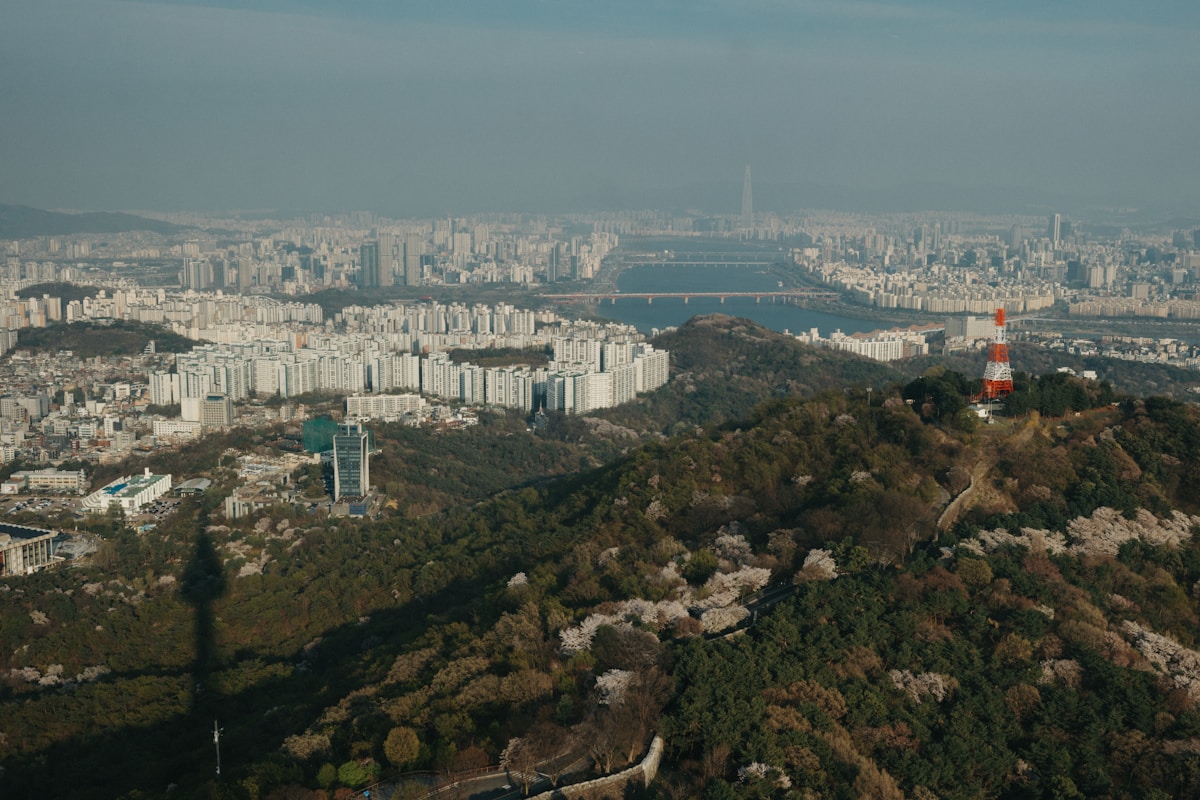
Seoul is one of Northeast Asia’s most accessible mega-cities for visitors — a dense subway network, a wide spread of international hotels, and accommodation options across every price band from hostel dorms to five-star towers. The challenge is not finding somewhere to stay but choosing which district works best for your travel style.
Seoul’s Main Accommodation Neighbourhoods
Myeongdong is Seoul’s most visited tourist district and the most popular base for first-time visitors. The shopping strip runs for about 1km, bordered by street food vendors in the evenings. Namsan Tower is a short cable car or walk away, and the subway connections from Myeongdong Station (Line 4) reach Gyeongbokgung Palace in around 20 minutes. Hotels here are plentiful but sell out quickly in peak season.
Insadong and Jongno sit north of Myeongdong and cover Seoul’s traditional quarter — teahouses, antiques, craft galleries, and the Bukchon Hanok Village walking circuit. This area suits travellers who want slower-paced, heritage-focused days. Prices are marginally lower than Myeongdong for equivalent quality, and the atmosphere is noticeably calmer.
Hongdae is a university district centred on Hongik University, known for live music venues, indie cafes, street performances, and affordable eating. It is the natural base for younger travellers and those who want to engage with Seoul’s creative culture. The area connects to Incheon Airport by AREX and to the rest of Seoul by Lines 2, 6, and the Gyeongui–Jungang Line.
Gangnam is Seoul’s business and upmarket residential district, south of the Han River. It is less photogenic than the old centre but efficient for business travellers — well-connected by subway (Lines 2, 3, 7, 9), and home to several of Seoul’s major international hotel chains. Rates can actually be competitive with Myeongdong for mid-range bookings outside peak season.
Itaewon and Yongsan sit between the old centre and Gangnam. Itaewon is Seoul’s most internationally diverse neighbourhood, with foreign restaurants, rooftop bars, and a well-established English-language culture. The Leeum Samsung Museum of Art is nearby. It suits travellers who want a slightly alternative base with easy subway access to the rest of the city.
Budget Hotels: Approximately KRW 50,000–130,000 Per Night (USD 37–97)
Ibis Ambassador Myeongdong — An Accor budget brand hotel in the heart of Myeongdong, steps from Exit 6 of Euljiro 1-ga Station. Reliable international standards, breakfast available, and a consistent choice for solo and couple travellers on a mid-week budget. From approximately KRW 70,000–130,000 per night as of 2026.
Ibis Styles Ambassador Seoul Myeongdong — The Ibis Styles variant in Myeongdong, a short walk from Myeongdong Station Exit 5. Slightly more design-forward than the standard Ibis, with a café and slightly larger room formats. From approximately KRW 80,000–140,000 per night as of 2026.
Ibis Ambassador Seoul Insadong — A quieter option in the Insadong/Jongno area, renovated in 2025 and well-suited to travellers who prefer a heritage neighbourhood base over the Myeongdong hustle. From approximately KRW 65,000–120,000 per night as of 2026.
What to Expect at the Budget End
Seoul’s budget hotels generally offer clean, compact rooms with reliable Wi-Fi and air conditioning. The Ibis Ambassador group is well-distributed across the city and maintains consistent standards. Independent guesthouses and hostels in Hongdae and Insadong offer more local character at the lower end of the price range, typically from around KRW 25,000 for dorm beds and KRW 55,000–90,000 for private rooms.
Mid-Range Hotels: Approximately KRW 130,000–300,000 Per Night (USD 97–225)
L7 Hongdae by LOTTE — A design-forward lifestyle hotel in the Hongdae district from the Lotte group’s boutique-positioning brand. Rooftop bar, good in-house dining, and a young, well-travelled clientele. The airport AREX from Incheon stops at Hongik University Station directly below. From approximately KRW 140,000–250,000 per night as of 2026.
L7 Myeongdong by LOTTE — The Myeongdong sister property to L7 Hongdae, located within the main shopping district. Rooftop views of Namsan Tower, sleek rooms, and the Lotte brand reliability. An excellent mid-range choice for travellers who want to be in the Myeongdong core without paying luxury rates. From approximately KRW 150,000–280,000 per night as of 2026.
Novotel Ambassador Seoul Gangnam — A solid upper-mid-range choice in Gangnam, beside Sinnonhyeon Station (Line 9). Multiple dining options, an indoor pool, and a professional business atmosphere. Consistently strong guest ratings make it one of the better-value mid-range options for business travellers or anyone based south of the Han River. From approximately KRW 160,000–290,000 per night as of 2026.
Luxury Hotels: Approximately KRW 320,000–800,000+ Per Night (USD 240–600+)
Lotte Hotel Seoul (Myeongdong) — Seoul’s flagship Lotte property, attached to Lotte Department Store and connected to Euljiro 1-ga Station. Multiple restaurants, a casino (non-Korean nationals only), a fitness centre, and a dedicated shopping mall access. Consistently rated as one of Seoul’s most complete five-star experiences for the Myeongdong location. From approximately KRW 380,000–650,000 per night as of 2026.
Four Seasons Hotel Seoul (Gwanghwamun) — Adjacent to Gyeongbokgung Palace, Sejong Arts Centre, and Cheonggyecheon Stream, this is Seoul’s most sightseeing-convenient luxury hotel. Five dining outlets, a large spa, and palace-adjacent views from upper floors. A strong choice for cultural travellers who want the five-star experience in the historic core. From approximately KRW 450,000–800,000+ per night as of 2026.
JW Marriott Hotel Seoul (Gangnam) — Set above Seoul Express Bus Terminal and Shinsegae Department Store, with Lines 3, 7, and 9 beneath the building. Seven dining venues, an indoor pool, and 24-hour room service. Gangnam location suits business travel; the subway connections offset the south-of-river position for leisure visitors. From approximately KRW 350,000–700,000 per night as of 2026.
Getting to Your Hotel from Incheon Airport
The AREX Express Train is the fastest option from Incheon Airport to Seoul Station (approximately 43 minutes, KRW 9,500 as of 2026). From Seoul Station, transfer to Line 1 or Line 4 for Myeongdong, or Line 1 for Jongno and Insadong. For Hongdae, take the AREX all-stops train to Hongik University Station (approximately 66 minutes, KRW 4,950 as of 2026).
Airport limousine buses run directly from both Incheon terminals to Gangnam, Hongdae, Myeongdong, and Jongno. Journey time is 60-80 minutes depending on traffic; fares are approximately KRW 9,000-17,000 as of 2026. These are the most convenient option for travellers with heavy luggage.
For the Gimpo Domestic Airport (for arrivals from Busan, Jeju, or other Korean cities), Line 5 and Line 9 connect directly to Yeouido and Hongdae, with onward subway connections to the rest of the city.
See our Incheon Airport transfer guide for full route options and current fares.
Getting Around Seoul
Seoul’s subway network is one of the most comprehensive in Asia — 23 lines covering every major district. A T-money transit card (available at all airport and subway station convenience stores) covers subway, bus, and some taxis with a small fare discount. Individual fares start at approximately KRW 1,400 as of 2026.
Taxis are metered, plentiful, and generally reliable. Standard taxis are silver or white; Kakao Taxi (app-based) is the easiest booking method for non-Korean speakers and accepts international cards.
Walking is viable within individual districts — Myeongdong to Insadong takes about 20 minutes on foot. The Han River parks are well-connected by bike-sharing (Seoul Bike, known as Ttareungyi).
Booking Tips
Book Seoul accommodation at least four to six weeks ahead for the cherry blossom peak (late March to early April), Golden Week (late April to early May), and the Chuseok holiday (dates shift annually, typically September to October). For December to January, the New Year period drives demand in Myeongdong especially.
Shoulder seasons — late May to mid-June, and September to early October (avoiding Chuseok) — offer the best combination of weather and reasonable rates. Monsoon season (late June to mid-August) brings lower rates but high humidity and rainfall.
For tours and activities from Seoul — DMZ tours, K-culture experiences, day trips to Suwon Hwaseong or Nami Island — see our Seoul activities and tours guide.