Seoul Travel Guide
Street food in Gwangjang Market, palaces in Bukchon, indie music in Hongdae, and night views from N Seoul Tower - four days in Korea's capital.
Guides for Seoul
Seoul is the capital and largest city of South Korea, home to around 10 million people within the city limits and nearly 26 million across the broader metropolitan area. It sits on the Han River, flanked by granite mountains that provide hiking trails within reach of the city centre. The city moves at pace - its food culture, fashion, nightlife, and technology scene attract visitors from across Asia and beyond.
The city holds five UNESCO-listed royal palaces from the Joseon dynasty (1392–1910), along with one of the world’s densest concentrations of street food, a formidable café culture, and some of the most technically advanced public infrastructure in Asia.
Getting to Seoul
Incheon International Airport (ICN), located on an island about 60 km west of central Seoul, handles the vast majority of international flights. From the airport, the AREX (Airport Railroad Express) runs direct trains to Seoul Station in approximately 43 minutes. All-stop trains take around 66 minutes and cost significantly less. Limousine buses serve specific hotel districts throughout the city. Taxis are available but the journey can cost KRW 60,000–80,000 depending on traffic.
Gimpo Airport (GMP) handles domestic routes plus limited services to Tokyo, Osaka, Beijing, and Shanghai. It connects to central Seoul via metro in around 30 minutes.
Key Neighbourhoods
Jongno and Gwanghwamun - the historical and administrative heart of the city, home to Gyeongbokgung Palace, Cheonggyecheon Stream, and Bukchon Hanok Village. This is where much of Seoul’s Joseon-era heritage is concentrated.
Myeongdong - the main shopping and cosmetics district. Pedestrian streets fill with street food vendors in the evenings. Expect crowds most days.
Insadong and Bukchon - craft galleries, teahouses, and traditional Korean architecture. Bukchon Hanok Village is one of the few areas in Seoul where traditional tile-roofed houses (hanok) remain in residential use.
Hongdae - the university arts district, centre of independent music, street performances, and late-night bars. Dense with cafés and fashion boutiques aimed at a younger crowd.
Gangnam - the affluent district south of the Han River, associated with high-end shopping, corporate headquarters, and the COEX convention complex. The neighbourhood gave its name to the 2012 K-pop track that briefly occupied the global consciousness.
Itaewon - the city’s most international neighbourhood, historically catering to US military personnel and now home to diverse restaurants, boutique bars, and LGBTQ venues.
Top Things to Do
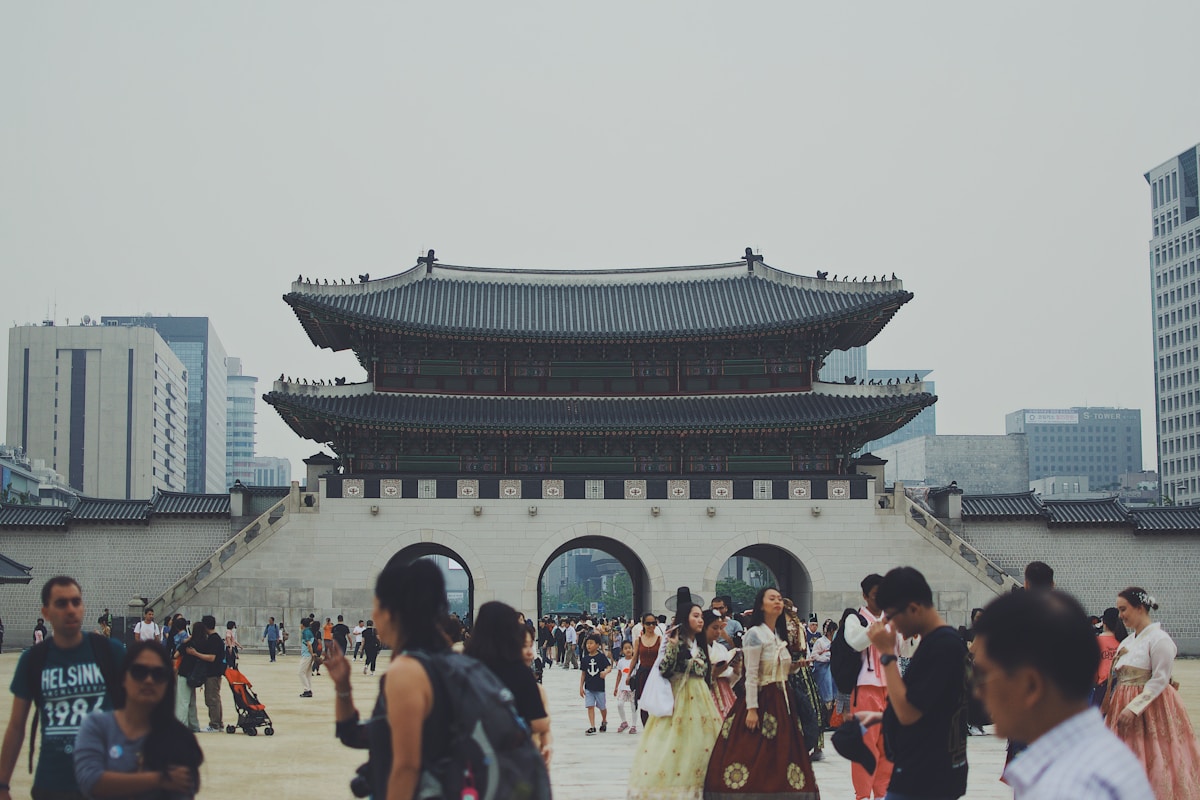
Gyeongbokgung Palace - the largest of Seoul’s five royal palaces, built in 1395 and substantially restored after Japanese colonial-era destruction. The changing of the royal guard ceremony runs at 10:00 and 14:00 most days. The adjoining National Folk Museum is free with palace admission.
Bukchon Hanok Village - a residential area of several hundred traditional Korean houses on the hill between Gyeongbokgung and Changdeokgung palaces. Narrow alleys reward slower exploration; the upper sections have views over tiled rooftops toward Namsan Tower.
Namsan Tower (N Seoul Tower) - a 236-metre communication and observation tower on Namsan Mountain, reachable by cable car or a 30-minute walk through parkland. The tower offers city views in all directions. The surrounding mountain park is popular for evening walks.
Cheonggyecheon Stream - an 11 km urban waterway restored in 2005 after decades as a raised motorway. The streamside walkway runs through central Seoul and is busy with walkers and cyclists in the evenings.
Noryangjin Fish Market - a wholesale and retail fish market operating around the clock. Visitors can select fresh fish, crab, or shellfish from the stalls and have it prepared in restaurants upstairs. Early mornings are most atmospheric.
Where to Stay in Seoul
For accommodation options across all budgets, see our Seoul hotels guide.
Food and Drink
Seoul’s food scene runs from early-morning pojangmacha (street stalls) through to high-end tasting menus. Korean BBQ - grilling samgyeopsal (pork belly) or bulgogi (marinated beef) at the table - is as central to a Seoul visit as any landmark. The Mapo district and Sinchon are reliable areas for grill restaurants.
Gwangjang Market in Jongno is one of the oldest traditional markets in Seoul and a strong reference point for Korean street food: bindaetteok (mung bean pancakes), mayak gimbap (small seaweed rice rolls), and yukhoe (seasoned raw beef) are the staples to try.
Café culture in Seoul is more elaborate than almost anywhere else in the world - rooftop cafés, dessert cafés, specialty espresso bars, and concept cafés occupy every district. Specialty coffee in particular has a serious following.
For tours and activities in Seoul, see tours in Seoul. Booking within the next few days? Our last-minute tours page tracks current availability across Seoul’s most popular experiences.
Seoul Guides
Detailed guides covering everything you need to plan your time in the city:
- Things to Do in Seoul - palaces, DMZ tours, Han River parks, and N Seoul Tower with entry fees
- Best Hotels in Seoul - named properties from budget guesthouses to luxury five-star options
- Seoul Food Guide - bibimbap, bulgogi, tteokbokki, Korean BBQ, and the best markets
- Seoul Café Culture - specialty coffee, concept cafés, and rooftop spots across every district
- Nami Island Day Trip - how to get there, entry fees, and what to expect
For a comparison of Seoul and Busan as travel destinations, see our Seoul vs Busan guide.
Planning day trips from the capital? Our day trips from Seoul guide covers Nami Island, the DMZ, Suwon Fortress, and the most popular half-day and full-day excursions. For hands-on cultural experiences, Korean cooking classes in Seoul offer guided sessions covering kimchi, tteok, and traditional recipes.
Deciding between Seoul and nearby cities? Our Seoul vs Incheon comparison covers what each city offers beyond the airport, how to get between them, and whether Incheon deserves more than a layover. We also break down Seoul vs Busan for travellers trying to decide which city to base themselves in - or how to split time between both.
Upcoming Events in Seoul
Jinju Lantern Festival 2026
Jinju Lantern Festival 2026 runs 3 to 12 October on the Nam River. Paper lanterns mark the 1592 Battle of Jinju: tickets, schedule, and how to get there.
Seoul Lantern Festival 2026
seoul
Seoul Lantern Festival 2026, 6 to 22 November. Illuminated installations and floating paper lanterns fill Cheonggyecheon Stream across Seoul.
Frequently Asked Questions
- How many days do you need in Seoul?
- Most visitors find four to five days enough to cover the main areas without rushing. A week gives you time to explore neighbourhoods like Hongdae, Bukchon, and Itaewon at a slower pace.
- Is Seoul expensive to visit?
- Seoul is mid-range by Asian standards. Street food and public transport are cheap, but designer cafes, craft beer bars, and high-end Korean BBQ can add up quickly. Budget travellers can manage on around US$50–60 per day.
- What is the best way to get around Seoul?
- The metro (subway) is the backbone of Seoul transport - extensive, clean, and very affordable. T-money cards work across metro, bus, and some taxis. Taxis are inexpensive by European standards and widely available.
- Do I need to speak Korean in Seoul?
- English is spoken at most hotels, tourist sites, and larger restaurants. Away from tourist areas, a translation app helps. Metro signs are bilingual throughout the city.
Book an experience
Top experiences in Seoul
Explore the best tours and activities in Seoul, with instant confirmation and free cancellation on most bookings.