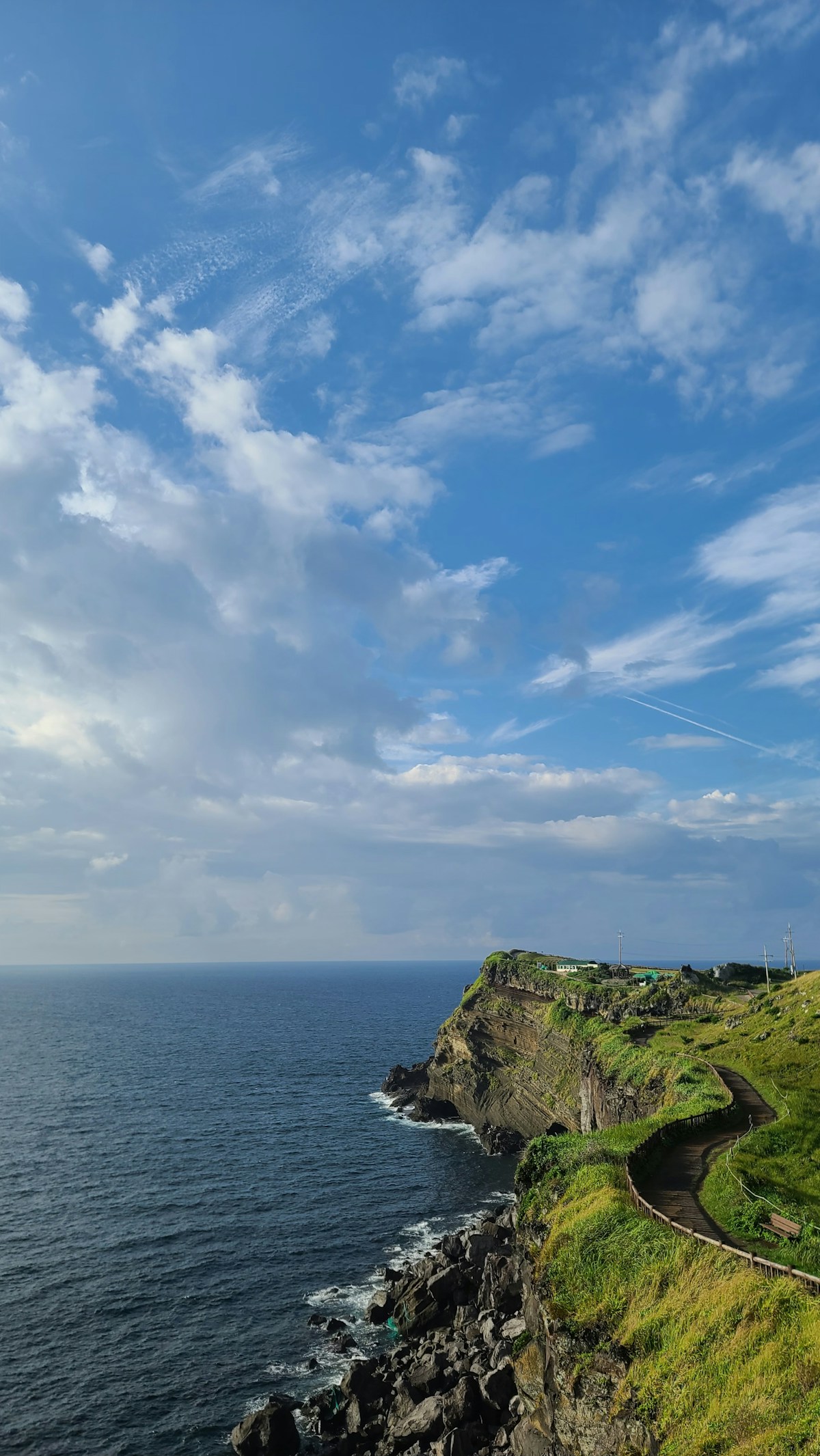
Renting a car in South Korea gives you access to parts of the country that trains and buses simply don’t reach well - the east coast cliffs around Gangwon-do, the back roads of Gyeongsang-do’s countryside, and Jeju Island’s volcanic landscape. Public transport is excellent between cities, but a car unlocks the space between them.
This guide covers the agencies to know, what to expect on pricing, licence requirements, and the practical details that catch first-time renters in Korea off-guard.
Which Agencies to Use
Korea has a mix of large domestic operators and international chains. The domestic agencies tend to offer better rates in country; international brands give you a familiar online booking experience and consistent insurance standards.
Lotte Rent-a-Car is South Korea’s largest domestic rental company and the most widely available outside Seoul - branches at most major airports, train stations, and city centres. Pricing is competitive: a standard compact (e.g. Hyundai Avante) starts at approximately KRW 45,000–60,000 per day as of 2026, with larger SUVs from KRW 90,000–130,000 per day. The website has an English-language option, though the booking flow can be clunky for overseas credit cards. Calling the branch directly or booking through a third-party aggregator avoids most friction.
SK Rent-a-Car is another major domestic player with a strong presence in Seoul, Busan, and Jeju. Rates are broadly similar to Lotte, and SK has a reputation for newer vehicles. English support at major branches is reasonable. The SK website works best with Korean cards; for international cards, GetRentacar or a similar aggregator is the more reliable booking route.
Jeju Rent-a-Car is a regional operator based solely on Jeju Island. It’s not a single company but rather a collective term for dozens of small independent rental firms clustered around Jeju Airport’s arrivals exit. Rates are typically 10–25% lower than national chains for Jeju bookings. Vehicle condition and service quality vary - look for firms with 4.0+ Google reviews and book in advance during summer and peak cherry-blossom season (late March to early April), when Jeju rentals sell out completely.
International chains (Hertz, Avis, Budget, Enterprise) operate at Incheon International Airport and some Seoul locations. Rates run 15–30% higher than domestic operators for equivalent vehicles, but the advantage is straightforward booking with international cards and standardised insurance documentation useful for expense reports.
What Does Car Rental Cost in Korea?
Prices vary by vehicle class, season, and rental duration. The figures below are approximate daily rates as of 2026 for a 3-day rental:
| Vehicle type | Approximate daily rate (KRW) | USD equivalent |
|---|---|---|
| Economy (Kia Morning, Hyundai i10) | 35,000–50,000 | $26–37 |
| Compact (Hyundai Avante, Kia K3) | 50,000–70,000 | $37–52 |
| Mid-size SUV (Tucson, Sportage) | 80,000–120,000 | $59–89 |
| Large SUV (Santa Fe, Sorento) | 120,000–180,000 | $89–133 |
| Minivan (Staria, Carnival) | 130,000–200,000 | $96–148 |
Rates are typically 20–30% higher during Korean school holidays (late July to mid-August) and Chuseok/Seollal (Lunar New Year). Book 2–3 weeks ahead for summer and major holiday periods.
Insurance: Basic collision damage waiver (CDW) is usually included in quoted rates, but the excess (자기부담금) can be KRW 500,000–1,000,000. Reducing the excess to zero costs approximately KRW 10,000–20,000 per day extra. Personal accident insurance is a further optional add-on. Check whether your home travel insurance or credit card covers rental car excess before paying for the full waiver.
Fuel: Korea uses the same petrol grades as most of Asia - 휘발유 (gasoline/petrol) and 경유 (diesel). Petrol price was approximately KRW 1,650–1,750 per litre as of 2026. Most rental cars run on petrol unless booked as a diesel or electric vehicle.
Tolls: Korea’s motorway network uses electronic toll collection (Hi-pass). Rental cars may include a Hi-pass transponder; check at pickup. Without Hi-pass, you pay at staffed booths using cash or card. A Seoul–Busan motorway run is approximately KRW 15,000–18,000 each way in tolls.
Licence Requirements
You need a valid national driving licence from your home country plus an International Driving Permit (IDP). Korea accepts IDPs issued under the 1949 Geneva Convention. Most countries issue Geneva Convention IDPs via automobile clubs (AA, AAA, RAC, CAA, etc.) for a small fee - they are not issued at embassies or on arrival. Get one before you travel.
Age requirements: Most agencies require drivers to be at least 21 years old. Some impose a young driver surcharge (추가 요금) for drivers under 26, typically KRW 10,000–15,000 per day.
Rental duration: Minimum rental is usually 24 hours. Some Jeju operators rent by the half-day (12 hours) during peak season.
Driving Practicalities
Korea drives on the right, like Europe and North America. Road signs are bilingual in Korean and English on major routes and highways; in rural areas, some signs may be Korean only. Google Maps and Naver Maps both work well for navigation - Naver Maps is more accurate for Korean rural roads and parking.
Speed limits: 100–110 km/h on motorways, 70–80 km/h on national routes, 50 km/h in cities (reduced to 30 km/h in school zones and residential areas). Speed cameras are frequent and well-signposted; fines are steep.
Parking: Most urban parking is paid and either metered or managed by an attendant. Major department stores and shopping centres offer underground parking, typically KRW 1,000–3,000 per 30 minutes. In smaller cities and rural towns, parking is generally free and plentiful.
Petrol stations: Available throughout the country - GS Caltex, S-Oil, and SK Energy are the main chains. Self-service pumps have a Korean-language interface; filling stations on major routes usually have an English option or staff who can assist.
Driving on Jeju Island
Jeju is the most popular destination for car rental in Korea. The island is roughly 73 km east-to-west and 41 km north-to-south, making it easy to cover in 2–3 days by car.
The main 1132 circular coastal road rings the entire island and is clearly signed. Inland roads to Hallasan and the lava tube caves are well-paved. Parking at Seongsan Ilchulbong, Manjanggul Cave, and Cheonjeyeon Falls has a fee (approximately KRW 1,000–2,500 per vehicle).
Rental agencies at Jeju Airport are clustered immediately outside the arrivals exit. In peak season (July–August, late March to early April), queues form and popular vehicle classes sell out - pre-booking 2–3 weeks ahead is essential.
Booking Tips
- Book online before arrival - walk-up rates at airport counters are typically 20–40% higher than advance bookings.
- For international cards, use an aggregator like GetRentacar rather than booking directly with Korean agencies whose payment systems often reject non-Korean cards.
- Photograph the vehicle thoroughly before driving - front, rear, all four sides, wheel arches - and confirm any pre-existing damage is noted on the rental agreement.
- Refuel to the same level as when collected. Most agencies charge a premium (approximately KRW 400–500 per litre above pump price) for any missing fuel.
- Return cars at least 30 minutes before your flight - airport rental return areas can have queues during peak periods.
Plan Your Trip
✈️ Book your flights to South Korea 🛡️ Get travel insurance 📱 Stay connected with an eSIM 🚗 Rent a car