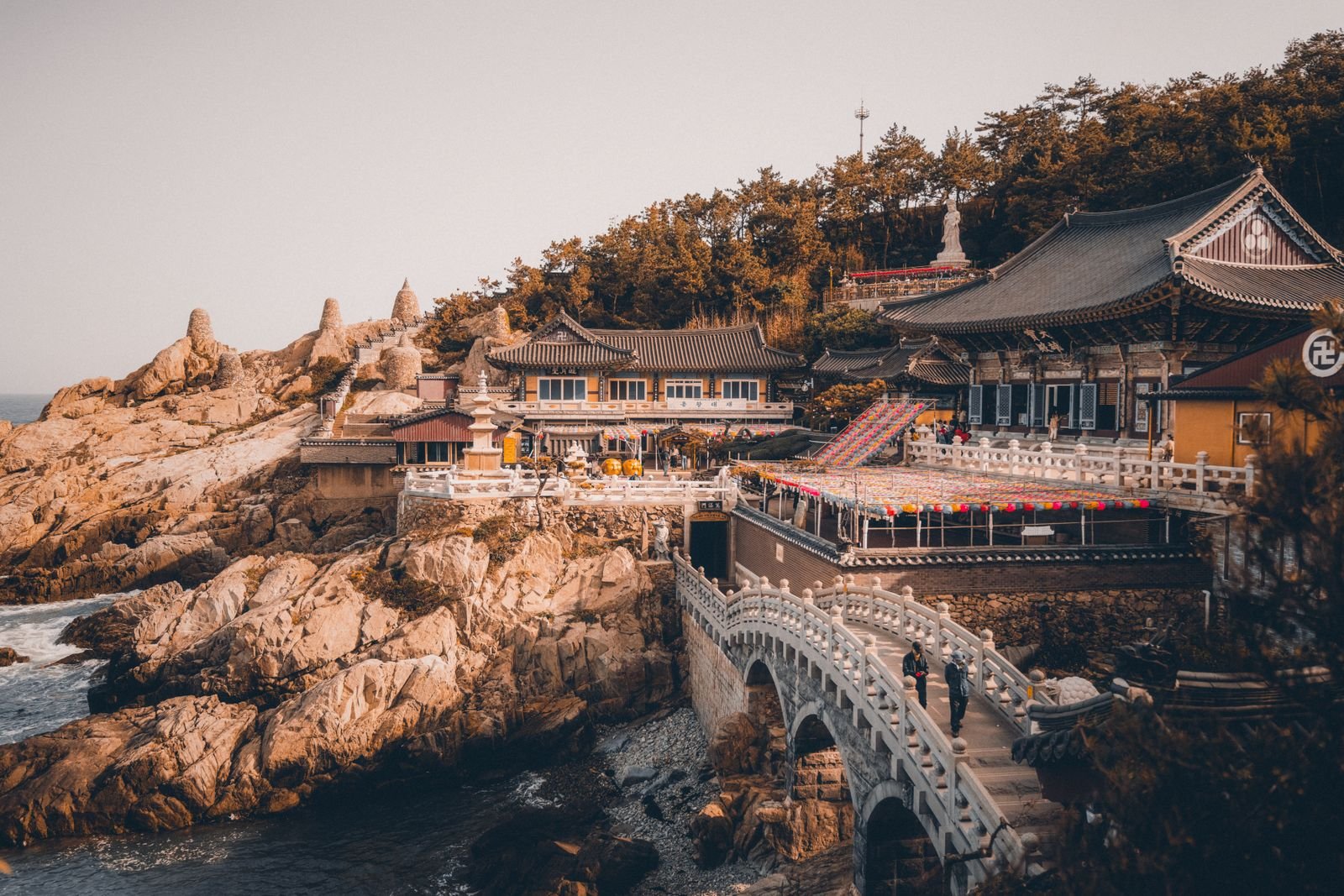
Haedong Yonggungsa (해동용궁사) is one of the few Buddhist temples in Korea built on the sea. Most temples sit in mountain valleys, but this one runs along rocky cliffs in Gijang-gun, on Busan’s north-eastern coast, with prayer halls, pagodas and stone lanterns stepping down to the waves. It is traditionally linked to the monk Naong in the 14th century, and was rebuilt in the 20th century after earlier destruction. Entry is free, and it is easily the best half-day trip from Haeundae.
Opening hours and entry
Entry is free. Published hours differ between sources: most place opening around 04:30-05:00 and closing around 19:00-19:30, with last entry shortly before. Because they conflict, check the temple listing or Visit Busan before a late-evening visit. Offerings and small donations are optional. The temple is also a place of active prayer, particularly on Buddha’s Birthday (a lantern-covered May festival) and on lunar new year mornings.
Getting there
From Haeundae (bus 181): Take Metro Line 2 to Haeundae Station, leave by exit 7 and find the stop for bus 181. Buses run roughly every 10-15 minutes, and the ride is about 30-45 minutes depending on traffic, at a standard city bus fare of about KRW 1,500 with T-money as of 2026. Get off at the Haedong Yonggungsa stop and follow the path for a short walk.
From Osiria Station (bus 1001): On the Donghae Line, Osiria Station is the closest rail stop, and buses 1001 and 139 run to the temple in around 5 minutes. This is the route if you combine the temple with the theme park.
By taxi: From Haeundae it takes about 25-35 minutes. A shared taxi or a taxi from the beach can be good value for two or three people.
See our Busan getting-around guide for T-money and metro basics.
What to see inside
Approach through the twelve zodiac statues along the entrance, then descend steps to the main compound. The key sights:
- Stone bridge: it crosses a narrow inlet to the main hall complex, with waves directly below.
- Daeungjeon main hall and Haesu Gwaneum Daebul: a large seaside Buddha-of-compassion statue stands above the rocks, one of the most photographed sights here.
- Dragon-themed art: the temple’s name refers to a dragon palace beneath the sea, and dragon motifs run through the architecture.
- Wish stones and pagodas: visitors leave small offerings along the paths. Do not climb on the rocks, which are slippery.
Allow 1-1.5 hours. The compound has a lot of stairs, so it is not easy with a pushchair.
Best time and crowds
Come at sunrise (the main shrine faces east) for the best light and almost no tour groups. Weekends and holidays are crowded from mid-morning. Lantern season in spring (around Buddha’s Birthday) is spectacular but busy. Wind off the sea can be cold from November to March, so layer up.
Combine with Lotte World Adventure Busan
The temple lies on the same stretch of coast as the Osiria Tourism Complex, where Lotte World Adventure Busan opened in 2022. A good day: temple at opening, then bus 1001 to Osiria for the theme park or the nearby shore. Check ticket prices and opening hours on the park’s official site before you go. Haeundae Blueline Park, the Sky Capsule coastal rail and the beaches are on the way back; see our Busan beaches guide for Haeundae and Songjeong.
Tours and where to stay
A guided half-day often combines the temple with Gamcheon Culture Village and Jagalchi. Browse Busan tours on GetYourGuide or see our best Busan tours guide. For a base, Haeundae is the closest hub to the temple; compare Busan hotels on Booking.com and read our best hotels in Busan. Combine this with the old-town side in our Gamcheon Culture Village guide and the 3-day Busan itinerary. Temple stays are covered in our temple stay guide.