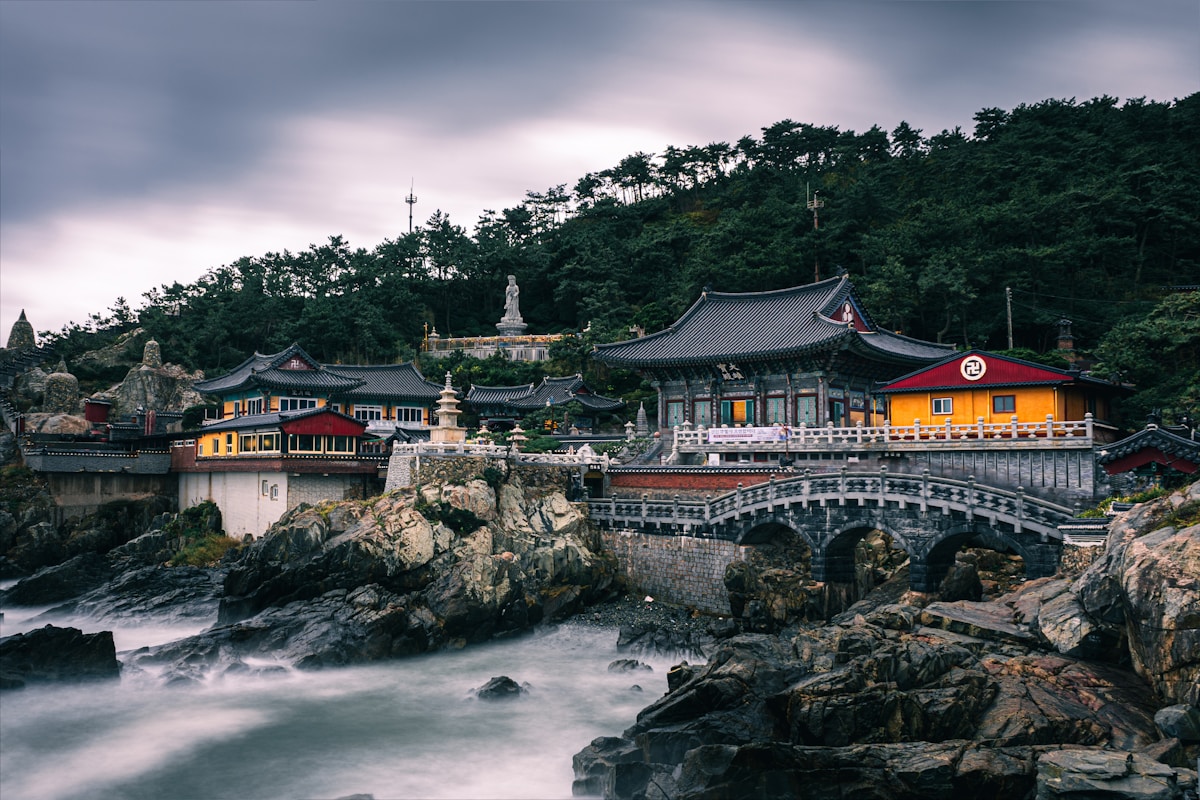
Korea’s Templestay programme is one of the most thoughtfully designed cultural tourism experiences in Asia. What started as a logistical necessity during the 2002 FIFA World Cup - when organizers needed additional accommodation near Jeonju, Gwangju, and other host cities - has grown into a nationwide programme with over 130 participating temples, translating the lived practices of Korean Buddhism into accessible experiences for visitors regardless of their own background or beliefs.
This guide covers what happens during a temple stay, which temples are best suited to different traveller priorities, how to book, and what to expect from the food, schedule, and cultural context.
What Is Templestay?
The official Templestay programme is managed by the Cultural Corps of Korean Buddhism (CCAB) under the Jogye Order, which oversees the majority of Korean Buddhist temples. The programme offers three main formats:
Overnight Templestay: The standard programme - arrive in the afternoon, follow the day’s temple schedule from afternoon bell to evening meditation to dawn prayer, eat temple meals, and leave the following morning. Most overnight programmes run for 1.5–2 days (arriving day 1 afternoon, departing day 2 morning after breakfast).
Templestay One Day: For those who cannot commit to an overnight, many temples offer half-day or full-day programmes covering selected activities - tea ceremony, lantern making, meditation, temple walking - without the accommodation component.
Rest Templestay: A less structured format offered by some temples, where participants essentially use the temple as a meditation retreat - they can participate in scheduled activities or simply have quiet time in the grounds and rooms. Good for those seeking genuine rest rather than a full cultural programme.
All formats can be booked through the official Templestay website (templestay.com), which provides English-language booking and programme descriptions.
A Typical Overnight Templestay Schedule
While each temple designs its own programme, a typical overnight Templestay day looks like this:
14:00–15:00 - Arrival and orientation. Participants receive practice clothing, are assigned rooms (usually single-sex dormitories with ondol heated floors), and are introduced to the temple’s layout and rules. Shoes are removed at all building entrances.
15:00–17:00 - Opening activity. This varies by temple: tea ceremony with a monk, temple walking (108 prostrations - a physical practice with specific meaning in Buddhism, though non-practitioners participate at their own pace), or introductory meditation.
17:30 - Evening meal. Temple food served in formal style in the communal dining hall. No conversation during the meal - a practice that focuses attention on the food and the act of eating.
18:30 - Evening dharma bell. The large bronze bell in the bell tower is struck 33 times at dawn and 28 times in the evening. Participants may watch or assist. The sound carries across the mountain or valley; it is a distinctively powerful introduction to the rhythm of temple life.
19:00–21:00 - Evening programme. Typically seated meditation instruction (zazen/seon practice) guided by a monk or meditation teacher, with simultaneous Korean/English translation at major temples. Beginners are shown how to sit and breathe; there is no expectation of immediate proficiency.
21:00 - Lights out. Most Templestays have an early curfew consistent with the dawn schedule.
04:00 - Morning bell and prayer. The 108-bell sequence begins before dawn. The main morning chanting service (Yebul) is a full community ceremony in the main worship hall. Participation is welcomed but not compelled.
06:30 - Morning meal. Breakfast is rice porridge (juk) and seasonal vegetables. Quieter and simpler than dinner.
07:30–09:00 - Closing activities. Some programmes add a final meditation session, temple cleaning participation (a communal cleaning practice is part of Korean Buddhist daily life), or a closing tea ceremony.
09:00 - Departure. Most programmes conclude by mid-morning.
Top Temples for a Templestay
Jogyesa Temple - Seoul (Insa-dong)
Jogyesa is the head temple of the Jogye Order of Korean Buddhism and is located in central Seoul, within walking distance of Insa-dong and Gyeongbokgung Palace. It offers the most accessible Templestay of any programme - participants can arrive by Seoul Metro (Anguk Station) with no travel to a mountain location required.
The trade-off for urban convenience is the setting: Jogyesa’s grounds are enclosed within the city, and the experience does not include the mountain or coastal atmosphere that defines the best rural temple stays. That said, the programme quality is high, the instruction is experienced, and the translation quality for English speakers is among the best in the network.
Best for: First-timers who are uncertain about committing to a remote temple stay, travellers with limited time in Seoul, and those who want to combine Templestay with other Seoul activities.
Booking: templestay.com - programmes fill quickly on weekends.
Beomeosa Temple - Busan (Geumjeongsan Mountain)
Beomeosa, founded in 678 CE on the slopes of Geumjeongsan mountain north of Busan, is one of the most significant Buddhist temples in Korea and offers a Templestay that gives a genuine mountain retreat experience within reach of Korea’s second city.
The approach to Beomeosa through the Geumjeongsan forest - past the Iljumun and Cheonwangmun gates - sets the tone for the programme. The programme itself follows the full schedule including dawn bell, communal meals, and seon meditation. The mountain setting means cleaner air and mountain sounds rather than city ambiance.
Best for: Visitors spending time in Busan, anyone wanting a mountain temple experience, travellers with an interest in Korean Buddhist history (Beomeosa has significant connections to the independence movement).
Getting there: Busan Metro Line 1 to Beomeosa Station, then shuttle bus or taxi to the temple.
Haeinsa Temple - Gayasan Mountain, Hapcheon
Haeinsa is one of the “Three Jewel Temples” of Korean Buddhism (alongside Tongdosa and Songgwangsa) and is the site of the Tripitaka Koreana - a set of over 80,000 carved wooden blocks representing the complete Buddhist canon, created in the 13th century and designated UNESCO World Heritage status in 1995. The storage halls for the Tripitaka are among the most remarkable examples of Korean architecture.
Haeinsa’s Templestay programme is one of the most historically rich in Korea. The temple sits deep in Gayasan National Park and requires approximately 3–3.5 hours of travel from Seoul (Daejeon, then bus toward Hapcheon). This remoteness is part of the appeal - the distance from daily life is built into the journey.
Best for: Travellers who want depth of historical and cultural context, those interested in Korean literary and religious heritage, visitors willing to spend more travel time for a more remote experience.
Tongdosa Temple - South Gyeongsang Province
Tongdosa, the second of the Three Jewel Temples, is located in the mountains near Yangsan (accessible from Busan). It is the largest temple complex in Korea by area, with over 65 sub-temples within its grounds and a main worship hall that - unusually - contains no Buddha statue, reflecting a specific theological tradition.
The Templestay programme at Tongdosa is particularly strong for those interested in understanding the different schools within Korean Buddhism. The scale of the complex allows for exploration beyond the main programme hours.
Getting there: From Busan, take the metro or KTX to Yangsan, then a local bus to the temple (approximately 1.5 hours total from Busan Station).
Beopjusa Temple - Songnisan National Park, Chungcheongbuk-do
Beopjusa, founded in 553 CE, sits in Songnisan National Park in the geographic centre of Korea and is the most natural setting among the major Templestay destinations. The surrounding national park has excellent hiking, and the combination of a temple stay with hiking the Songnisan peaks the following day is a strong two-day option.
A famous feature of Beopjusa is the 33-metre gold-painted standing Buddha statue (Mireuktaes), one of the tallest in Korea. The temple hosts one of the longer Templestay programmes, with some options running 2 nights.
Getting there: From Seoul, take a bus from Seoul Central City Terminal or Dong Seoul Terminal to Boeun, then a local bus to the temple. Approximately 2.5 hours total from Seoul.
Temple Food: What to Expect
Temple cuisine (사찰음식, sachal eumsik) deserves its own section because it consistently surprises first-time Templestay participants. The absence of meat and the five pungent vegetables forces a creativity with fermented ingredients, seasonal produce, and preparation technique that many participants find reveals an entirely unfamiliar dimension of Korean food.
Key dishes and preparations:
- Doenjang jjigae (without the usual anchovy stock): Made with mushroom stock, tofu, and zucchini. Fermented soybean paste provides enough depth without anchovy.
- Kongnamul (soybean sprout salad): Blanched and seasoned with sesame oil and salt only. Simple and correctly balanced.
- Braised mountain vegetables (namul): Fern shoots, bellflower root, dried squash - textures and flavours that do not exist in most Western food traditions.
- Kimchi: Temple kimchi uses no jeotgal (fermented seafood) and no garlic. The fermentation flavour comes through cleanly without the pungency of standard kimchi.
Practical Details
Booking: All official Templestay programmes book through templestay.com. The English-language version is comprehensive. Some temples also accept walk-in participants if space exists, but booking ahead is strongly recommended, particularly for weekend programmes and peak seasons (spring and autumn).
What to bring: Clean, comfortable clothing for sleeping (temple clothes are provided for the programme). Toiletries. Personal medication. A journal - many participants find the quieter periods good for reflection.
Physical considerations: The 108 prostrations (a traditional form of meditative practice) involve repeated kneeling and standing. You can participate at your own pace or observe. Inform the temple coordinator of any physical limitations on arrival.
Photography: Most temples allow photography in the grounds. The main worship hall and ceremonies may restrict photography - follow the temple’s guidance and ask if unsure.
Language: Major temples in the Templestay network provide English-speaking coordinators and bilingual instruction for the standard programme activities. Smaller rural temples may have limited English support - check the programme listing on templestay.com, which notes language availability.
Browse tours and activities in South Korea through GetYourGuide.
Pick up an eSIM for South Korea through Airalo to stay connected.
Related Guides
Before your temple stay, the Korean etiquette guide covers bowing customs, dining protocols, and the respectful behaviour expected at Buddhist sites. For Gyeongju-based stays at Bulguksa or Golgulsa, see the Gyeongju travel guide for the surrounding UNESCO heritage context. The Andong travel guide covers Bongjeongsa - one of the oldest wooden buildings in Korea - and the broader Confucian atmosphere that makes Andong a complementary destination alongside a temple stay programme.