Busan Travel Guide
Haeundae beach, Gamcheon hillside art village, Jagalchi fish market, and Beomeosa temple hike - Busan packs more variety than any other Korean city.
Guides for Busan
Busan is South Korea’s second city and its largest port, occupying a stretch of rugged coastline in the country’s southeast where granite ridges drop to long sandy beaches and a busy commercial harbour. Around 3.4 million people live here, and the city has a distinct personality from Seoul — more relaxed, more maritime, more focused on seafood and open-air life. The contrast is part of the appeal: Busan moves slower, breathes more salt air, and feels less driven by corporate ambition.
The city is compact enough to cover its main draws in two to three days, but longer stays reward exploration into neighbourhood life, coastal hiking, and a food culture built on the morning catch.
Getting to Busan
From Seoul by KTX: The high-speed train is the standard option. Seoul Station to Busan Station takes approximately 2 hours 15 minutes; tickets cost from around KRW 59,800 (approx USD 45) in standard class. SRT trains from Suseo Station are slightly cheaper at a similar journey time. Book via the Korail or SRT apps — trains fill quickly on summer weekends and public holidays.
By air: Gimhae International Airport (PUS) is around 20 minutes from central Busan by metro or airport bus. Multiple domestic flights per day connect from Seoul Gimpo Airport. International routes cover Japan, China, and Southeast Asia.
By bus: Express buses from Seoul’s Express Bus Terminal take 4–5 hours and cost KRW 23,000–34,000 (approx USD 17–26), making them a reasonable fallback when train tickets are unavailable.
Neighbourhoods
Haeundae is Busan’s most visited district, centred on the city’s most famous beach. The sand runs about 1.5 km and is backed by high-rise hotels, seafood restaurants, and a promenade that stays active well into the evening. Peak summer (July–August) draws enormous crowds; spring and autumn are considerably calmer and still warm enough to walk the shore.
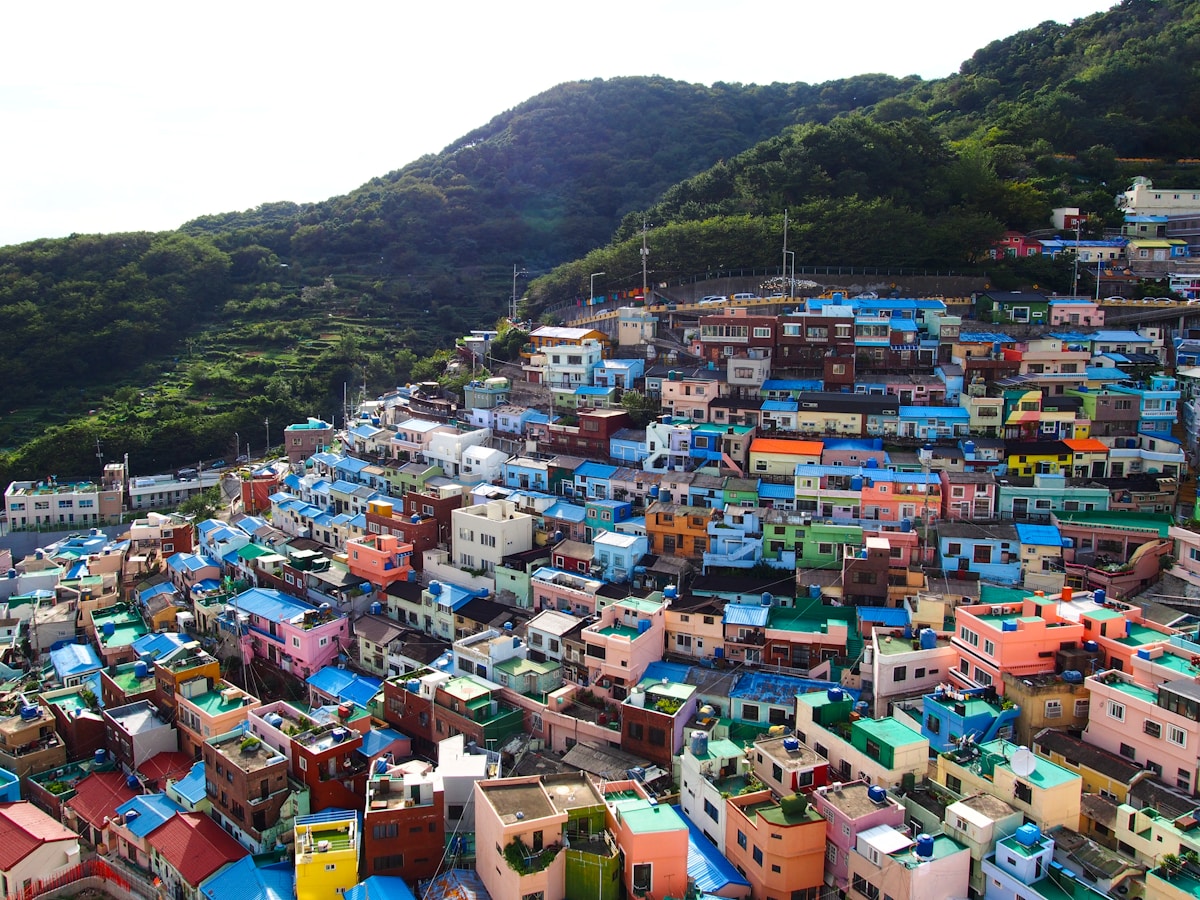
Gamcheon Culture Village in the Saha district occupies a steep hillside west of the city centre. Built as emergency housing for Korean War refugees, the neighbourhood was revitalised from 2009 as an arts district. Narrow alleys hold murals, small galleries, and café terraces with harbour views. It takes one to two hours to explore and is best visited on weekdays to avoid weekend tour groups.
Nampodong and the waterfront form the old commercial core: Jagalchi Fish Market (the largest in South Korea), Gukje Traditional Market, and BIFF Square where the annual Busan International Film Festival is based. Ssiat hotteok — seed-filled sweet pancakes — originated here and are available from street stalls along BIFF Square most days.
Seomyeon is Busan’s main commercial hub and transport interchange, well-positioned for metro connections across the city with a dense concentration of mid-range hotels, restaurants, and shopping streets.
Top Sights
Haedong Yonggungsa Temple sits on coastal cliffs north of Haeundae, its shrines and stone lanterns descending toward the sea. Unlike most Korean temples set in mountain forests, this one is surrounded by water on three sides and is most atmospheric at sunrise. It is around 30 minutes by bus from Haeundae.
Jagalchi Fish Market runs along the Nampodong waterfront. The covered market building holds stalls selling live seafood; restaurants on the upper floors prepare purchases at the table. Mornings are most active, though the market runs throughout the day.
Beomeosa Temple, dating from 678 CE, sits in the hills of Geumjeongsan above the city — historically more significant than Haedong and far less crowded. Take the metro to Beomeosa station, then a 15-minute walk or short taxi ride to the entrance. The surrounding forest trails are good for an hour’s hiking.
Where to Stay in Busan
For accommodation options across all budgets, see our Busan hotels guide.
Food and Drink
Busan’s food identity is built around the sea more than any other city in South Korea. Milmyeon — cold wheat noodles in chilled beef broth — is a city speciality: try it at Choryang Milmyeon near Busan Station (from around KRW 8,000–10,000 per bowl as of 2026), one of the original shops serving the dish. Dwaeji gukbap (pork and rice soup) is the other Busan institution, best at old-school restaurants around Seomyeon and Gukje Market from around KRW 9,000–12,000 per bowl.
For fresh seafood, walk through Jagalchi Market, choose your fish or shellfish from the downstairs stalls, and have it prepared in a restaurant upstairs — a raw fish platter (modeumhoe) runs around KRW 40,000–80,000 depending on selection. Gukje Market nearby has a cheaper multi-stall street food section good for assembling a casual meal.
The Gwangalli and Centum City districts have a more contemporary dining scene for those after modern Korean restaurants or international food. For a full breakdown by neighbourhood, see the Busan food guide.
Guided Tours in Busan
Touring Busan with a guide is practical for sites spread across different districts — the Sky Capsule coastal route, Gamcheon Village, and Haedong Temple are each 20–40 minutes apart by taxi. These are current GetYourGuide options:
| Tour | Duration | From | Covers |
|---|---|---|---|
| Busan: Top Attractions Authentic One-Day Tour (4.94★) | 9.5 hours | $26.66/person | Haedong Yonggungsa Temple, Gamcheon Village, Jagalchi Market, Taejongdae |
| Busan: Top Coastal Highlights with Sky Capsule | 9 hours | $32.65/person | Cheongsapo, Blueline Park Sky Capsule, Haeundae Beach, coastal highlights |
| Busan: Sky Capsule, Gamcheon, Haeundae Blueline Park & more | 9 hours | $35/person | Combines Sky Capsule coastal route with Gamcheon Culture Village and Haeundae |
| Busan: Well-Rounded Small-Group Tour with Hotel Pickup (5.0★) | 11.5 hours | $38.45/person | Comprehensive city coverage with hotel pickup included |
Prices as of 2026. All tours depart from central Busan pickup points; hotel pickup included on the small-group option.
[Browse Busan day tours on GetYourGuide →](/go/tours-busan)
Explore Busan
Detailed guides covering the city:
- Beaches in Busan — Haeundae, Gwangalli, Songdo, and Dadaepo with swimming seasons and access
- Getting Around Busan — metro lines, T-money card, bus routes, and fares in KRW
- Day Trips from Busan — Gyeongju by KTX in under an hour, Tongyeong by bus, coastal excursions
- Busan Food Guide — milmyeon, dwaeji gukbap, Jagalchi seafood, and where to find them by neighbourhood
- Things to Do in Busan — Haedong Temple, Gamcheon Village, Jagalchi Market with entry fees and transport
- Best Hotels in Busan — full comparison across all budgets and districts
Deciding between Busan and Jeju for beach time? Our Busan vs Jeju guide covers costs, transport, beach quality, and what each destination does best. For guided tours and day trips around the city, see tours in Busan.
Upcoming Events in Busan
Jinju Lantern Festival 2026
Jinju Lantern Festival 2026 runs 3 to 12 October on the Nam River. Paper lanterns mark the 1592 Battle of Jinju: tickets, schedule, and how to get there.
- Busan International Film Festival 2026
busan
BIFF 2026 runs 7-16 October in Busan: one of Asia's leading film festivals, screening Korean and international films at Haeundae and central city venues.
Frequently Asked Questions
- How long does it take to get from Seoul to Busan?
- The KTX high-speed train covers the journey in approximately 2 hours 15 minutes from Seoul Station to Busan Station. Standard trains take 4–5 hours. Flights exist but the train is nearly always faster and more convenient door-to-door.
- How many days should I spend in Busan?
- Two to three days is enough to see Haeundae Beach, Gamcheon, Jagalchi Market, and Haedong Yonggungsa Temple without rushing. Film festival visitors or beach-focused travellers often stay four to five days.
- When is the best time to visit Busan?
- Spring (April–June) and autumn (September–November) offer mild temperatures and clear skies. Summer brings beach season — Haeundae is extremely busy in July and August. October is Busan International Film Festival month, which draws large crowds.
Book an experience
Top experiences in Busan
Explore the best tours and activities in Busan, with instant confirmation and free cancellation on most bookings.