Ten dishes cover the best of Korean eating: bibimbap, samgyeopsal, kimchi jjigae, tteokbokki, bindaetteok, milmyeon, dwaeji gukbap, Andong jjimdak, hotteok and a Jeolla-style hanjeongsik. Most cost KRW 1,500 to 18,000 per portion as of 2026, and each has a city or market where it tastes best.
We chose dishes that show different regions and price points, so the list works as a route as well as a menu. Prices are approximate as of 2026 and rise at tourist restaurants.
1. Bibimbap
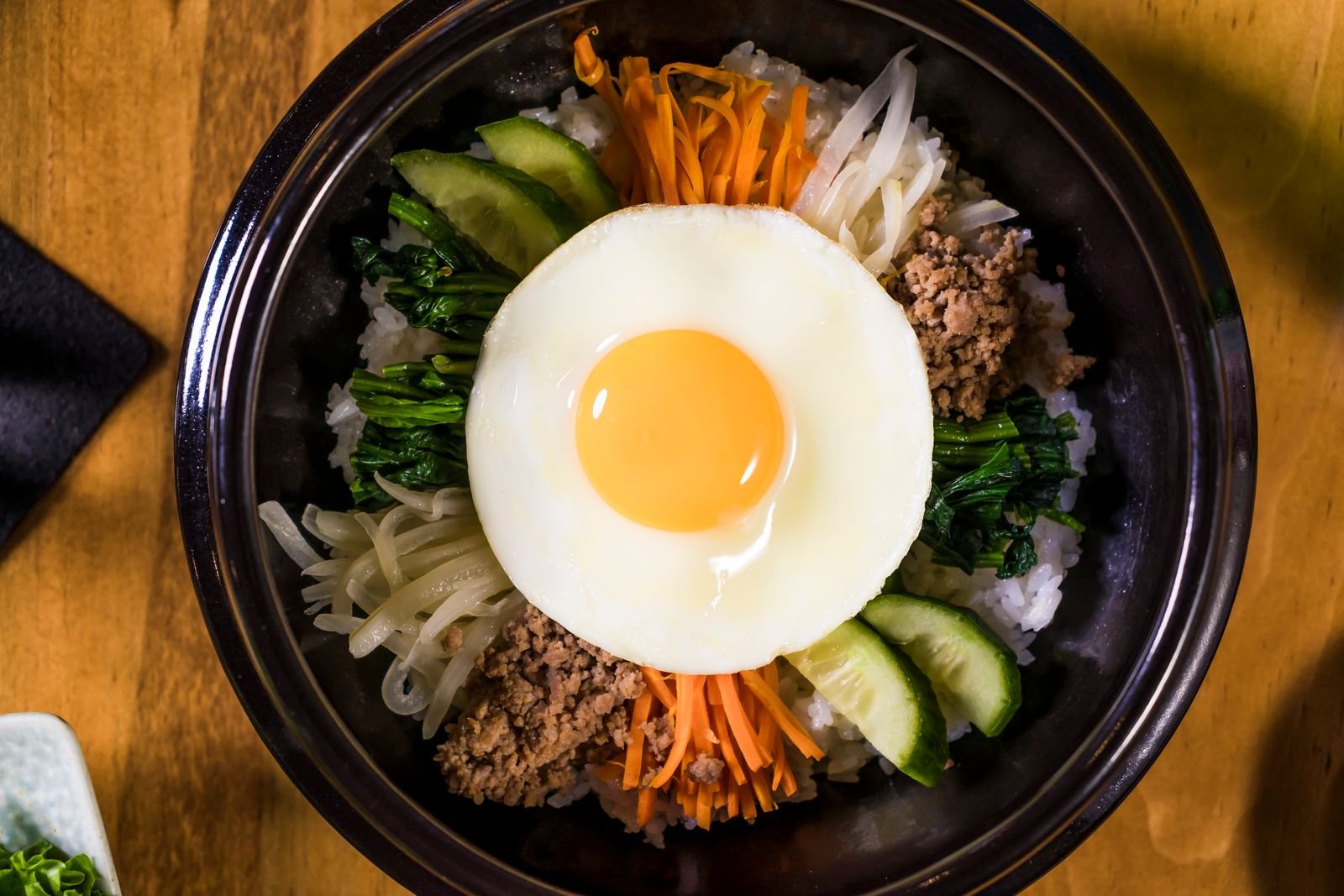
Bibimbap is rice topped with seasoned vegetables, egg and gochujang, mixed together at the table. A stone bowl version (dolsot) crisps the rice at the bottom. At a sit-down restaurant it typically costs KRW 10,000 to 15,000, and Jeonju is the city most associated with the dish.
Where to eat it: Almost any Korean restaurant in Seoul, or Jeonju for the regional reference. Read our Jeonju food guide.
Local tip: Let the stone bowl sit for a minute before mixing so the rice forms a crust.
2. Samgyeopsal (Grilled Pork Belly)
Thick unmarinated slices of pork belly are grilled at the table, then wrapped in lettuce or sesame leaves with garlic and ssamjang. Expect KRW 12,000 to 16,000 per portion. Seoul’s Mapo district has one of the highest concentrations of samgyeopsal restaurants in the city.
Where to eat it: Mapo in Seoul, or any local neighbourhood grill.
Local tip: Order a stew or cold noodles at the end of the meal, since rice dishes are usually sold after the meat. Our Korean BBQ guide explains cuts, ordering and etiquette.
3. Kimchi Jjigae
Kimchi jjigae is a bubbling stew of aged kimchi, pork or tuna, tofu and onion, served with rice and side dishes. A bowl usually costs KRW 8,000 to 12,000 as of 2026 and tastes best at small local restaurants away from tourist streets.
Where to eat it: Local bunsik and jungsikdang restaurants, found in every neighbourhood in Seoul.
Local tip: Look for places with a short handwritten menu and lunchtime office crowds. Our Seoul food to try guide lists more everyday Seoul dishes.
4. Tteokbokki
Tteokbokki are chewy rice cakes in a sweet-spicy red sauce, usually with fish cake. A market stall portion costs approximately KRW 5,000 to 8,000, and at pojangmacha tent stalls a full snack of KRW 4,000 to 8,000 is typical.
Where to eat it: Gwangjang Market in Seoul, or any street food area.
Local tip: Odeng (fish cake) skewers come in a hot broth with free refills, so lift a cup and drink it while you queue. See our Korean street food guide for markets and prices.
5. Bindaetteok (Mung Bean Pancake)
Bindaetteok is a crispy pancake of ground mung beans, kimchi and pork, fried on a round griddle. At Gwangjang Market it costs about KRW 5,000 to 7,000 per portion, and is one of Korea’s oldest street foods.
Where to eat it: Gwangjang Market in Seoul.
Local tip: Pair it with a kettle of makgeolli, which runs about KRW 6,000 to 9,000, as the market regulars do.
6. Milmyeon (Busan Wheat Noodles)
Milmyeon is Busan’s chilled wheat-noodle soup in a cold, tangy broth. The noodles are chewier and slightly thicker than buckwheat naengmyeon, and a bowl costs approximately KRW 9,000 as of 2026.
Where to eat it: Around Seomyeon Station in Busan.
Local tip: Order it in summer when cold broth is most welcome. Our Busan food guide lists reliable spots.
7. Dwaeji Gukbap (Busan Pork Soup)
Dwaeji gukbap is a milky pork-bone soup with rice and slices of boiled pork, seasoned at the table with salted shrimp, chives and kimchi. It costs approximately KRW 8,000 to 10,000, and many places open early in the morning.
Where to eat it: Near Bujeon Market and in Seomyeon in Busan.
Local tip: Add seasonings a little at a time and taste between each, since the broth starts mild.
8. Andong Jjimdak
Andong jjimdak is braised chicken with potatoes, glass noodles and a soy-based sauce. A portion that feeds two or three people costs approximately KRW 25,000 to 35,000, and the original version is served in the jjimdak alley near Andong’s old market.
Where to eat it: The jjimdak alley in central Andong. See our Andong where to eat guide for more local places.
Local tip: Go with two or three people, since single portions are rare and sharing is how the dish is served.
9. Hotteok
Hotteok are hot flat pancakes filled with brown sugar, cinnamon and sesame seeds, griddled until the dough puffs. A single piece usually costs KRW 1,500 to 2,000 as of 2026, and Busan’s seed-filled ssiat hotteok costs around KRW 1,500.
Where to eat it: Winter street stalls and markets, especially BIFF Square and Gukje Market in Busan.
Local tip: Eat it straight from the paper cup while the filling is hot, but let it cool for a moment because the sugar is molten.
10. Jeolla-Style Hanjeongsik
A hanjeongsik is a set meal where the table fills with a dozen or more small dishes around a main course, and the Jeolla region is known across Korea for generous spreads. In Suncheon a set typically costs about KRW 15,000 to 25,000 per person, and Gwangju has some of the country’s best traditional cooking.
Where to eat it: Suncheon and Gwangju. Our Gwangju where to eat guide and Suncheon guide have route ideas.
Local tip: Come hungry and arrive for lunch, since many restaurants cluster in the city centre rather than near the sights.
Eat Your Way Through with a Guide
If you want a guide to explain each dish, our Seoul food tours guide compares options, and you can browse Korean food tours on GetYourGuide. For a wider overview of cuisine, read our South Korea food guide. Vegetarian travellers should read our South Korea vegan guide before ordering. For official food and travel information, see Visit Korea.