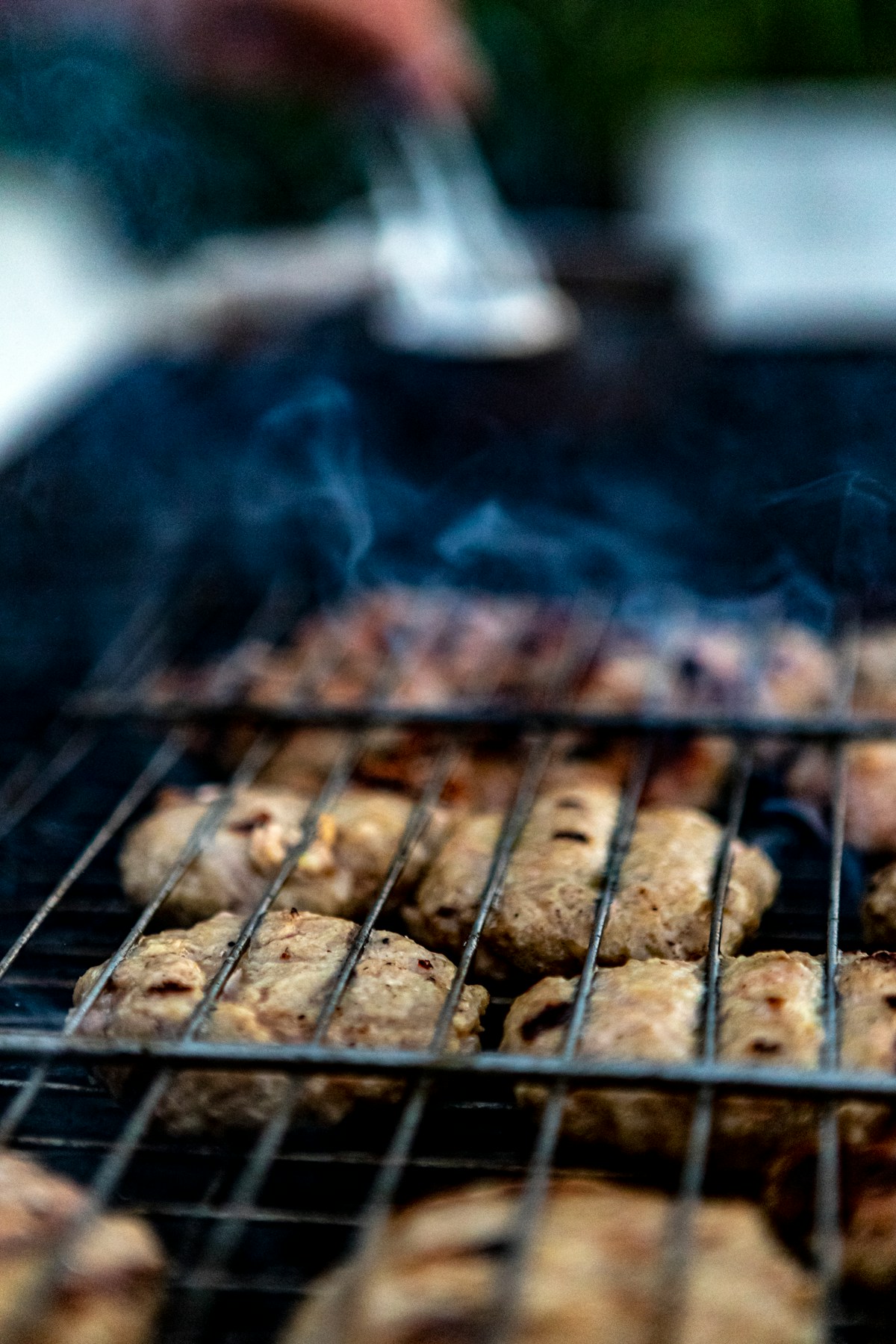
Jeju’s food is shaped by its geography: a volcanic island with deep surrounding waters, a mild climate suited to citrus farming, and a female free-diver tradition that has produced one of Korea’s most distinctive seafood cultures. The three things to eat here — Jeju black pork, haenyeo-harvested seafood, and hallabong citrus — are all specific to the island and unavailable in the same form anywhere on the mainland.
Jeju Black Pork (Heukdwaeji)
Heukdwaeji — black pork — is Jeju’s most famous product. The native pig breed is darker, more robustly flavoured, and more marbled than the white pig breeds used for standard Korean barbecue. The fat-to-meat ratio and the cooking texture are different enough that eating it here feels like a distinct experience rather than a regional version of something you could have in Seoul.
Restaurants specialising in heukdwaeji are concentrated along the Heukdwaeji Street (흑돼지거리) in the Nohyeong-dong district, a ten-minute taxi ride from Jeju City centre. This is the most concentrated cluster of black pork restaurants on the island, and the competition keeps standards consistent. Most restaurants here grill the pork over charcoal rather than gas, which adds a smokier flavour to the fat.
Donsadon on Heukdwaeji Street is a well-regarded option; a portion of heukdwaeji samgyeopsal (thick belly strips) costs approximately 18,000–20,000 KRW per 200g as of 2026. Pado Heukdwaeji nearby is similarly priced. Expect to order at least 400g for two people alongside the standard banchan spread — lettuce wraps, garlic, dipping sauces, and kimchi. Total cost for two people typically falls in the 45,000–65,000 KRW range including drinks.
The meat is traditionally eaten without marinating, letting the natural flavour carry. Wrapping in sesame leaf with a dab of ssamjang paste is the standard approach.
Haenyeo Seafood
Jeju’s haenyeo (해녀) — the female free-divers who harvest seafood by hand without equipment beyond a wetsuit and fins — have been part of the island’s food culture for centuries. Their catch is served across the island, often at small restaurants directly adjacent to the coast where the divers work.
Jeonbok juk (abalone porridge) is the signature haenyeo dish — slow-cooked rice porridge with diced abalone and sesame oil, mild and savoury. The texture is silky with the abalone adding a slight oceanic weight. Most Jeju-style jeonbok juk restaurants serve a bowl for approximately 15,000–18,000 KRW as of 2026. Haenyeo Sikdang on the Sehwa coast east of Jeju City is one of the most established options; smaller haenyeo restaurants also operate at Gimnyeong and along the northern coast road.
Sea urchin (goseongge) is served fresh in small portions, either on rice or alongside other raw seafood. A small portion costs around 10,000–15,000 KRW. Turban shells (sora) are often boiled or steamed and eaten with a toothpick — these appear regularly at Dongmun Market stalls for 3,000–5,000 KRW per portion.
Raw abalone (jeonbok hoe) — thinly sliced and served with soy sauce and wasabi — costs significantly more, typically 30,000–50,000 KRW for a portion, reflecting the labour involved in harvesting it.
Dongmun Traditional Market
Dongmun Sijang is Jeju City’s main traditional market, a covered market district a short walk from the city centre. The food section is the draw. It has all the standard Korean market staples — tteokbokki, twigim, odeng fish cake skewers — alongside Jeju-specific items: raw seafood in tanks, hallabong and Jeju mandarin stalls, black sesame products, and several stalls selling jeonbok juk in small takeaway containers.
The raw seafood section has vendors selling live abalone and sea urchin directly. Prices here are lower than at dedicated restaurants, though the setting is more basic. Evening is the most atmospheric time — stalls are lit up and the market is busy with locals shopping for dinner.
The market also has a specific reputation for heuk imja (black sesame) products — sesame oil, black sesame powder, and sesame-based sweets made from Jeju-grown sesame seeds. These make practical and genuinely local souvenirs.
Hallabong Citrus
Hallabong (한라봉) is a citrus variety developed in Japan and widely cultivated on Jeju’s slopes — named after Hallasan mountain, whose distinctive peak silhouette the fruit’s protruding navel is said to resemble. It is larger than a standard mandarin, slightly easier to peel, and noticeably sweeter with a stronger aroma.
The fresh fruit is only available between November and February. Outside that window, hallabong-flavoured items are everywhere: ice cream, freshly squeezed juice, biscuits, jam, and tea. The quality of hallabong juice varies significantly — freshly squeezed at market stalls is far better than the bottled versions sold at gift shops. A cup of fresh-squeezed hallabong juice at Dongmun Market costs approximately 3,000–4,000 KRW as of 2026.
Practical Notes
Jeju City’s restaurant options are spread across the city rather than in one concentrated district. Heukdwaeji Street is the clearest destination for black pork; Dongmun Market for street food and market seafood. For coastal haenyeo seafood, it is worth travelling slightly out of the city centre to the northern or eastern coast where smaller restaurants operate closer to the diving sites.
A Jeju food and market tour is useful here — the haenyeo culture in particular benefits from context, and guides can take you to smaller coastal restaurants not easily found without local knowledge. Budget approximately 30,000–40,000 KRW for a full black pork dinner for two, plus drinks; 20,000–30,000 KRW for a haenyeo-focused lunch of porridge and raw seafood.