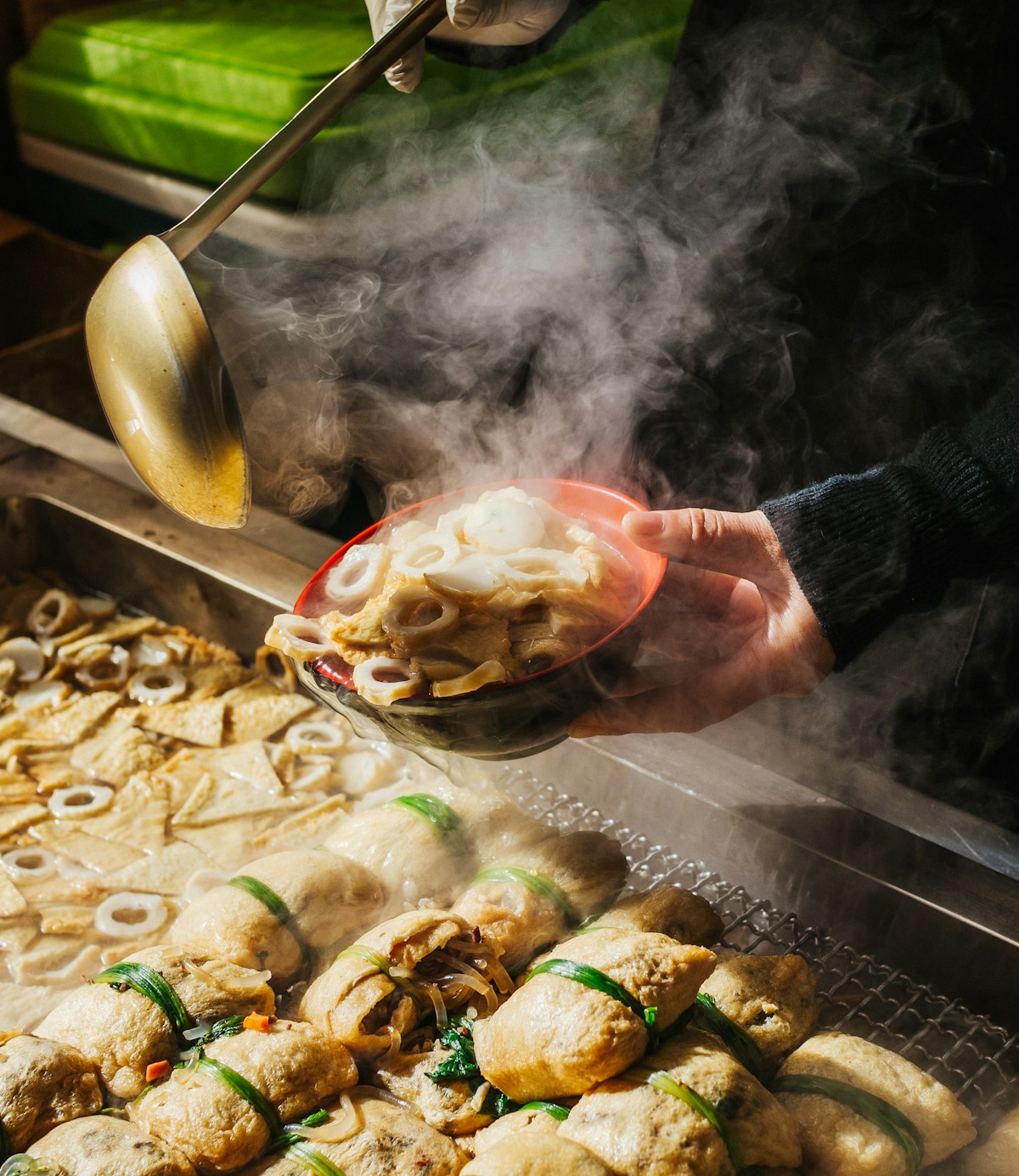
Gyeongju’s food is quieter than its history. The city that served as the Silla Kingdom capital for nearly a thousand years does not have a loud restaurant scene — but it has a distinct culinary identity rooted in royal court tradition, fermented grains, and the agricultural landscape of the Gyeongbuk region. The best approach here is to slow down, eat ssambap with a table full of banchan, and walk the hwangnam bread trail between museum visits.
Ssambap — The Royal Wrap
Ssambap is the dish most closely associated with the Gyeongju food tradition. The name translates roughly as “wrapped rice” — a set meal that arrives as a bowl of rice, a selection of seasonal banchan (side dishes), and a generous pile of fresh leaves for wrapping. Lettuce, perilla, sesame leaf, and occasionally cabbage or green onion leaves provide the wrappers. You fill them with rice, a pinch of fermented soybean paste (doenjang), and whatever banchan you prefer, then fold and eat in one bite.
In Gyeongju, ssambap sets lean toward locally sourced herbs and vegetables — crown daisy, wild sesame, chrysanthemum greens — that reflect the agricultural character of the surrounding Gyeongbuk plains. Gyeongju Ssambap (경주쌈밥) near the Hwangnam area is a straightforward local option; a full ssambap set runs approximately 13,000–16,000 KRW per person as of 2026. Haedong Ssambap near Tumuli Park is another reliable choice with an extensive banchan spread.
The meal is not a quick lunch — the pace is deliberate, the side dishes keep coming, and the experience is as much about sitting still as it is about the food itself.
Hwangnam Bread
Hwangnam ppang (황남빵) is the edible emblem of Gyeongju. The bakery Hwangnam Ppang on the main strip near Hwangnam-dong has been producing this small red bean pastry since the 1930s — the recipe and the family ownership have remained largely unchanged. The bread is soft-skinned, filled with sweetened red bean paste (not too sweet), and eaten warm.
The shop sells them by the box (a standard gift box of 10 costs approximately 8,500 KRW as of 2026) and fresh by the piece at the counter. There is usually a queue in the afternoon, particularly on weekends. The surrounding neighbourhood has other bakeries and food stalls that have appeared alongside the original, selling variations and Gyeongju-themed biscuits — but the original Hwangnam Ppang shop is the one worth visiting.
A short walk links Hwangnam-dong with Cheomseongdae observatory and the Tumuli Park royal tombs — this informal food trail, moving between the main bakery, a makgeolli bar, and dinner at a ssambap restaurant, is the most natural way to structure an afternoon in Gyeongju.
Makgeolli Near Tumuli Park
Makgeolli — unfiltered rice wine, milky white, slightly effervescent, and lower in alcohol than soju — is the traditional drink of the Korean countryside. Gyeongju produces its own variants using locally grown rice, and the area around Tumuli Park has a cluster of small bars and pojangmacha (street stalls) that serve it alongside simple anju (drinking snacks).
Gyeongju Makgeolli Bar near the park entrance is a modest venue with outdoor seating in good weather, serving house makgeolli at roughly 4,000 KRW per litre jug as of 2026 — a very affordable way to spend an evening. Pajeon (spring onion pancake) or doenjang jjigae (fermented bean paste stew) are the standard accompaniments. The surrounding streets have several similar small establishments; follow the low plastic stools and the smell of fermented grain.
The makgeolli culture here is unpretentious. It suits the slower pace of Gyeongju evenings, after the tour buses have left and the archaeological sites have quietened.
Gyeongju Bread Trail
Beyond hwangnam bread, Gyeongju has a small secondary tradition of shaped biscuits and wafers stamped with the cityscape’s most recognisable forms — the curved rooflines of Bulguksa temple, the distinctive circular tumuli mound silhouettes, the Cheomseongdae observatory tower. These are sold across the central tourist zone and function primarily as edible souvenirs. They are not remarkable as food but are well-made and reflective of the city’s identity.
Gyeongju Gyodong Beopju is a traditional rice spirit (not makgeolli but a distilled version called beopju) that carries a geographical indication — it can only be made in Gyeongju using specific local rice varieties and a filtered method tied to Gyeongju’s Choi clan tradition. Bottles are sold in specialty food shops near the city centre; prices start around 30,000 KRW for a standard bottle as of 2026.
Practical Notes
Gyeongju’s restaurant district is concentrated around the Hwangnam and Nodong-dong areas, within walking distance of the main Tumuli Park and Cheomseongdae sites. Most traditional ssambap restaurants open for lunch from around 11:30 and serve dinner until 9:00. The hwangnam bread bakeries are busiest mid-afternoon. For a guided food and history tour of Gyeongju, combining the archaeological sites with a ssambap lunch and a makgeolli bar stop is the most efficient structure for a day visit.
Prices are modest by Korean city standards. A ssambap lunch, an afternoon of bread tasting, and a makgeolli evening can be done comfortably for 35,000–45,000 KRW per person across a full day.