Korean cuisine is built around a set of techniques, fermented ingredients, and communal dining customs that give it a character quite distinct from Chinese or Japanese food, despite sharing some ingredients and influences. Understanding a few core principles makes navigating menus and markets far easier.
The Fundamentals
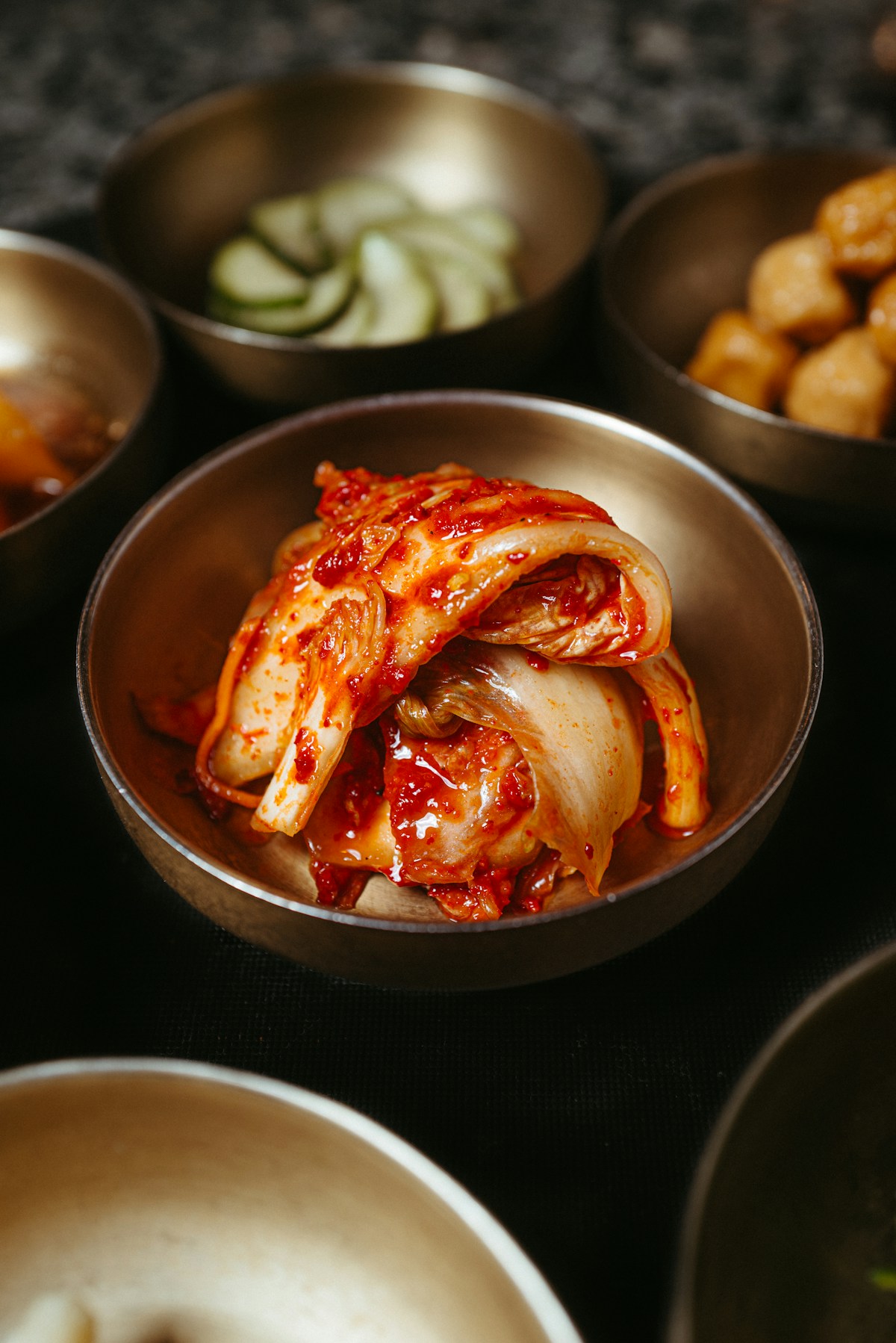
Kimchi - fermented vegetables, most commonly napa cabbage, seasoned with gochugaru (red pepper flakes), garlic, ginger, and salted shrimp or fish sauce. Kimchi appears at virtually every Korean meal as a banchan. It is eaten on its own, used as a cooking ingredient, and made in dozens of variations. Kimjang - the communal process of making large kimchi batches for winter - is UNESCO-listed as an intangible cultural heritage.
Gochujang - a thick, fermented paste of red chilli, glutinous rice, and soybeans, aged in clay pots. It is one of the most important condiments in Korean cooking - used in marinades, stews, dipping sauces, and bibimbap.
Doenjang - Korean fermented soybean paste, the closest equivalent to Japanese miso but with a richer, earthier flavour. Used in doenjang jjigae (soybean paste stew), one of the most common Korean everyday dishes.
Sesame oil - used as a finishing flavour in salads, soups, and rice dishes. The toasted nutty aroma is central to Korean food.
Essential Dishes
Korean BBQ (gogi-gui) - meat grilled at the table on a gas or charcoal grill. Samgyeopsal (pork belly) and bulgogi (marinated sliced beef) are the most common. Meat is wrapped in perilla leaves or lettuce with a piece of garlic, a smear of gochujang, and sliced green onion. The communal, interactive nature of the meal is as important as the food itself. For a guided Korean BBQ dining experience, book a group Korean dining tour.
Bibimbap - rice topped with seasoned vegetables, a fried or raw egg, gochujang, and sesame oil. The dolsot (stone pot) version has a layer of crispy rice at the bottom. Jeonju is considered the origin of the canonical version.
Tteokbokki - chewy cylindrical rice cakes cooked in a spicy-sweet gochujang sauce, often with fish cakes and boiled eggs. A ubiquitous street food, sold from carts and pojangmacha (covered stalls) across the country.
Japchae - stir-fried glass noodles (made from sweet potato starch) with vegetables and meat in a sesame and soy sauce. Often served at celebrations and as a banchan.
Samgyetang - whole small chicken stuffed with ginseng, glutinous rice, jujube, and garlic, simmered in a clear broth. Traditionally eaten on the three hottest days of the Korean lunar calendar (Boknal days, in July and August) as a way of building stamina against the heat.
Haemul pajeon - a large, thick pancake made with seafood (typically squid, shrimp, and oysters) and green onions, cooked crispy in a pan. A rainy-day food by cultural convention - the sound of the sizzle is said to resemble rain. Best at traditional markets.
Naengmyeon - cold buckwheat noodles served in a chilled beef broth (mul naengmyeon) or with a spicy sauce (bibim naengmyeon). Originating in North Korea, these noodles are eaten year-round but are especially popular in summer.
Street Food
Korean street food culture is deeply developed, from the pojangmacha stalls to dedicated market food alleys. Key items:
- Hotteok - sweet filled pancakes with brown sugar, cinnamon, and nuts. Winter staple.
- Kimbap - seaweed-rolled rice with various fillings. More substantial than Japanese maki; sold from convenience stores and kimbap shops.
- Gyeranppang - a small boat-shaped bread baked with a whole egg inside, sold hot from street carts.
- Odeng/eomuk - fish cake skewers simmered in a light broth, served on a stick with the broth in a small cup.
- Mandu - Korean dumplings, steamed or pan-fried. Filling varies; kimchi mandu and pork and glass noodle mandu are common.
For guided experiences exploring Korea’s street food scene and market culture, book a food market tour in South Korea.
Regional Specialities
- Jeonju: bibimbap, makgeolli (rice wine), kongnamul gukbap (bean sprout rice soup)
- Busan: milmyeon (wheat cold noodles), dwaeji gukbap (pork bone broth with rice), fresh seafood
- Gyeongju: hwangnam-ppang (sweet bean paste cakes)
- Suwon: galbi (charcoal-grilled beef short ribs)
- Gangneung: chodang sundubu (seawater tofu)
- Jeju: heukdwaeji (Jeju black pig BBQ), abalone porridge (jeonbokjuk), raw fish (hoe)
- Andong: jjimdak (braised chicken with glass noodles and soy-based sauce)
Many regions offer regional food tours and culinary experiences that showcase these local specialities with local guides.
Where to Eat
Traditional markets - Gwangjang Market in Seoul, Jagalchi in Busan, Dongmun in Jeju, and local markets throughout the country provide the most concentrated street food experiences. Most markets offer guided market tours that include tastings and cooking demonstrations.
Chain restaurants and gimbap shops - cheap, reliable, and available everywhere. Gimbap Cheonguk, Kimbap Nara, and similar chains serve affordable rice, noodle, and gimbap meals.
Pojangmacha - covered street stall areas, typically open evenings. Benches, hot food, and makgeolli or soju. Best experienced in autumn and winter.
Jjimjilbang cafeterias - public bathhouses often have canteens serving straightforward Korean food (ramen, rice dishes, eggs) at very low prices. Eating here is a cultural experience in itself.
For guided food tours in South Korea covering markets, BBQ restaurants, and cooking classes, book ahead for the most popular options.
Dive Deeper Into Korean Cuisine
For city-specific food guides: Seoul food guide | Busan food guide | Jeonju food guide | Seoul café culture. To learn to cook the dishes covered above, see the Korean cooking classes guide which covers classes in Seoul, Busan, and Jeonju. Travelling plant-based? Our vegan travel guide to South Korea explains what to watch for and where to eat well without animal products.