Busan’s food identity is shaped by its port. The city has direct access to the East Sea (Sea of Japan) and the Korea Strait, and this maritime supply chain runs through its cuisine in a way that distinguishes it clearly from landlocked or river-based food cultures inland.
Jagalchi Fish Market
South Korea’s largest seafood market is the obvious starting point. The covered indoor market building and the surrounding outdoor stalls run along the waterfront near Nampo Port. The ground floor holds tanks and stalls of live and fresh seafood - including hairtail (galchi), flounder (gajami), turban shell (sora), sea cucumber, snow crab, and various molluscs.
The process: select your seafood from the market stalls (prices are negotiated; it helps to be confident), then take your purchase to one of the restaurants on the upper floors or surrounding alley, where staff will prepare it - typically raw (hoe), grilled, or in a stew (maeuntang, spicy fish stew) - for a preparation fee. A guided Busan food and market tour is practical here - a local guide handles the price negotiations at Jagalchi and knows which stalls serve the freshest catch.
Best times: early morning (6:00–9:00) when the wholesale market is active; evenings when the outdoor stalls light up and the surrounding restaurants fill.
Milmyeon
Milmyeon is Busan’s signature noodle dish - cold or room-temperature wheat noodles in a chilled beef and pork broth, topped with sesame, cucumber, and sometimes a half boiled egg. It was developed during the Korean War period in Busan, when North Korean refugees from Hamheung (who were accustomed to cold buckwheat noodles) improvised using wheat flour, the more available option.
The noodles are chewier and slightly thicker than buckwheat naengmyeon. Gaya Milmyeon near Seomyeon station is one of the longest-running spots - a bowl runs approximately 9,000 KRW as of 2026. Busan Milmyeon in the Bujeon Market area is another consistent choice at similar prices. Unlike naengmyeon, milmyeon is specifically a Busan product and less common elsewhere.
Dwaeji Gukbap
Pork and rice soup - a simple, rich broth of pork bones and offcuts served over rice, with kimchi and condiments on the side. In Busan, this is a breakfast and late-night dish as much as a lunch staple. The restaurants serving it are typically no-frills - metal tables, communal pots of kimchi on the table, broth arriving in stainless steel bowls.
Ssiat Dwaeji Gukbap near Bujeon Market is a well-known name in this category, open from early morning. Ilgwang Dwaeji Gukbap in the Seomyeon area is another reliable option. Expect to pay approximately 8,000–10,000 KRW per bowl as of 2026 - a reasonable price for a filling meal. Some restaurants have been operating the same recipe for 50+ years.
BIFF Square and Nampodong
The central square and surrounding streets of Nampodong form the heart of Busan’s street food scene. Ssiat hotteok - a Busan-specific evolution of the standard hotteok sweet pancake, filled with a mix of seeds, brown sugar, and cinnamon, pressed thin and crispier than the Seoul version - became famous here. Stalls along the square have been selling it for decades.
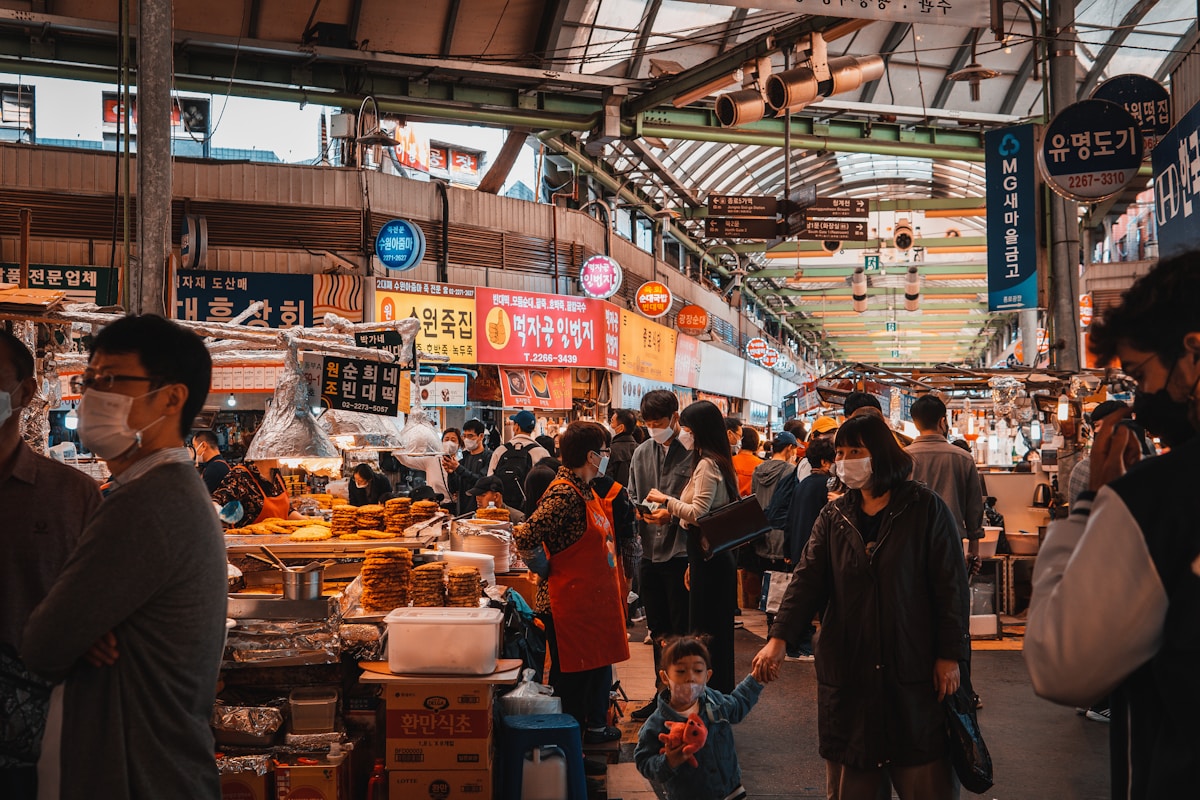
The surrounding market streets have standard Korean street food: tteokbokki, odeng fish cake skewers, fried squid, twigim (deep-fried vegetables and seafood). The area is pedestrianised and very busy on evenings and weekends.
Gukje Market
Adjacent to BIFF Square, Gukje Market is one of the larger traditional markets in South Korea. The food alleys inside are less photographed than Nampodong’s street stalls but have good variety - including the pig’s feet (jokbal) and large stewed pork preparations associated with the market. The atmosphere is more market-worker than tourist-oriented.
Raw Fish (Hoe) Culture
Eating fresh raw fish is more central to Busan dining culture than almost anywhere else in Korea. Hoe - thinly sliced raw fish served with dipping sauces, lettuce, and perilla - is eaten at dedicated hoe restaurants around the Jagalchi area and Haeundae. The fish is sliced to order from live tanks. The combination of freshness and price (compared to Japan’s sashimi) makes this one of the strongest arguments for eating seafood in Busan.
The Haeundae Raw Fish Centre near the beach has a floor of competing stalls where you can select your fish, have it prepared, and eat at shared tables. Haeundae Amso Galbijip is a well-regarded option for those wanting a sit-down meal rather than a market stall experience. A hoe set for two people typically runs 40,000–70,000 KRW depending on the fish and portion size.
What to Budget
Street food at BIFF Square and Gukje Market is very affordable - ssiat hotteok costs around 1,500 KRW, tteokbokki and odeng skewers typically 3,000–5,000 KRW per portion. A milmyeon or dwaeji gukbap lunch costs 8,000–10,000 KRW. Sit-down seafood meals at Jagalchi-area restaurants start around 25,000 KRW per person and scale up depending on what you order. Full hoe meals for two people fall in the 50,000–80,000 KRW range. Busan is noticeably more affordable than Seoul for seafood in particular.
For food tours and market experiences in Busan, guide services can navigate both the language and the etiquette of buying and eating at markets.