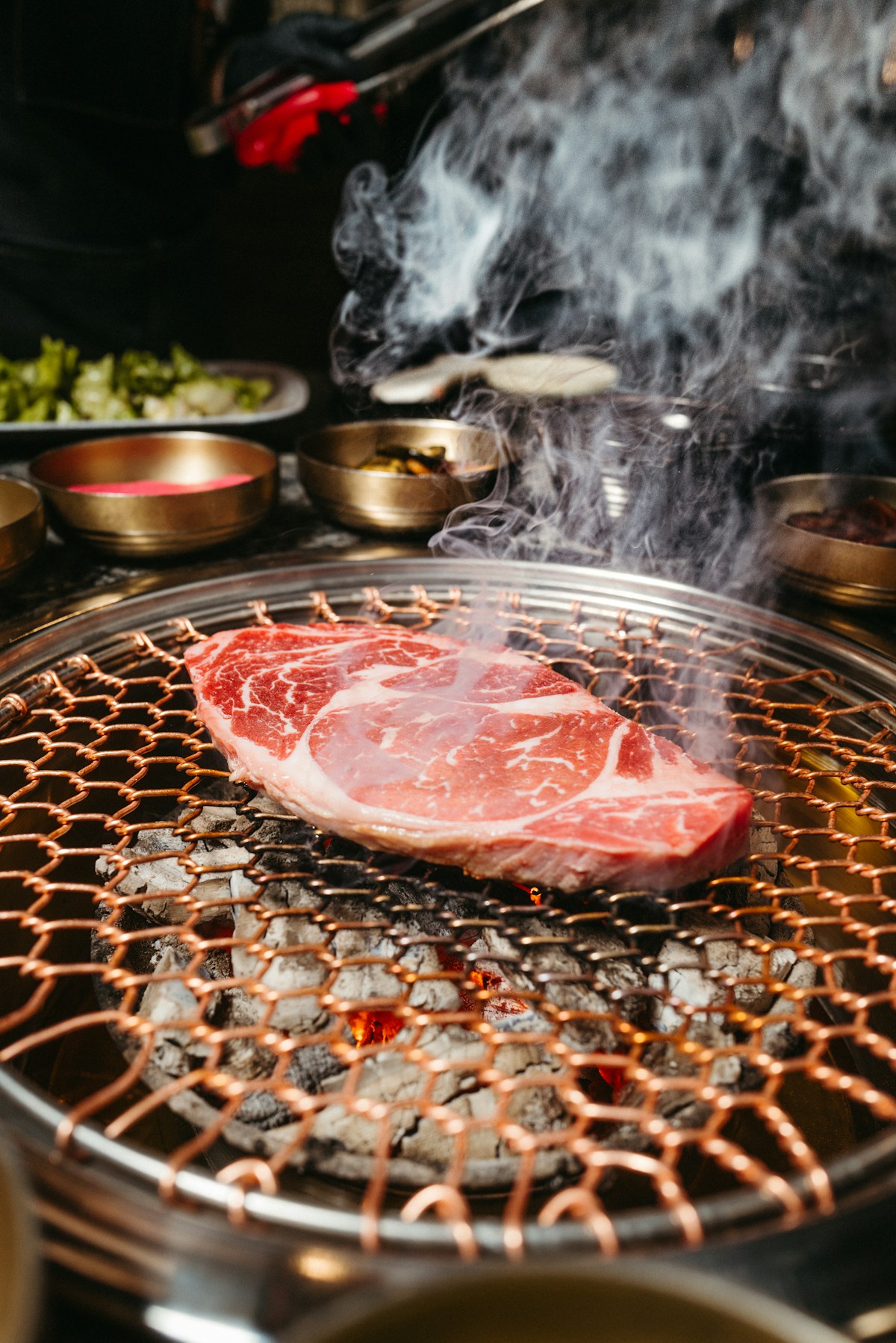
Korean BBQ is a full meal format built around a tabletop grill. You order cuts of meat, receive a spread of side dishes (banchan), and cook at the table. For first-timers, the combination of unfamiliar cuts, shared grilling etiquette, and the pace of ordering can feel disorienting - this guide covers the mechanics, the best cuts to start with, and where to go in the major cities.
How Korean BBQ Restaurants Work
Most KBBQ restaurants have gas or charcoal grills built into the table. Some have electric plate grills; charcoal grills are considered the benchmark by Korean diners. You sit down, are handed a menu, and order meat by the portion (인분, inbun). One portion usually feeds one person, so two people typically order two to three portions across two or three cuts.
When the meat arrives, the grill is already on. For pork belly and unmarinated pork cuts, you place the meat directly on the grill and turn it with the tongs and scissors provided. Korean restaurant scissors - used to cut grilled meat into bite-sized pieces - are one of the more useful tools you will encounter. For thinner cuts like bulgogi, many places provide a shallow metal bowl to sit over the grill, preventing small pieces falling through.
The banchan arrives with the meat. Refills are free - just gesture to a server or press the table call button. Ssam (wrapping leaves) come alongside the meat. The correct wrapping sequence: rice on the leaf, piece of grilled meat, slice of garlic (raw or roasted on the grill), a smear of ssamjang paste, then fold and eat in one bite.
Cuts to Know
Samgyeopsal (삼겹살) - Pork Belly
The most eaten cut in Korea. Unmarinated. Three layers of fat and lean meat - the fat renders down on the grill to baste the meat. Comes thick-sliced. Expect KRW 12,000–16,000 per portion (USD 9–12). Dugyeopsal is a leaner two-layer version.
Moksal (목살) - Pork Neck
Juicier than samgyeopsal, with more fat marbling. Slightly cheaper - KRW 11,000–15,000 per portion. Considered the superior cut by many regulars.
Galbi (갈비) - Short Rib
Beef or pork ribs, usually marinated in soy, sesame oil, garlic, ginger, and sugar. The marinade chars pleasantly. Beef galbi (소갈비) costs KRW 20,000–35,000 per portion; pork galbi (돼지갈비) is KRW 13,000–18,000. Cut the bone-on rib portion with scissors before eating.
Bulgogi (불고기) - Marinated Sliced Beef
Thinly sliced beef marinated in a sweet soy sauce. One of the most internationally familiar Korean dishes. Cooks in two to three minutes. KRW 14,000–20,000 per portion.
Hanwoo (한우) - Korean Beef
Hanwoo is domestically raised Korean beef, prized for its marbling. Cuts include deungsim (sirloin), chaekkeut (top sirloin), and kkot deungsim (ribeye). Hanwoo is expensive - KRW 40,000–100,000+ per portion depending on the grade - but quality is consistently high. Look for the official 한우 certification symbol on menus.
Jumulleok (주물럭) - Seasoned Beef
Marinated beef shoulder or rib meat, less sweet than bulgogi. A good middle option between marinated and plain cuts.
Table Etiquette
The grilling is communal. If you are the one managing the grill, keep an eye on the cook level - pork should be well cooked through. Turn pieces regularly. Do not let meat burn and sit; Korean BBQ is served in batches, not all at once.
- Do not pour your own drink; pour for others and let others pour for you.
- Use the serving chopsticks (when provided) to transfer meat from grill to plate rather than eating directly from the grill.
- Wrap and eat ssam in one bite - biting through it mid-wrap is messy and socially awkward.
- Ordering soju alongside the meal is standard. Soju and beer mixed (somaek) is common. Non-drinkers can order barley tea (boricha) or water - no issue with this.
- When the grill pad becomes blackened and sticky, signal the server; they will swap the grill plate at no extra charge.
Best Korean BBQ Restaurants by City
Seoul
Mapo Galmaegi-sal Alley (Mapo-gu) - The most famous BBQ strip in Seoul, concentrated near Mapo Bridge and in the surrounding residential alleys. Dozens of small restaurants serving galmaegi-sal (pork skirt steak), a cut distinct to this area. Per-person cost approximately KRW 15,000–20,000 (USD 11–15). No reservations typically needed - walk in and queue if necessary.
Palsaik Samgyeopsal (팔색삼겹살) - Chain with multiple Seoul locations (Hongdae, Myeongdong, Insadong). Serves pork belly in eight marinades - wine, ginseng, curry, soy garlic, and four others - simultaneously on one plate. Gimmicky in concept but popular with first-timers. Around KRW 18,000 per portion.
Maple Tree House (메이플 트리 하우스) - Premium hanwoo beef restaurant near Itaewon and Insadong. English-friendly, popular with visitors. Beef sets from KRW 70,000 per person.
Yangnyeom Tongdak BBQ (Jongno area) - More local atmosphere. Pork-focused, charcoal grill. Per person KRW 13,000–18,000.
A Korean BBQ food tour in Seoul is a good option if you want a guide to explain cuts, ordering, and the wrapping technique on your first visit.
Busan
Gukje Market Area (Nampo-dong) - Several good galbi and samgyeopsal spots clustered around the market and Biff Square. Busan pork options including dwaeji gukbap (pork soup rice) are an alternative to the grill format here.
Seomyeon Meat Street - The highest concentration of BBQ restaurants in Busan, particularly between Seomyeon Station exits 1 and 2. Busy every evening. Prices run slightly below Seoul - samgyeopsal around KRW 11,000–14,000 per portion.
Jeonju
Jeonju beef is regionally well-regarded. Hanwoo galbi houses near the Hanok Village charge KRW 35,000–60,000 per portion but the quality justifies the premium. The city also has a strong tradition of hanjeongsik (traditional set meals) which can substitute for BBQ if you want a full multi-dish spread.
Ordering Tips for First-Timers
- Order two or three different cuts for variety - start with one pork and one beef.
- Order the lettuce and perilla wrap (쌈, ssam) if not automatically provided.
- Add a pot of doenjang jjigae (fermented soybean paste stew) or kimchi jjigae (kimchi stew) - these serve as the warm liquid accompaniment and fill the table alongside the meat.
- At the end of the meal, if you have leftover rice and want it, fried rice (볶음밥, bokkeumbap) in the residual grill fat is sometimes offered. Say yes.
- Prices on menus are per portion. Two people at a restaurant with KRW 14,000 samgyeopsal ordering two portions each will pay around KRW 56,000 before drinks.
What a Meal Costs
| Setting | Per person (food only) | Notes |
|---|---|---|
| Local neighbourhood restaurant | KRW 12,000–18,000 (USD 9–13) | Pork focus, beer or soju extra |
| Mid-range city restaurant | KRW 20,000–35,000 (USD 15–26) | Mix of pork and beef cuts |
| Premium hanwoo restaurant | KRW 50,000–120,000 (USD 37–89) | Domestic Korean beef, table service |
Soju costs approximately KRW 5,000–7,000 per bottle at a restaurant. Beer (500ml) runs KRW 5,000–8,000. Barley tea is usually free or KRW 1,000–2,000.
A full Korean BBQ experience - meat, banchan, a stew, drinks - for two people typically comes to KRW 60,000–90,000 (USD 44–67) at a mid-range restaurant in Seoul.