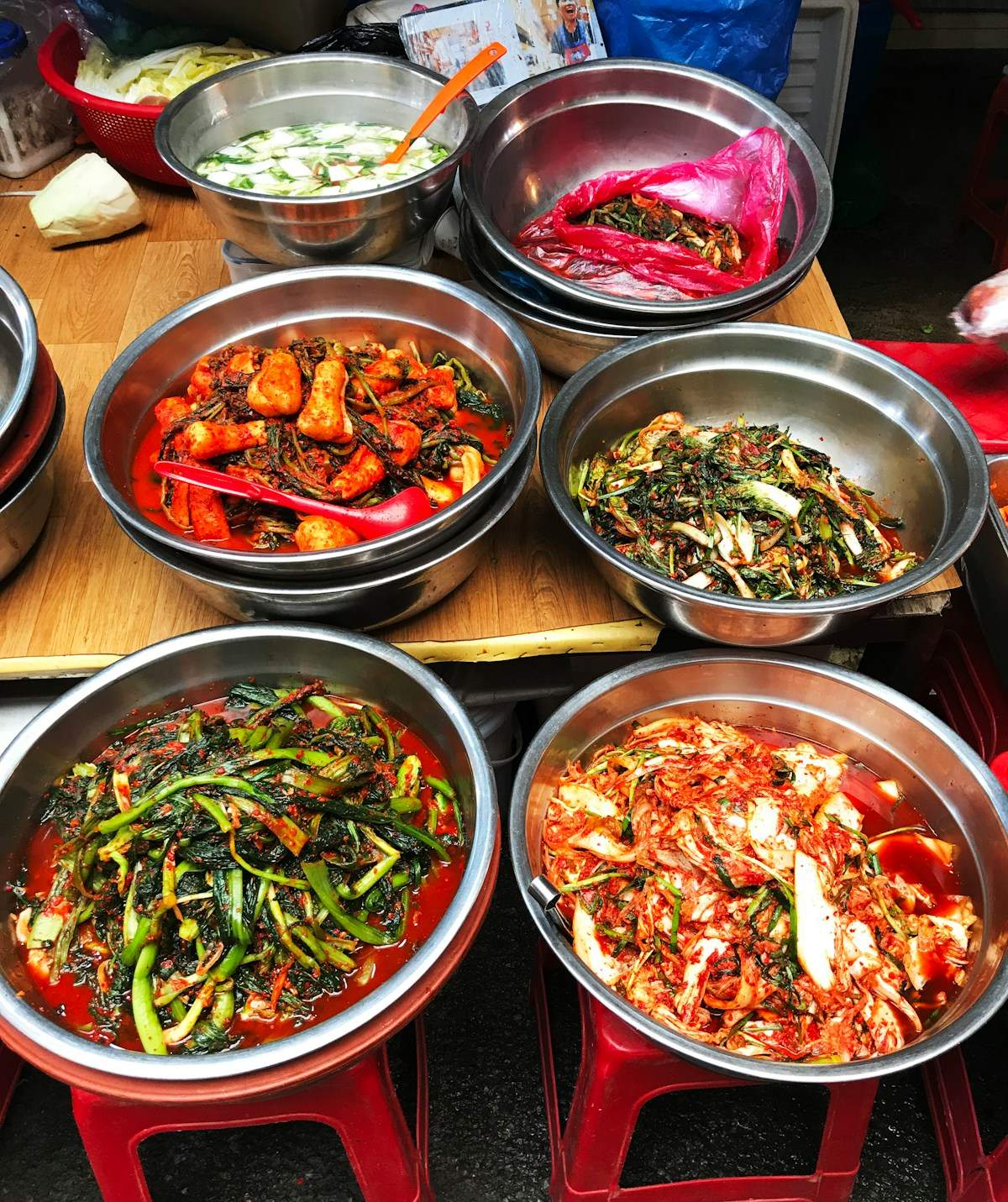
Gwangju has one of the strongest food reputations in South Korea. The Jeolla region’s combination of productive farmland, coastal access, and a long tradition of fermentation produces ingredients that Seoul’s restaurant industry has long sourced from here. Eating in Gwangju means more banchan side dishes per table than almost anywhere else in the country, and a kitchen culture that values refinement over novelty. Here is a practical guide to eating well in Gwangju, with prices and locations as of 2026.
The Banchan Culture of Gwangju
A meal at a traditional Gwangju restaurant typically arrives with 15 to 25 banchan side dishes before the main course. These may include multiple types of kimchi, braised lotus root, seasoned fernbrake (gosari), seasoned bean sprouts, braised anchovies, marinated tofu, pickled cucumber, and half a dozen more. This generosity is not merely hospitality - it reflects regional culinary values in which the quality and variety of the accompaniments is as important as the main dish.
Most sit-down restaurants in the Dongmyeong-dong and Chungjang Road areas of central Gwangju offer this standard, regardless of the price point. A full meal with banchan, a main dish, and rice costs approximately KRW 10,000–18,000 per person at mid-range restaurants as of 2026.
Tteokgalbi (떡갈비) - Songjeong
Tteokgalbi is a Gwangju-area speciality of grilled patties made from minced beef and rice, pressed onto a wooden skewer or formed by hand. The texture is softer than conventional grilled beef, and the dish is seasoned with soy sauce, sesame, and a small amount of gochujang. It is not spicy; the flavour profile is sweet-savoury.
The best concentration of tteokgalbi restaurants is in Songjeong (송정), near the KTX Gwangju-Songjeong Station, approximately 10 km from central Gwangju. Songjeong Tteokgalbi Street (송정떡갈비거리) is a pedestrian alley lined with dedicated tteokgalbi restaurants. A standard two-person set meal of tteokgalbi, rice, soup, and banchan costs approximately KRW 20,000–30,000 as of 2026. Hamangjib (하망집) and Songjeong Ilgajeong (송정일가정) are the most consistently recommended among local visitors.
Ganjang Gejang (간장게장)
Raw soy-marinated crab is one of the signature dishes of Jeolla cuisine and is served in specialist restaurants across Gwangju. The crab - typically blue crab (kkotge) - is marinated raw in a ganjang (soy sauce) brine for several days, then served cold with the shell intact. The semi-liquid roe and crab meat mixed with the intensely savoury sauce is traditionally eaten by pulling the rice into the shell and mixing it directly.
Gejang Sikdang (게장 식당) restaurants in the Dongmyeong-dong area of central Gwangju are the standard recommendation. Expect to pay approximately KRW 30,000–50,000 per person for a set meal including crab, rice, soup, and banchan as of 2026. This is one of the pricier Gwangju eating experiences, but portions are generous.
Doganji Makgeolli (막걸리)
Gwangju’s makgeolli (rice wine) culture centres on traditional bars (sulchip) that pair house-brewed rice wine with substantial anju (drinking snacks). Unlike Seoul’s makgeolli bars, which often focus on a single dish alongside the drink, Gwangju sulchip typically serve multiple rounds of food.
Dongmyeong Makgeolli Bar Street (동명동 막걸리 골목) near Chungjang Road has the highest density of these establishments. A ceramic jug of makgeolli costs approximately KRW 3,000–5,000 as of 2026; food accompaniments (pajeon, japchae, kimchi jjigae) are ordered separately and range from KRW 8,000–15,000 per dish. The atmosphere is informal; most bars are standing-room or low-table style.
Gwangju Traditional Market (광주 양동시장)
Yangdong Market in western central Gwangju is one of the largest traditional markets in the Honam region. The covered market stalls sell fresh produce, seafood, dried goods, and prepared food. The food stall section near the market interior serves doenjang jjigae, bibimbap, sikhye (sweet rice drink), and various hot dishes from approximately 07:00 to 18:00.
A meal at a market stall costs approximately KRW 6,000–9,000 as of 2026. The market is accessible via bus from Gwangju Station or a KRW 4,000–5,000 taxi ride from the city centre.
Chungjang Road Street Food
The pedestrian zone around Chungjang Road and the adjacent lanes in Donggu are the main street food area of central Gwangju. Vendors sell tteokbokki (spicy rice cakes, approximately KRW 3,000–4,000), hotteok, gimbap, grilled corn on the cob, and tornado potato skewers from carts and small stalls.
The area is busiest from late afternoon through the evening, particularly on weekends. Several independent coffee shops and dessert cafés have opened in the side streets, making this a good area to explore on foot after eating at one of the market-adjacent restaurants.
For food tours in Gwangju that cover the tteokgalbi restaurants of Songjeong, the gejang specialists of Dongmyeong-dong, and the traditional market food halls with a guide who can explain the dishes in English, GetYourGuide lists options for the Gwangju and South Jeolla region. Booking an eSIM from Airalo before you arrive makes navigating between eating spots straightforward using Kakao Maps.