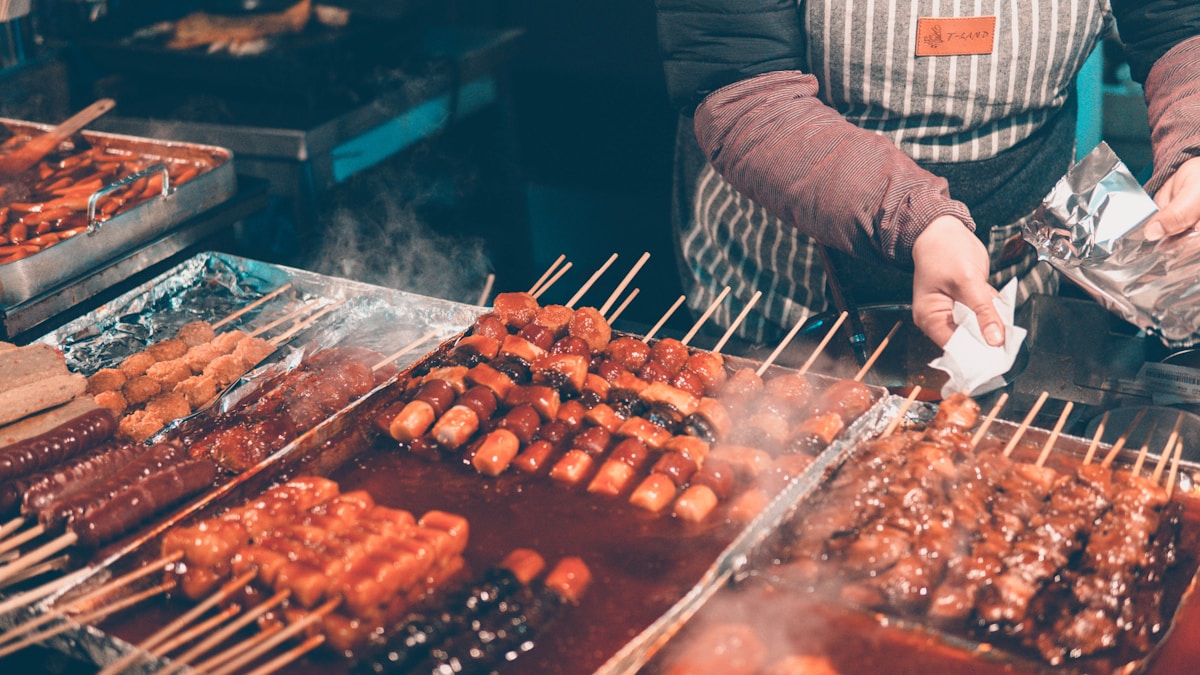
Seoul’s food scene is one of the city’s biggest draws - but navigating it cold, without Korean language skills and without knowing where to start, means a lot of walking between 7-Elevens. A guided food tour fixes that. The best operators cover ground you’d take days to find on your own, explain the food as you go, and handle the awkward moment of ordering at a stall where nobody speaks English.
This guide covers the best food tours operating in Seoul, what each covers, and what to expect on price and format.
Street Food Tours: Markets and Night Vendors
Airbnb Experiences - Seoul Street Food (various hosts)
Airbnb’s Experiences platform has the highest volume of food tour hosts in Seoul, ranging from amateur local guides to trained culinary professionals. The most-reviewed experiences concentrate on Gwangjang Market, Namdaemun Market, and Myeong-dong. Prices run approximately KRW 45,000–80,000 per person as of 2026. Quality varies significantly between hosts - filter by reviews over 4.8 stars and read through comments to confirm guides speak confident English.
Ongo Food Communications
One of the longest-running food tour operators in Seoul, Ongo specialises in Korean street food walks and cooking experiences. Their most popular offering is the Gwangjang Market food walk, covering bindaetteok (mung bean pancakes), mayak gimbap, soondeae (blood sausage), and seasonal vendors. Group sizes are capped at 10–12 people. Price: approximately KRW 69,000 per person as of 2026. Ongo also offers an evening Myeong-dong and Namdaemun tour that starts after 18:00 when the stalls hit peak activity.
GetYourGuide - Seoul Food Tour operators
GetYourGuide lists several independently-operated Seoul food tours with upfront pricing and free cancellation up to 24 hours before. Tours on the platform include night market walks, Korean BBQ introductions, and combination food-and-neighbourhood experiences covering Insadong or Bukchon alongside eating. Prices range from approximately KRW 50,000–100,000 per person depending on duration and group size. Reviews on GYG are verifiable and a good indicator of guide quality.
O’ngo Food Tour (private option)
For small groups or couples, O’ngo’s private food tour gives you a guide entirely to yourselves across your choice of markets and neighbourhoods. The private format allows the guide to adapt the pace and focus based on your preferences - more sit-down restaurant time, more street snacking, or a mix. Price: approximately KRW 130,000–180,000 per person for a private 3-hour experience as of 2026.
Cooking Classes: Learn to Make Korean Dishes
Ongo Food Communications - Cooking Class
Ongo’s cooking classes take place in a dedicated kitchen near Gyeongbokgung and typically cover 3–4 dishes: usually kimchi, tteokbokki (spicy rice cakes), bibimbap, and one or two others depending on the session. Classes run approximately 2.5–3 hours including eating what you cooked. Price: approximately KRW 80,000 per person as of 2026. Small group size (max 8) keeps the pace manageable. Vegetarian and gluten-free adaptations are available on request.
Seoul Cooking Class - Mangwon Market (various providers)
Several operators run a market-to-table format in the Mapo-gu area: participants visit Mangwon Market with the instructor to buy ingredients, then cook in a nearby kitchen space. This format gives you a genuine market experience rather than pre-sourced ingredients. Duration is typically 3–4 hours. Price: approximately KRW 90,000–110,000 per person as of 2026.
Hansik Cooking Studio
Based in Insadong, Hansik runs small-group and private cooking classes focused specifically on traditional (not modern or fusion) Korean cuisine - jeon (Korean pancakes), japchae (glass noodle stir-fry), doenjang jjigae (fermented soybean paste stew). Class sizes max at 6 people. Price: approximately KRW 85,000–95,000 per person as of 2026.
Night Market and Late-Night Eating Tours
Myeong-dong Night Market Walk (self-guided with map apps)
Myeong-dong’s pedestrian street fills with around 70–100 food vendors from approximately 18:00 until midnight every evening. No guide is strictly necessary - the vendors are clustered along a 400m strip and signs are in English, Chinese, and Korean. Must-try stops: tornado potato skewers, egg bread (gyeran-ppang), hotteok (sweet pancakes), cheese lobster, and the various tteokbokki (spicy rice cake) stalls.
Gwangjang Market Evening Tour
Several operators offer evening Gwangjang Market tours specifically to experience the covered market after dark, when the food stalls that line the interior aisles are fully operational. Guided tours typically include bindaetteok fresh off the griddle, a round of soondeae (blood sausage with rice), and a guide explanation of the various gimbap styles. Evening timing is 18:00–21:00 for most operators. Price: approximately KRW 55,000–75,000 as of 2026.
Dongdaemun Design Plaza Area (late-night, self-guided)
Around Dongdaemun and the nearby Pyounghwa Fashion Town, a cluster of pojangmacha (tent restaurants) operates from approximately 22:00 until 03:00. These are small-scale operations - typically 4–8 plastic tables under a tent - serving anju (food paired with alcohol), including haemul pajeon (seafood pancakes), grilled pork, and spicy rice cakes. This is the least tourist-oriented late-night eating in central Seoul. No guided tours focus on this area specifically, but it is walkable from Dongdaemun History & Culture Park metro station.
Korean BBQ Introductions
For visitors who want guidance on how to actually use a Korean BBQ restaurant - how to light the charcoal or turn on gas burners, which cuts of meat to order in what sequence, how to wrap meat in lettuce with doenjang paste - short Korean BBQ orientation tours are worth considering.
A few operators on GetYourGuide and Airbnb Experiences offer 1.5–2 hour experiences at a partner BBQ restaurant in Mapo or Mapo-gu that include explanation of the ordering system, the correct dipping sauces, and the traditional accompaniments. Price: approximately KRW 60,000–80,000 per person including food as of 2026.
If you prefer to go independently, the Seoul food guide covers the best Korean BBQ restaurants in Mapo and Hongdae by price range.
What to Eat Before the Tour Starts
Most food tours include substantial eating - plan not to eat a full meal for 3–4 hours beforehand. Tours that run 7pm onwards often start with lighter snacks and build up to heavier dishes later in the evening.
Let the guide know in advance about dietary restrictions - vegetarians can be accommodated on most tours with advance notice, as many Korean street snacks are naturally vegetable-based. Pork is the most common allergen to flag, as it appears in dishes that don’t obviously appear meat-based (soondeae, kimchi fried rice at some vendors, certain rice cake preparations).