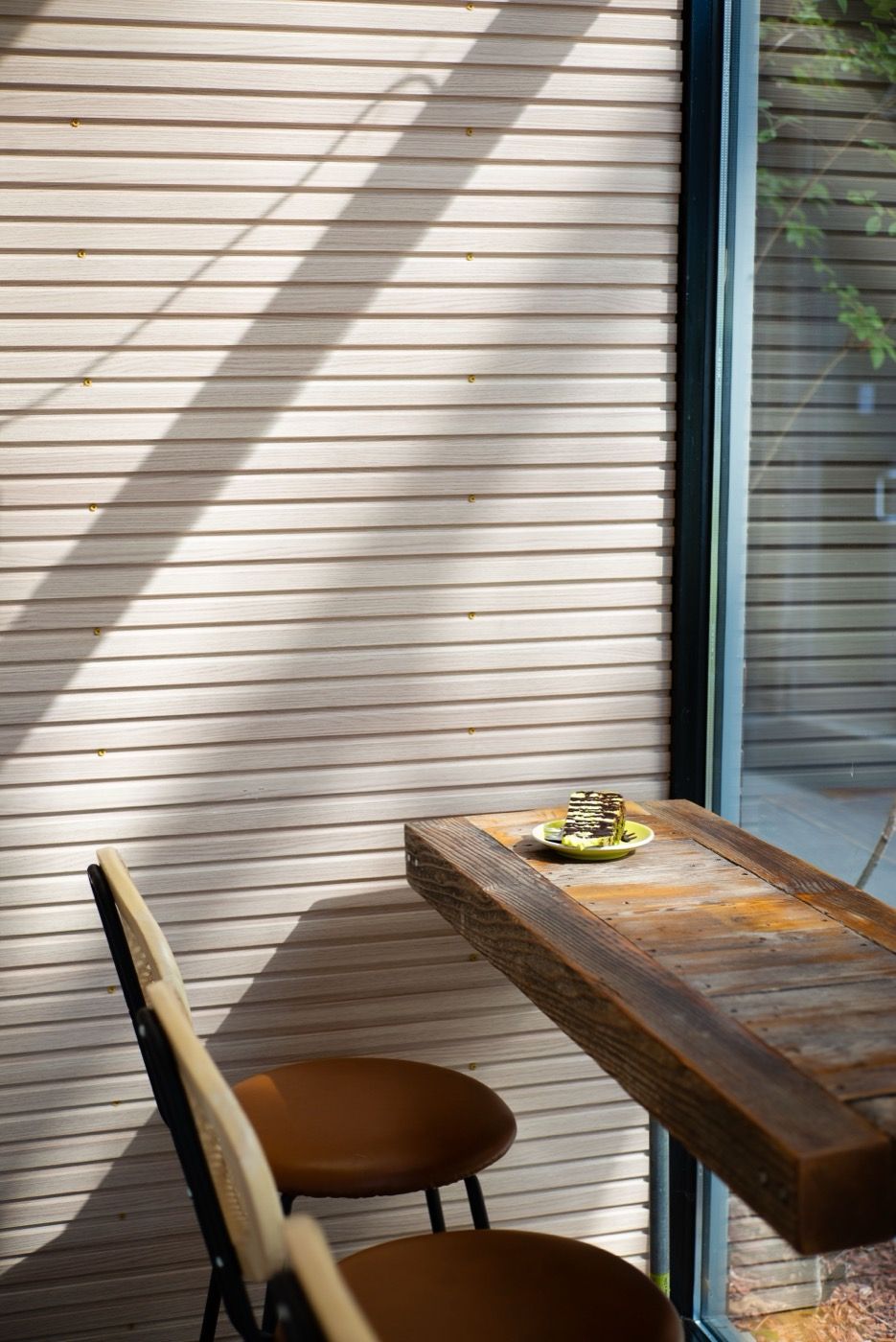
Mangwon-dong does not market itself. There are no Instagram-famous queue lines, no queues for the opening hour of a concept cafe, and no neighbourhood-wide branding campaign. The market has been running since before the cafes arrived, the side streets are full of ordinary apartment blocks, and the people drinking coffee at 10:00 on a Tuesday morning are mostly people who live nearby.
That absence of performance is exactly why the cafe scene here is worth the detour. When a neighbourhood has enough genuine foot traffic from local residents, cafe owners can focus on the product rather than the concept. Mangwon’s best cafes are well-calibrated, independent, and run by people who care about their specific specialty - single-origin espresso, natural-process filters, or house-fermented kombucha on tap next to the La Marzocco.
Coffee Montage
Coffee Montage is the anchor of Mangwon’s specialty scene - a small, focused roastery-cafe that has been operating long enough to have regulars who pre-order specific seasonal lots before they sell out. The space holds about twenty people, with a bar counter facing the grinders and a bench along the window. The barista explains each coffee on the day’s menu; single-origin pour-overs rotate weekly and are sourced from smallholders in Ethiopia, Colombia, and Korea’s growing domestic specialty-coffee supply chain.
A filter coffee costs KRW 7,500–9,500 depending on origin. Espresso drinks run KRW 6,000–7,500. There is no sweet menu beyond a plain scone. Open Tuesday to Sunday 10:00–20:00, closed Monday.
Bora Bora
Bora Bora is a compact neighbourhood cafe with a following among the expat community in Mapo-gu. The interior is light and clean - white walls, natural wood, and a small terrace - and the menu is broader than a pure specialty shop: flat whites (KRW 6,500), a decent matcha latte (KRW 7,000), cold brew on tap (KRW 7,000), and several Korean-style dessert drinks including a hojicha milk (KRW 7,500). The wi-fi is fast and reliable and there is no time pressure, which makes it a popular working spot on weekday afternoons.
English menus are available and staff are comfortable with English orders - less common in the immediate neighbourhood than in areas like Itaewon or Hongdae. Open daily 10:00–22:00.
Felt Coffee
Felt Coffee is a second-wave-to-third-wave crossover: the espresso is pulled with care but the environment is deliberately casual. Wooden furniture, a mismatched playlist, and enough ambient noise to feel alive without being loud. The house blend espresso (KRW 5,500) is a reliable daily-driver coffee - chocolate and caramel forward, low acidity, works well as a long black. Seasonal lattes rotate monthly; recent editions have included black sesame (KRW 8,000) and a citrus espresso tonic (KRW 8,500).
Felt draws a mix of creative freelancers and neighbourhood regulars. Seating is limited to about fifteen inside plus four outside, so weekend afternoons can fill up quickly. Open daily 09:00–21:00.
Mangwon Market Morning Run
The most honest way to visit Mangwon’s cafe scene is to pair it with the market. Mangwon Market (망원시장) runs along a covered street off the main road from the station and opens from around 07:00. The stalls sell produce, dried goods, and an excellent selection of street snacks - bindaetteok (mung bean pancake, KRW 2,000–3,000), tteokbokki (spicy rice cake, KRW 3,000–4,000), and seasonal jeon pancakes.
A standard morning plan: arrive at Mangwon Station by 09:00, walk the market from south to north, stop for a snack, then settle into one of the cafes above for an hour before the neighbourhood fills up. By 11:00 on weekends, both the market and the better cafes have queues.
Seoul Roasters
Seoul Roasters operates a small production roastery in the back of their Mangwon shop, and the smell of fresh roasting on Tuesday and Friday mornings is unmistakeable from the street. The retail side is simple: a bar, eight tables, and a menu that changes when the latest roasting batch comes through. Filter coffee (KRW 7,000–9,000) is the main event; espresso is available but the preference of the baristas is clearly for the brewed side of the menu.
Bags of beans are available to take home - 200g bags run KRW 18,000–24,000 depending on origin. Open Wednesday to Monday 09:00–18:00, closed Tuesday on roasting days.
Practical Notes for Mangwon
Mangwon is quieter than Seongsu or Hongdae and weekday visits are genuinely low-key. The neighbourhood does not have a late-night cafe scene - most places close between 20:00 and 22:00. Parking is tight on the surrounding streets but most visitors arrive by subway or on foot from the Han River parks.
The Han River cycle path passes directly along the south side of the Mangwon Hangang Park, about 15 minutes’ walk from the main cafe strip. Rental bikes from the city’s Ttareungi public bike scheme (KRW 1,000 per 30 minutes) are available at the park entrance, and cycling west along the river toward the World Cup Stadium area takes about 20 minutes. It makes a natural end to a Mangwon cafe morning.
If you are planning a longer stay near the river, you can browse hotels in Seoul on Booking.com.