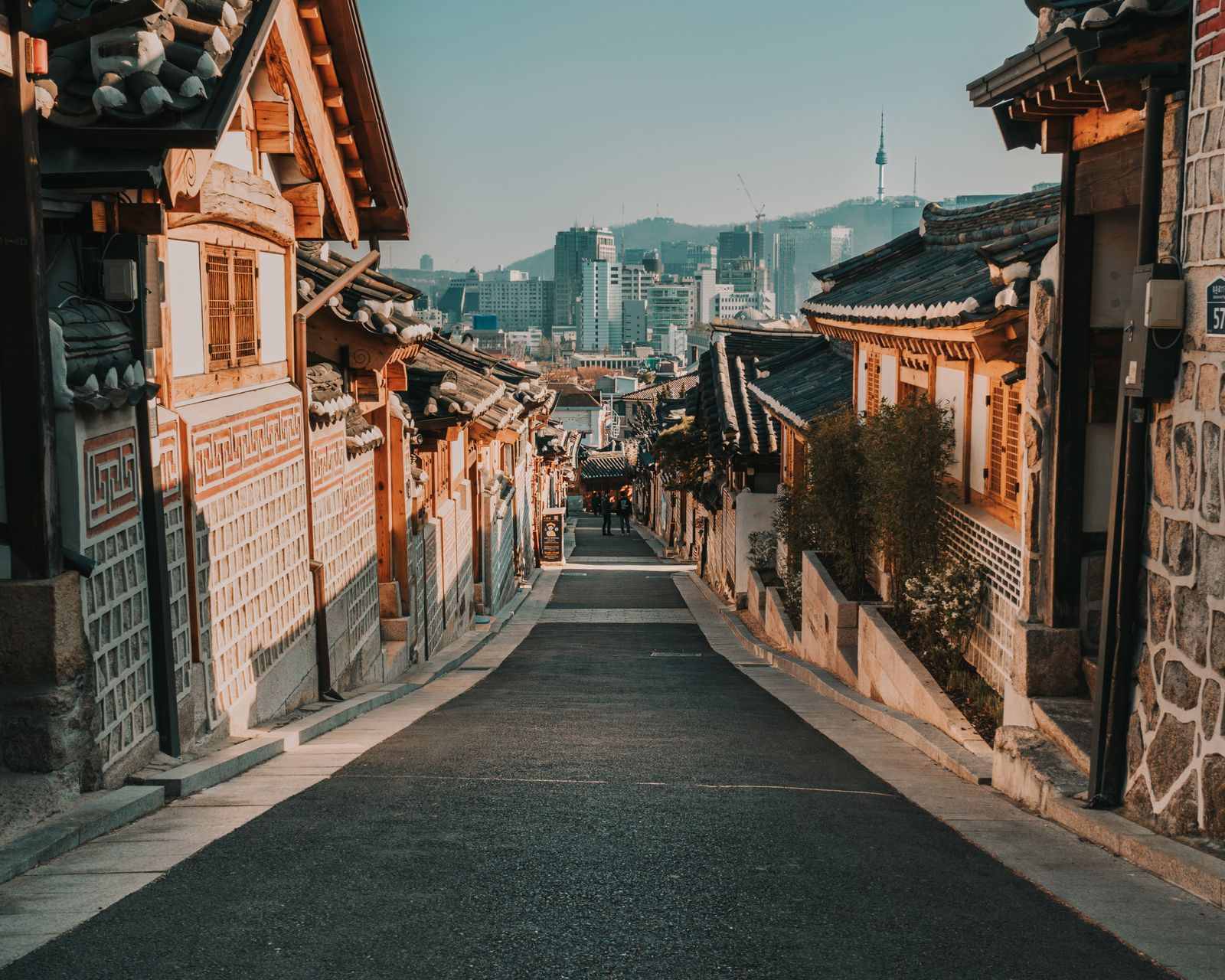
Ikseon-dong sits between Changdeokgung Palace and the busy road at Jongno, occupying a grid of alleys that look more like a film set from the Joseon era than a neighbourhood in a city of ten million people. The hanok houses here - traditional wooden structures built around a central courtyard - survived the demolition waves of the twentieth century because the plot sizes were too awkward for high-rise development. What remained was a dense warren of single-storey homes with tiled roofs, exposed timber beams, and small internal gardens.
From around 2016, cafe and restaurant owners started leasing these buildings and converting them into venues that preserved the original structure while adding coffee machines, matcha grinders, and kitchen equipment. The result is a cafe district where the architecture is as much the attraction as anything in the cup - and where the best places understand that the hanok shell requires a certain restraint in what you put inside it.
Ikseon Gahoe
Ikseon Gahoe is one of the older conversions in the neighbourhood and sets the standard for what a hanok cafe should be: minimal intervention, traditional materials, and an outdoor courtyard that forms the heart of the seating. The building’s wooden lattice windows have been kept intact, and the floor seating areas - low cushions around lacquered tables - give it a genuinely traditional feel rather than a theme-park version of one.
The matcha latte (KRW 9,000) uses ceremonial-grade matcha and is served without sweetener by default. Korean traditional teas - omija (five-flavour berry), yuzu, and barley - run KRW 6,500–8,000. The bingsu in summer is a condensed-milk variety topped with red bean, and a single serving (KRW 15,000) comfortably serves two. Open daily 11:00–21:00.
Café Sukkara
Café Sukkara occupies a converted hanok on one of the quieter alleys off the main drag, which means it is slightly harder to find but considerably less crowded. The interior keeps the original black-tile roof and wooden column structure visible, with low seating arranged around the central courtyard. In warm weather the courtyard itself becomes the main seating area, and the combination of open sky above the old rooflines makes it one of the more photogenic spots in the neighbourhood.
The menu leans toward traditional Korean beverages: sikhye (sweet fermented rice punch, KRW 6,000), misugaru latte (roasted grain milk, KRW 8,000), and a rotating seasonal dessert. The hoeddeok waffle - a Korean street-food pancake adapted for a sit-down setting - costs KRW 9,500. Open Wednesday to Monday 11:30–20:30, closed Tuesday.
Yukjeon Sikdang Dessert
This dessert cafe specialises in bingsu - Korean shaved ice - and serves some of the most technically accomplished versions in Ikseon-dong. The milk snow base is finely shaved and flavoured with condensed milk rather than sweetened artificially, and toppings are seasonal: strawberry and cream in spring, melon in summer, chestnut and sweet potato in autumn. Prices run KRW 14,000–18,000 per serving. The space is small - eight tables - and there is frequently a short wait during weekend afternoons. Open daily 11:00–21:00, last order 20:30.
Dawon Traditional Tea House
For a break from coffee-first menus, Dawon is the most comprehensive traditional tea destination in the area. Operating inside a converted hanok that dates to the early twentieth century, it serves over fifteen Korean teas including chrysanthemum, jujube, lotus, and the delicate omija tea whose five flavours - sweet, sour, salty, bitter, and pungent - come from a single berry. Teas run KRW 7,000–11,000. The space is dim, quiet, and the floor seating cushions are exchanged for wooden chairs in the outer rooms. Open daily 10:00–21:00.
Navigating Ikseon-dong
The neighbourhood is small enough to cover in an hour of walking, but the alleys are genuinely narrow - two people pass each other with difficulty in some sections - and weekend afternoons can feel congested. The best strategy is to arrive before noon, when the morning light is soft and the crowds are thin, or after 18:00, when the ambient lighting shifts and the hanok spaces have a different character entirely.
Most cafes in Ikseon-dong do not take reservations. Queues for the most popular bingsu and matcha spots can reach 20–30 minutes on weekend afternoons in summer. Weekday visits between 10:00 and 12:00 are almost always walk-in without waiting.
Around Ikseon-dong
After cafes, the neighbourhood’s surrounding area rewards exploration. Changdeokgung Palace (admission KRW 3,000) is ten minutes on foot and includes the Huwon Secret Garden, one of the most beautiful formal gardens in the city. Insadong’s craft shops and galleries are eight minutes in the other direction. The Naksan Park footpath, which connects to the old Seoul city wall, begins about 15 minutes’ walk northeast and offers rooftop-level views over the hanok neighbourhood itself.
The area is central, so it works well as a base: browse hotels in Seoul on Booking.com.