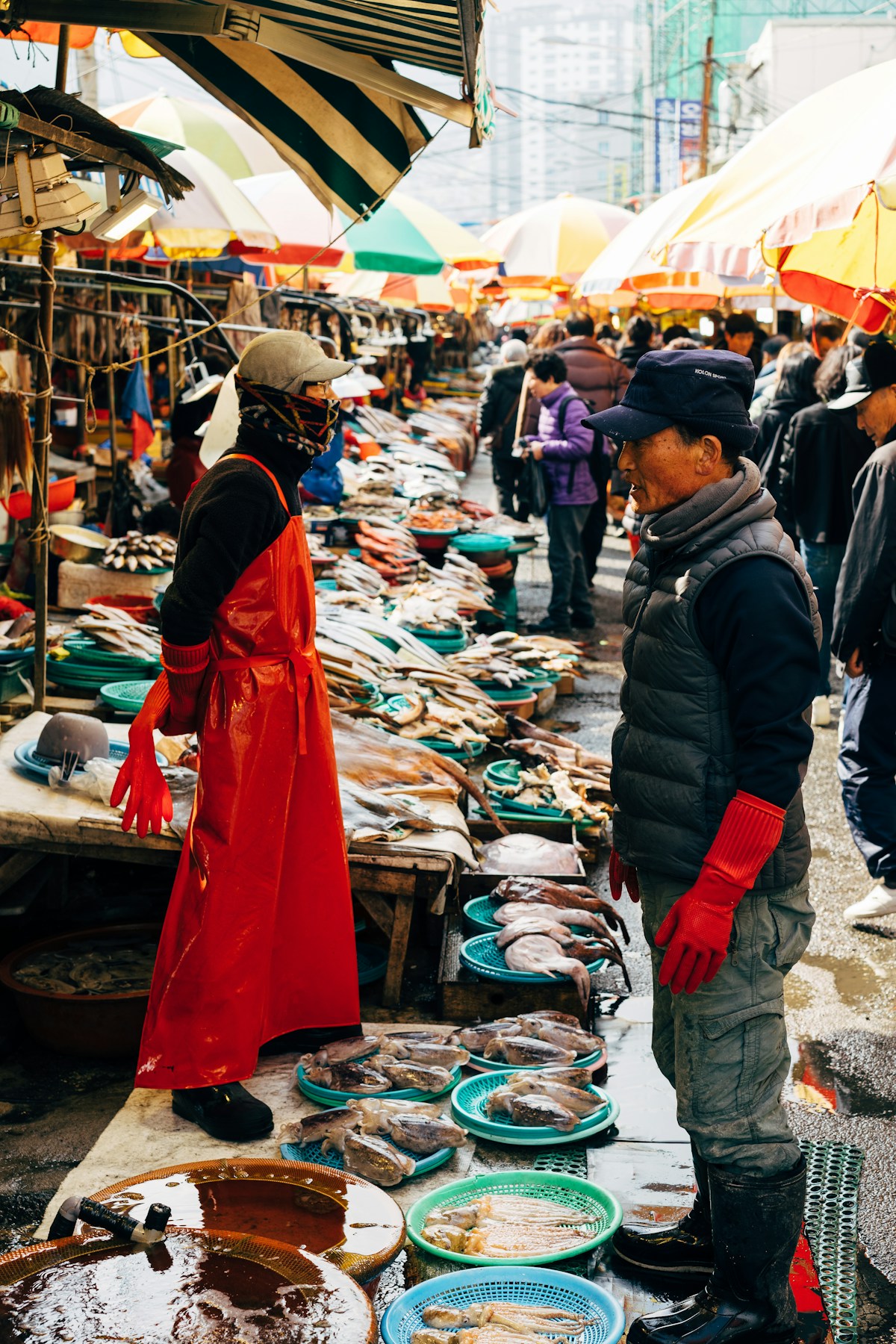
Jagalchi Market (자갈치시장) is South Korea’s largest seafood market, set on the Nampo waterfront in central Busan. The main building, with its distinctive wave-shaped roof, holds the stalls on the ground floor, and the open-air alleys outside sell dried fish, squid and shellfish. Many visitors come to buy a live fish and have it prepared upstairs. This page covers the market itself: the layout, how the system works and how to avoid being overcharged. For the wider Busan dish list, see our Busan food guide.
Getting there and hours
Take Busan Metro Line 1 to Jagalchi Station and leave by exit 10; the market is a few minutes’ walk. Nampo Station is one stop away. Most guides give hours of about 05:00 to 22:00, but each stall sets its own, so the late afternoon is the safest window for restaurants. The market is closed on certain Tuesdays each month, and guides disagree on which, so confirm before a special trip. See our Busan getting-around guide for metro fares and T-money.
How the downstairs-to-upstairs system works
- Walk the ground-floor aisles. Stalls display live flatfish, sea bream, sea urchin, abalone, octopus, eel and crab in tanks. Ignore touts at the entrance and wander one full loop first.
- Choose and ask the weight price. Prices are quoted per kg or per piece and depend on season and size. Say “얼마예요?” (eolmayeyo, how much?) and look at the scale as the fish is weighed. As a rough guide as of 2026, mid-range flatfish and bream sell at tens of thousands of won per kg, while king crab can start around KRW 75,000-95,000 a kg.
- Have it prepared. The vendor sends you to the upstairs hall or a partner restaurant. The restaurant slices the fish as hoe (sashimi) and often cooks the head and bones into spicy fish stew (maeuntang).
- Pay the extras. Restaurants typically add a table-setting fee of around KRW 5,000 per person and a cooking charge of KRW 5,000-10,000 per item if you want it grilled, steamed or stewed. Side dishes and rice come with the meal.
Tip: confirm the total, including the weight, the cooking fee and the table charge, before sitting. A weighed price that looks low can rise once extras are added.
What to expect
The scene is loud and wet, with fish being cut in front of you. Footwear with grip helps. Winter, from December to February, is the peak season for flounder and crab, and the market feels busiest on weekend lunchtimes. Vegetarians and anyone avoiding raw food can still enjoy a walk through, but should skip the upstairs hall. For a calmer alternative, eat cooked fish at the Nampo-dong restaurants nearby.
Etiquette and avoiding overcharging
Prices at the main stalls are not fixed, and light haggling is normal if you buy several items, though it will not move a posted price much. Do not photograph vendors up close without asking, since the aisles are their workplace. Bring small notes or a card, as most stalls accept both, and keep your receipt for the upstairs restaurant. If a tout steers you to a restaurant before you have chosen a fish, politely decline and go to a stall of your own choice. A group of three or four shares a platter far better than a solo diner, because a single fish is sold whole and the smallest portions are often too large for one person.
Combine with Nampo, BIFF and Gamcheon
Jagalchi sits in the old commercial core. After lunch, walk 5 minutes to BIFF Square for street snacks, then Gukje Market and the Nampo-dong shops. In the morning, take Line 1 to Toseong for Gamcheon Culture Village and return in time for lunch. Our 3-day Busan itinerary schedules this day with timings. Best time to visit Busan explains why winter suits the market.
Tours and where to stay
A guided Busan food or city tour can handle the ordering and the haggling. Browse Busan tours on GetYourGuide or see our best tours in Busan. Nampo and Busan Station are the closest bases; compare Busan hotels on Booking.com and read our best hotels in Busan guide.
Official visitor information is at Visit Busan.