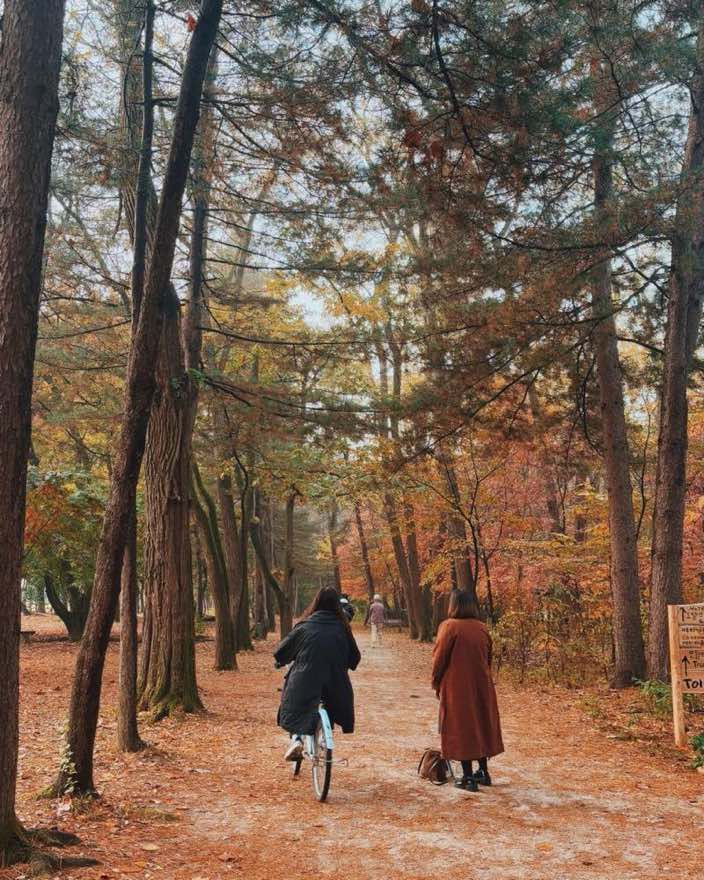
South Korea’s 2027 autumn foliage season runs from late September to mid-November. The country’s forested mountain ranges - nearly 70% of Korea is covered by mountains - turn from green to gold, orange, and crimson in a wave that moves north-to-south over six weeks, giving travellers multiple windows to catch peak colour at different destinations.
This guide covers the 2027 forecast, the best destinations by timing, and the practical details for planning an autumn Korea trip.
How to Read the Forecast
Korea’s autumn dates are driven by temperature. The Korea Meteorological Administration (KMA) publishes an official foliage forecast each September once early-autumn temperature data is available at knma.or.kr. The dates below are historical averages based on the last decade; the KMA forecast will refine these once published.
Rule of thumb: a warm September pushes all dates 5–10 days later. A cool September with an early cold snap can bring Seoraksan colour up to two weeks earlier than average. Follow the KMA September forecast for the most accurate 2027 picture.
2027 Foliage Forecast by Destination
| Destination | Predicted 2027 Peak | Confidence |
|---|---|---|
| Seoraksan National Park (Gangwon-do) | Sep 27 – Oct 10 | High (consistent early peak) |
| Bukhansan / Dobongsan (Seoul) | Oct 15 – Oct 25 | High |
| Nami Island / Gapyeong | Oct 23 – Nov 2 | Medium-high |
| Gyeongju (Bulguksa, Bomun Lake) | Oct 25 – Nov 5 | Medium-high |
| Naejangsan National Park (North Jeolla) | Oct 30 – Nov 14 | High (consistently Korea’s latest peak) |
| Hallasan / Jeju Island | Oct 25 – Nov 10 | Medium |
Dates represent the window when each destination is at 70–100% colour saturation. Arriving 3–5 days before peak allows you to witness the turn; arriving at exact peak means maximum colour but maximum crowds.
Seoraksan: Korea’s Earliest Colour
Seoraksan National Park in Gangwon Province is reliably the first major destination to colour each year, typically from late September. The inner Seoraksan (Baekdamsa Temple area) usually peaks before the outer Sokcho trailheads.
In 2027, expect the Ulsanbawi trail (6km round trip from the main entrance) to be at full colour around September 30 to October 5. The Seoraksan Cable Car (KRW 16,000 return, adults, as of 2026) provides the quickest route to the upper colour zones without hiking.
Getting to Seoraksan: express bus from Seoul Dong Seoul Terminal or Seoul Express Bus Terminal to Sokcho takes 2.5–3 hours (KRW 16,000–20,000). The Seoraksan Autumn Foliage Festival (설악문화제) takes place in Sokcho in late September to early October alongside the colour peak.
Naejangsan is the final stop; Seoraksan is where the season begins. Booking the express bus and Sokcho accommodation in advance for the last weekend of September is advisable for 2027.
Seoul’s Mountain Parks: Mid-October Sweet Spot
Seoul’s foliage overlaps the last week of Seoraksan’s season. Bukhansan National Park, accessible by the Bukhansan Ui subway line, peaks around October 15–25. The park is free to enter; trails are marked and no permits are required for most routes.
The Dobongsan section (Line 1 or 7 to Dobongsan Station) tends to colour slightly earlier than the main Bukhansan area and is less crowded. The lower valley trails from Dobongsan Station (1.5–3km) are ideal for a half-day autumn walk without committing to a full mountain day.
For a more cultural setting, the Changdeokgung Secret Garden (Huwon) - 78 acres of royal garden in the city - peaks in the same window. Admission is KRW 8,000; access is by guided tour only, with English tours running at fixed times. Book Secret Garden tickets at least one week ahead during the last two weeks of October - slots fill days in advance at peak season.
See the full Seoul autumn foliage guide for palace gardens, Namsan, Cheonggyecheon, and more city spots.
Nami Island: The Ginkgo Avenue
Nami Island (Namiseom) in Gapyeong, 75 minutes from Seoul by ITX-Cheongchun train, has a different character to the mountain parks. The island’s 430,000 square metres includes a ginkgo-lined main path (메타세쿼이아길) that turns vivid gold between late October and the first week of November.
Getting there: ITX-Cheongchun from Cheongnyangni Station to Gapyeong (KRW 3,600, 70–80 minutes), then a local bus to the wharf (KRW 1,100) and the ferry to the island (KRW 18,000 including entry as of 2026). The ferry runs every 30 minutes.
In 2027, the ginkgo avenue peak falls around October 25 to November 2. Nami Island makes a natural one-day detour between the Seoul mountain park window and the Naejangsan window - ideally timed for late October.
Pair it with Garden of Morning Calm (10 minutes by taxi from the Gapyeong wharf, entry from KRW 11,000) for a full autumn day trip from Seoul. Guided Nami Island day trips from Seoul are available from around KRW 80,000–120,000 per person including transport.
Naejangsan: The Maple Tunnel - Korea’s Last Peak
Naejangsan in North Jeolla Province is the definitive final stop on any Korea autumn itinerary. The maple tunnel - a half-kilometre corridor where the canopy meets overhead - is the most concentrated display of autumn colour in the country, and consistently peaks last of all Korea’s major parks.
For 2027, target the window of October 30 to November 14. Mid-week visits (Tuesday to Thursday) avoid the most intense weekend crowds, which fill the shuttle bus queue and the tunnel itself.
Getting there: KTX from Seoul Station to Jeongeup (1 hour 30 minutes, from KRW 35,000), then bus 171 to Naejangsan terminal (30 minutes, KRW 1,200). Full transport and timing detail in the Naejangsan National Park guide.
The Naejangsan Autumn Foliage Festival (내장산 단풍축제) typically runs in late October to early November with evening maple tunnel illumination. Exact 2027 dates will be published by Jeongeup City in September 2027.
Entry fee: KRW 3,000 per adult.
2027 Autumn Korea Itinerary
For a trip catching multiple peaks in sequence:
8-day itinerary
- Day 1–2 Sokcho / Seoraksan (late September / first week October): arrive Sokcho by express bus from Seoul, hike Ulsanbawi, cable car for valley views, base overnight in Sokcho (accommodation from KRW 60,000 per night)
- Day 3–4 Seoul (mid-October): Bukhansan or Dobongsan hike, Changdeokgung Secret Garden (book ahead), evening at Gyeongbokgung ginkgos
- Day 5 Nami Island day trip (late October): ITX from Cheongnyangni, island walk, Garden of Morning Calm
- Day 6 Gyeongju (late October): KTX from Seoul (2 hours, from KRW 47,000), Bulguksa Temple grounds in colour, Bomun Lake ginkgo path
- Day 7–8 Naejangsan / Jeonju (early November): KTX to Jeongeup, full day at Naejangsan maple tunnel, evening and following morning in Jeonju Hanok Village
This sequence follows the natural north-to-south progression of Korea’s autumn wave, with no significant backtracking.
Korea vs Japan Autumn: Which to Choose in 2027?
Japan’s momiji season runs on a broadly similar timeline to Korea’s, but with notably higher accommodation costs during peak weeks (Kyoto in early November) and larger international crowds. Korea offers comparable scenery - Seoraksan’s granite-and-foliage combination is as visually striking as Nikko or the Nakasendo - at significantly lower cost and with fewer foreign tourists at the park-level experience.
The practical edge Korea has in 2027: Seoraksan, Naejangsan, and Nami Island are all reachable by public transport from Seoul within 3 hours, making a multi-destination autumn trip manageable over 8–10 days without a car.
For anyone who has already done Japan autumn: Korea’s version is not a lesser version - it’s a different aesthetic (granite + maple vs cedar temple + maple) and a different experience on the ground.
Booking Checklist for Autumn 2027
- September: Check KMA official foliage forecast (knma.or.kr); book KTX tickets for October weekends
- 6–8 weeks before: Book Sokcho accommodation for last weekend of September; book Jeonju accommodation for early November
- 3–4 weeks before: Book Changdeokgung Secret Garden guided tour slots
- 2 weeks before: Check Seoraksan Daecheongbong permit availability (reservation.knps.or.kr) if summit hiking planned
- On arrival: Confirm shuttle bus operating hours at Naejangsan; check festival dates at jeongeup.go.kr
The full South Korea autumn foliage guide covers 2026 season detail and a complete destination comparison for all major parks.
Book Early for Peak Foliage
Peak weeks sell out. Compare Seoul hotels for the mid-October city parks, Sokcho hotels for Seoraksan in late September to early October, and Jeonju hotels for Naejangsan. For guided days, browse Sokcho tours and Jeonju tours.