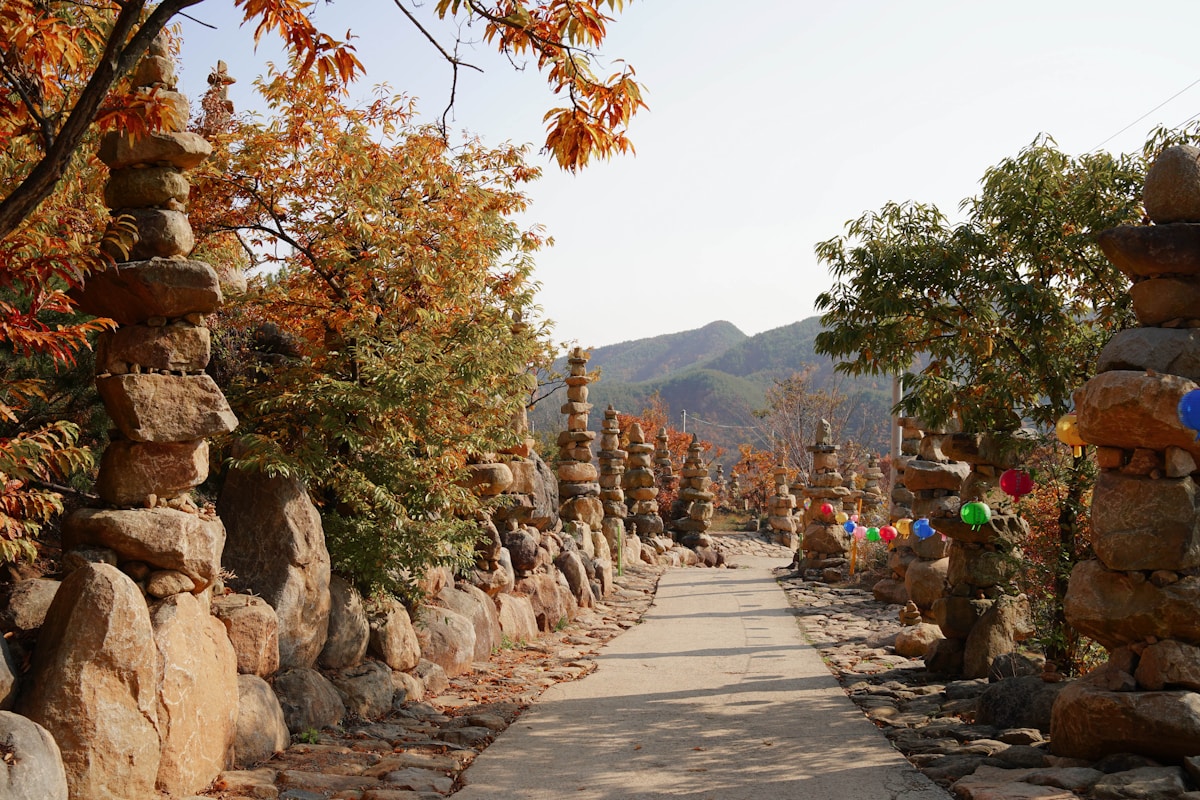
Completing the Dongseo Trail takes planning. Unlike a weekend national park day-hike where you can show up with a daypack and a downloaded map, a 173 km coast-to-coast walk requires decisions about accommodation, gear weight, water resupply, and timing. This guide covers all of it.
Accommodation Along the Trail
The Dongseo Trail does not have a dedicated hut network in the style of Alpine or Japanese long-distance trails. Hikers sleep in town, not in the mountains. Each section endpoint has accommodation - but quality and availability varies significantly.
Guesthouses and Minbak
The backbone of Dongseo Trail accommodation is the Korean minbak (민박) - a family-run guesthouse offering a room with bedding, usually a shared bathroom, and sometimes a simple breakfast. Prices range from approximately KRW 35,000 to KRW 55,000 per night (as of 2026). In larger section towns like Anyang, Wonju, and Gangneung, budget motels and business hotels are plentiful. Search on Naver Map (네이버 지도) rather than Western booking platforms - the majority of Korean minbak do not appear on Booking.com or Airbnb.
Booking tip: Call ahead in Korean or use Naver Booking (the booking function within Naver Map). Google Translate’s camera mode handles Korean call menus reasonably well. Alternatively, the Korea Tourism Organization’s 1330 helpline provides English-language accommodation assistance.
National Park Campsites (Section 4 Only)
Within Chiaksan National Park, designated camping areas are available. The Chiaksan campsite near Birobong trailhead costs approximately KRW 7,000 per person per night (as of 2026) and must be booked in advance via reservation.knps.or.kr. Facilities include toilets and a water point; no cooking shelters. Arriving without a reservation during peak season (late September to mid-November) means you may be turned away.
Pitch limit: approximately 30 tents. Book at least two weeks ahead for autumn weekends.
The Hoengseong Accommodation Problem
Hoengseong - the overnight stop after Chiaksan (Section 4) - is a small market town with limited tourist accommodation. There are a handful of motels, mostly aimed at Korean business travellers. Available rooms sell out on autumn weekends. Book Hoengseong accommodation before you book anything else on the trail. If Hoengseong is full, the next option is a taxi to Wonju (approximately 25 minutes, KRW 25,000–30,000) or continuing to Daegwallyeong - which extends an already long day significantly.
Permits
The Dongseo Trail as a whole requires no permit or registration. However:
- Chiaksan National Park entry: KRW 1,000 per person at the main entrance gate (as of 2026). Pay at the gate - no advance booking required.
- Chiaksan campsite: Advance booking required via reservation.knps.or.kr. Free to browse; account registration is in Korean.
- Section 4 trail cutoff: The Chiaksan ridge trail has a timed entry cutoff - hikers must pass the Birobong summit marker by 14:00 to safely descend before dark. The park wardens enforce this in peak season. Start Section 4 no later than 06:30.
No overseas passport registration is required. No formal trail permit exists. Korean national parks track visitors via entrance gate counts, not individual registration.
Water and Food Resupply
Water: Reliable water sources (springs or tap points) exist at every major trailhead and most section endpoints. Chiaksan has a spring near the Hyangnobong shelter (marked on Naver Maps). On the Daegwallyeong plateau (Section 5), water sources are sparse over a 12 km stretch - carry a full 2 litres from Hoengseong. A lightweight filter (Sawyer Squeeze or similar) provides insurance; tap water throughout Korea is potable.
Food: Convenience stores (GS25, CU, 7-Eleven) are present in every town. For carrying trail food, look for kimbap rolls (KRW 1,000–1,500 each) from 24-hour convenience stores at the start of each day - they hold well for 6–8 hours and provide genuine sustenance. Energy bars and dried fruit are widely available. Korean trail snacks - yakgwa (sesame honey cookies) and dried squid - are good morale items and sold at mountain town shops.
Gear List
Footwear
Well-fitted hiking boots remain the safest choice for the Dongseo Trail. The Chiaksan section has wet rock, root-crossed trail, and sustained descents where ankle support matters. Trail runners are viable in summer dry periods but increase fatigue risk on the longer sections. Avoid road shoes or lightweight casual trainers on any section involving Chiaksan.
Trekking poles: Strongly recommended. The Chiaksan descent puts significant load on knees - poles reduce this substantially. Carbon poles (lighter) are fine; aluminium poles (more durable if you’re rough on gear) are adequate.
Pack Weight
Aim for a base weight of 6–8 kg including water. Heavy pack hiking is counterproductive over 9–12 days - the cumulative strain on ankles and hips across 173 km is significant. Leave the bulky camera gear behind; most hikers find a phone camera sufficient.
Pack checklist:
- Waterproof jacket (essential - Gangwon weather changes fast)
- Thermal mid-layer or fleece for Chiaksan ridge
- Lightweight sleeping bag (5°C rating) - useful for campsites and some older minbak with minimal bedding
- First aid kit including blister care (compeed-style patches)
- Headlamp with spare batteries (pre-dawn starts on Section 4)
- Offline maps: download Naver Maps tiles for all six sections before departure
- Power bank - charging opportunities at accommodation each night, but not on trail
Electronics and Navigation
Download the entire trail route to your phone via Naver Maps or AllTrails before departure. The Dongseo Trail appears on AllTrails in Korea-specific segments; the Naver Maps pedestrian routing follows the official waymarked path on most sections. Do not rely on real-time data - mobile coverage drops in the Chiaksan interior and some Gyeonggi valley sections.
A KT or SKT SIM provides the best rural coverage in Gangwon Province. T-Mobile USA and most European roaming arrangements have coverage gaps on the plateau.
Best Season
Autumn: Late September to mid-November (Recommended)
Autumn is the optimal window for the Dongseo Trail. Temperatures range from 8°C to 18°C during the day - ideal walking conditions. Foliage colour peaks in the Chiaksan section around mid-October, making the ridge traverse spectacular. The Daegwallyeong plateau turns golden. Dry, stable weather prevails through most of October.
Crowds: Chiaksan sees significant weekend traffic from Korean hikers in October. The trail itself is never busy by international hiking standards - you will rarely encounter other long-distance hikers. Day hikers from nearby cities use parts of the Chiaksan section on weekends.
Spring: Late April to early June (Good)
Spring is the second-best season. Temperatures are cool and stable; trails are well-dried after winter. Azalea blooms appear on Chiaksan’s lower slopes in early May. Fewer crowds than autumn. Main risk: spring is unpredictable in Gangwon - snow is possible on Chiaksan in late April, and cold rain in May is common. Pack the thermal layer even if the forecast looks mild.
Summer: July to August (Avoid for Multi-Day)
The monsoon season brings heavy rain, slippery trails, and high humidity. Flash floods are a risk in Gyeonggi river sections. Temperatures in low-altitude sections regularly reach 33–35°C. If you must hike in summer, restrict to the higher-elevation Chiaksan and Daegwallyeong sections (cooler, faster-draining terrain) and skip the river valley stages until autumn.
Winter: December to February (For Experienced Hikers Only)
The Dongseo Trail is hikeable in winter with appropriate preparation. Chiaksan carries significant snow in December and January - micro-spikes are essential, crampons advisable for the summit traverse. Daegwallyeong can be brutally windy and cold at 830m. Some rural guesthouses and minbak close from December to February - verify accommodation in Hoengseong before planning a winter attempt. The advantage: the trail is entirely empty, and the Chiaksan ridge in snow is genuinely spectacular.
Getting to the Trailheads
Western terminus (Incheon): Take Seoul Metro Line 7 to Bupyeong-gu Office Station - the official Dongseo Trail western trailhead marker is a 15-minute walk from the exit. No transport cost if you hold a T-Money card.
Eastern terminus (Gangneung): KTX from Seoul Cheongnyangni Station to Gangneung takes approximately 2 hours (KRW 27,600 standard class, as of 2026). Gangneung Station is 3 km from the trail end marker in the Old Town - taxi or bus.
Logistics: Most hikers travel from Seoul to Incheon by metro to start, then return by KTX from Gangneung at the end. The KTX ticket can be booked in advance at korail.go.kr - advisable for October weekends when seats sell out.
If you are considering guided hiking alternatives or shorter day hikes in the Gangwon Province area before committing to the full trail, GetYourGuide’s South Korea hiking tours include guided national park options that cross sections of the Dongseo route.