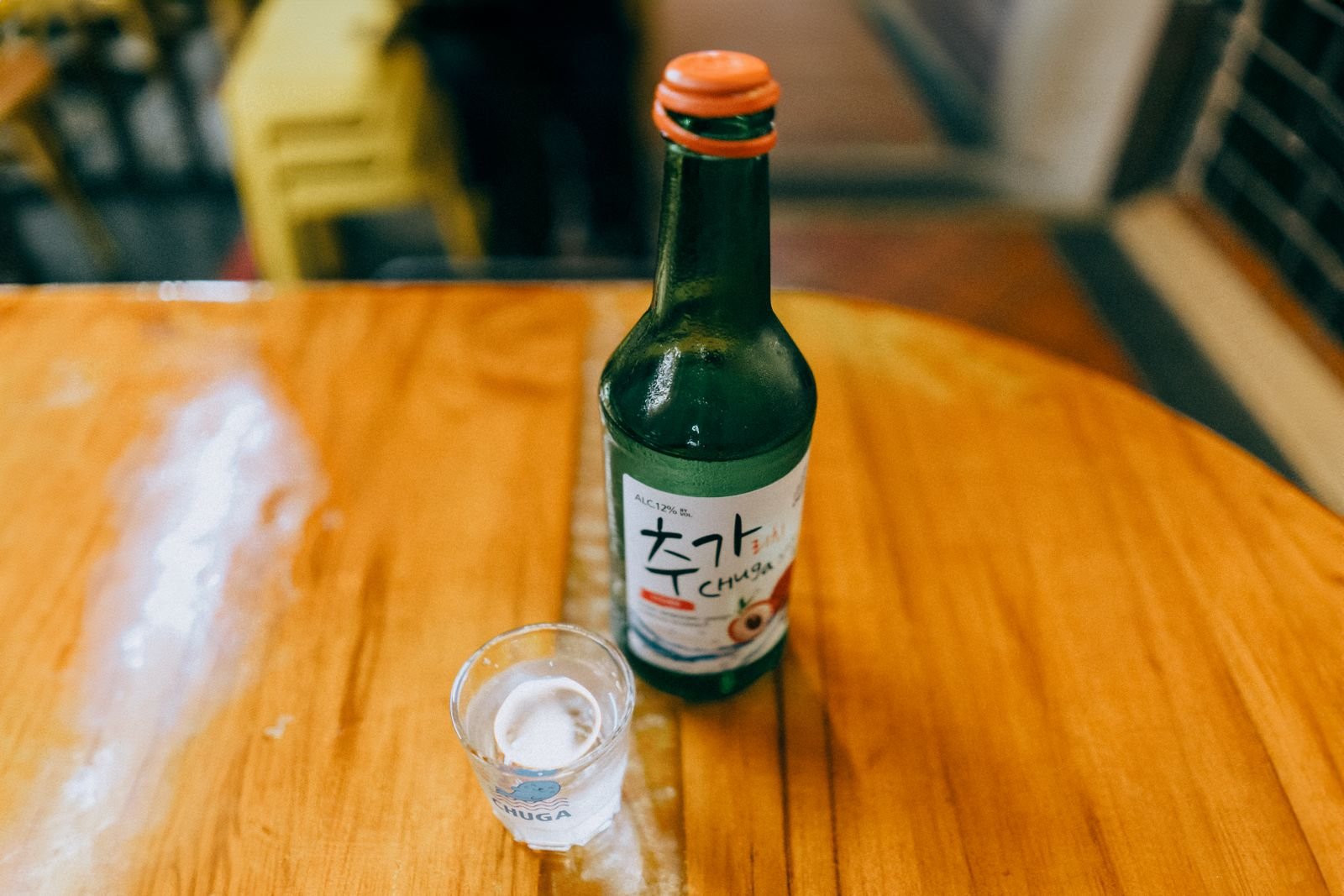
Drinking is built into how Koreans eat, celebrate and close out the working week. A table without a green soju bottle is the exception rather than the rule at an evening barbecue or fried chicken restaurant. This guide covers the drinks you will meet most often, what they cost as of 2026, the etiquette that makes a good impression, and the places that are worth a detour. For the food side of the table, start with our South Korea food guide.
Soju: The Everyday Spirit
Soju is a clear, lightly sweet distilled or diluted spirit, historically made from rice and now often from sweet potato, tapioca or other starches. The bottles you see everywhere are the standard 360 ml green glass type. Modern soju sits at roughly 16 to 17 percent alcohol, with older “original” labels closer to 20 percent and fruit-flavoured versions (grapefruit, lychee, green grape) around 12 percent.
Brands worth knowing:
- Chamisul (Jinro): the market leader, sold as a Fresh version and a stronger Original. Look for the blue and green label.
- Chum Churum (Lotte): slightly softer, often the one served by default in restaurants.
- C1 (Daeseon): the Busan and southeast regional favourite. In Busan, ordering “C1” at a restaurant is the local move, and bars there pour it instead of the national brands. See our Busan nightlife guide for where to start.
- Fruit soju (Chum Churum Sunrise, Good Day, Chuga): sweeter and easier to drink, popular with first-timers and younger crowds.
Prices as of 2026: a bottle costs roughly KRW 2,000 to 2,500 in a convenience store (GS25, CU, 7-Eleven) and KRW 5,000 to 6,000 in a typical restaurant or bar. Draught beer is usually KRW 4,000 to 6,000 at casual places.
Somaek (soju plus beer, “so” and “maekju”) is the national mixed drink. Pour a shot of soju into a beer glass, usually one part soju to four or five parts beer, and stir with a spoon or chopstick for a quick swirl.
Makgeolli: Milky Rice Wine
Makgeolli is the oldest drink on this list. It is unfiltered rice wine, cloudy white, lightly fizzy and about 6 to 8 percent alcohol. The flavour is sweet, tangy and slightly creamy, and it pairs especially well with savoury pancakes (jeon), spicy stews and fried food. On a rainy day, makgeolli and pajeon (scallion pancake) is the classic Korean order.
Bottles of 750 ml cost roughly KRW 1,500 to 3,000 in shops. Restaurants charge KRW 6,000 to KRW 10,000 for a bottle, and craft versions run higher. Shake the bottle gently before opening, since the sediment settles to the bottom, and serve it cold.
Jeonju makgeolli alleys: Jeonju is the best-known makgeolli destination in the country. In the makgeolli streets around Samcheon-dong, you order a kettle (jujeonja) of makgeolli, typically around KRW 20,000 to 30,000 per kettle depending on the bar, and a table of side dishes arrives for free with each round. Later kettles bring more dishes, so the meal keeps escalating. Evenings after 6pm are busiest. Plan this around a night in the city using our Jeonju city guide and pair it with bibimbap the same day.
Tasting in Seoul: if you want to learn how makgeolli is made and compare styles in a single evening, book a makgeolli brewery or pub-crawl tour in Seoul. Guided sessions are a practical way to try several regional varieties without ordering full bottles.
Other Drinks Worth Trying
- Bokbunja-ju: a sweet, deep red wine made from Korean black raspberries, associated with Gochang in Jeonbuk Province. Roughly 15 to 19 percent alcohol, served in small glasses after a meal.
- Maekju: the Korean word for beer. Domestic lagers (Cass, Hite, Terra) are light and cold; craft breweries are growing in Seoul and Busan.
- Dongdongju: a thicker, rougher relative of makgeolli with rice grains floating in it.
- Sikhye: a non-alcoholic sweet rice drink served cold, common at jjimjilbang (bathhouses) and after a barbecue.
Pojangmacha and Convenience Store Drinking
Pojangmacha are orange-tarped street tents, traditionally serving tteokbokki, odeng, grilled seafood and soju late into the night. Many have moved indoors or into permanent shops, but the tent atmosphere survives in the Jongno and Euljiro areas of Seoul and in Busan’s harbour districts. Expect bottles at KRW 5,000 to 6,000 and sharing plates from KRW 10,000. For the food side, see our Korean street food guide.
The budget alternative is the convenience store. Buy a bottle of soju or a few cans of beer, pick instant ramyeon or triangle gimbap, and sit at the outdoor tables. Koreans do this all summer, and the combined bill is under KRW 8,000. For district-by-district bar recommendations, see our Seoul nightlife guide.
Drinking Etiquette
Rules vary by group, but these basics apply almost everywhere. Our Korean etiquette guide covers the wider customs.
- Never pour your own drink at the start. Someone fills your glass, and you fill theirs. Watch for empty glasses at the table.
- Use two hands when pouring for or receiving a drink from someone older. Alternatively, support the pouring wrist with the other hand.
- Turn your head away slightly from elders when you drink the first shot.
- The eldest or most senior person starts, and “geonbae” (cheers) is the usual toast.
- Say no politely. Cover your glass with a hand, or accept a small pour and leave it. Koreans understand, and drinking is not compulsory.
- Do not mix pouring styles: avoid topping up a glass that still has liquid in it. Wait until it is empty, or pour from the side.
Practical Tips
- The legal age is 19, so carry your passport.
- Many bars are open until 3am or later in Seoul, and last-call timings are flexible.
- Last metro runs around midnight to 1am, so plan a taxi or night bus for later.
- Hangover drinks (such as ready-made packs) are sold in every convenience store, and a bowl of haejangguk (hangover soup) the next morning is a local ritual.
- For official visitor information, see the Korea Tourism Organization.
Plan Your Night
Pair a drinking night with a good meal using our Seoul nightlife guide, then book a Seoul food and drink tour for a guided start.