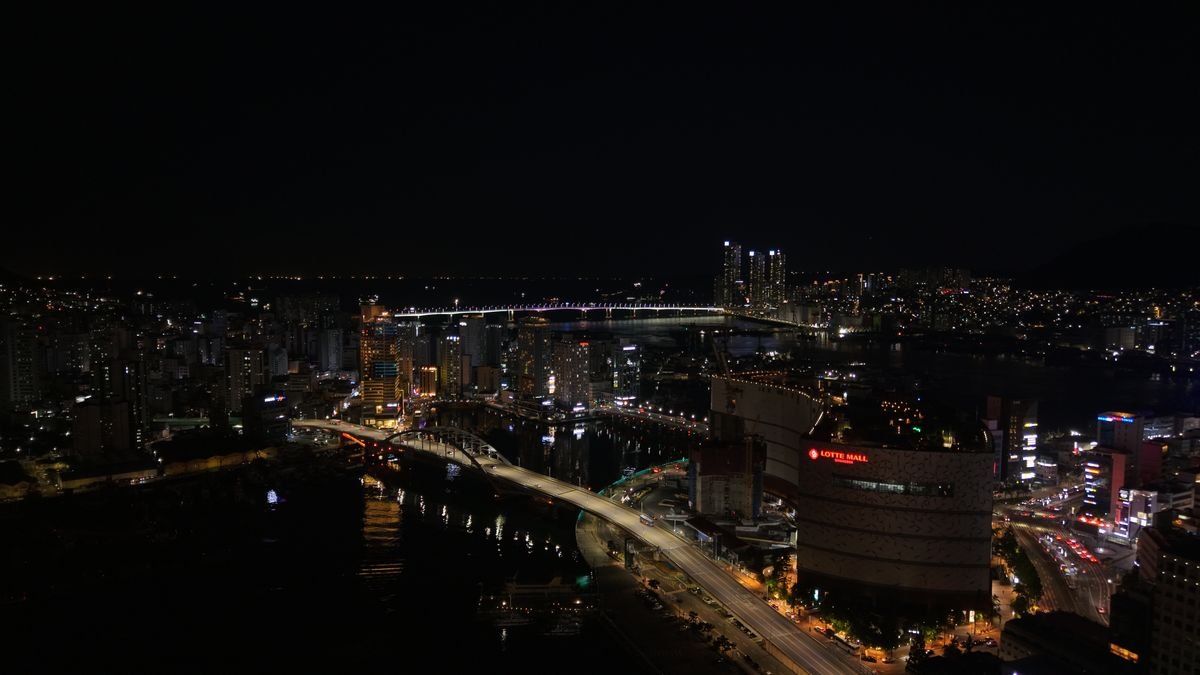
Busan’s nightlife is spread across three main districts, each with a distinct character. Gwangalli has the setting — the bridge-lit bay promenade where outdoor drinking and waterfront bars dominate. Seomyeon has the density — clubs, noraebangs (private karaoke rooms), and late-night restaurants packed into a few blocks of the city centre. Haeundae has the tourist polish — cocktail bars and hotel venues facing the most famous beach in South Korea. Here is what to expect in each area, with metro access and approximate costs as of 2026.
Gwangalli Beach
Gwangalli is the best nightlife area in Busan for most visitors. The 1.4km promenade faces Gwangan Bridge — a cable-stayed suspension bridge that is lit up in changing colours at night. In warm months (April to October), the strip of bars, restaurants, and terrace venues along the seafront fills from around 19:00 and stays busy until well past midnight.
The promenade bar strip
The main concentration of bars runs along the beach road closest to the water. Most are informal, with outdoor seating and a view of the bridge. Expect Korean-style pojangmacha-inspired setups (tent bars and outdoor tables) alongside more established bars with indoor seating. Beer (Korean lager) costs approximately KRW 5,000-8,000 per bottle; cocktails from KRW 12,000. Craft beer bars have appeared in the lanes just back from the beach.
What to eat
The Gwangalli area has strong food options for a night out. Millak Waterfront Fresh Fish Centre, a short walk east of the main beach, is a multi-storey raw fish market where you select live fish and pay to have it prepared — expect to spend KRW 40,000-80,000 for two people depending on selection. The surrounding streets have affordable dakgalbi (spicy stir-fried chicken), seafood jjigae, and convenience store soju setups if you are keeping to a budget.
Getting there
Metro line 2 to Gwangan station (Exit 3 or 5), then a 10-minute walk to the beach. From Seomyeon, one stop on line 2, approximately 4 minutes. From Haeundae, 10 minutes on line 2.
Seomyeon
Seomyeon is the commercial heart of Busan and its main late-night district. Unlike the outdoor beach bar vibe of Gwangalli, Seomyeon is about indoor venues, clubs, and the practical density of having everything in one place. It is where most Busan locals go on a big night out.
Clubs and bars
The highest concentration of clubs is in the blocks around Seomyeon Rodeo Street and the alleys east of exit 7. Club music ranges from EDM to K-pop depending on the venue; covers vary from free before midnight to KRW 10,000-20,000 later on weekends. Drinks prices inside clubs are higher than bars — beer approximately KRW 8,000-12,000, cocktails from KRW 15,000.
The bar scene is more varied: craft beer taprooms, whisky bars, rooftop venues, and pojangmacha street tents sitting side by side. The Saturday night foot traffic in the club district is significant — arrive before 23:00 if you want to walk comfortably.
Noraebang
Seomyeon has the best concentration of noraebang venues in Busan. Coin noraebang (pay per song, approximately KRW 500 per song) are popular with smaller groups; standard rooms start from around KRW 15,000 per hour for a small room. Many venues have bilingual (Korean/English) song lists and some specifically cater to foreign visitors.
Late-night food
Seomyeon is one of the few Busan areas where food is easy to find at 03:00 — 24-hour gukbap (rice soup) restaurants, ramen joints, and fried chicken delivery services operate through the night. Ssiat Hotteok, a sweetened wheat pancake filled with seeds and sugar, is a famous Seomyeon street food that has queues from the late afternoon through to midnight; the original stall is near Seomyeon’s street food alley.
Getting there
Metro lines 1 and 2 to Seomyeon station. The station has multiple exits — Exit 1 leads toward the main food alley; Exits 7-8 are closest to the bar and club area. From central Busan (Nampo-dong), line 1 north, approximately 10 minutes.
Haeundae
Haeundae is the most tourist-facing nightlife area, with a mix of hotel bars, beachfront venues, and the upscale marina development at The Bay 101. It is less raw than Gwangalli and more expensive, but the setting — the beach at night, the high-rise hotel skyline — is undeniably impressive.
The Bay 101
A waterfront lifestyle complex on the eastern end of Haeundae Beach, behind the APEC Naru park. Bars and restaurants here sit on a marina with yachts moored alongside, looking back at the Haeundae highrise skyline. Cocktails and imported beers cost KRW 15,000-25,000; the atmosphere is more date-night than high-energy nightlife. The outdoor deck is good in summer; indoor venues take over in winter.
Beach promenade bars
The strip of bars along Haeundae Beach is more relaxed than Gwangalli — a mix of outdoor pojangmacha setups in summer and enclosed bars year-round. In peak season (July-August), the beach itself is lit and populated late into the evening. Outdoor beach bars typically charge KRW 5,000-10,000 for beer.
Getting there
Metro line 2 to Haeundae station, then 10 minutes south on foot to the beach.
Nampodong and BIFF Square (Evening Street Food)
Nampodong is less of a nightlife district and more of an evening destination for street food and cinema. BIFF Square, the outdoor entertainment area near the Busan International Film Festival venue, is lively in the evenings with tteokbokki (spicy rice cakes), hotteok, squid skewers, and similar street food running from KRW 2,000-6,000 per item. The atmosphere peaks on Friday and Saturday evenings but is pleasant most nights.
Getting there: Metro line 1 to Jagalchi station or Nampodong station.
Practical Notes
Metro closing time: Busan’s metro runs until approximately 23:30 on weekdays and 00:00 on weekends. After that, taxis are the main option — KakaoTaxi works reliably in Busan. A ride from Gwangalli to Haeundae costs approximately KRW 8,000-12,000 by taxi.
Dress code: Busan’s nightlife is generally casual. Most bars have no dress code; a small number of clubs at the higher end request smart casual — no flip-flops.
Safety: Busan is a safe city for night-time activities. The main nightlife areas are well-lit and populated through the night. Standard urban precautions apply.
For daytime Busan, see our things to do in Busan guide. For the best beaches, see our Busan beaches guide.
Where to Stay
This page is part of our Busan travel guide, and our guides to best time to visit Busan and day trips from Busan pair well with it.
Planning a trip around this? Browse hotels in Busan on Booking.com and compare areas, prices and cancellation terms before you book.