Manjanggul (만장굴) is the best-known of Jeju’s lava tubes and one of the longest in the world: about 7.4 km of tube formed when a lava flow from the Geomunoreum volcano drained out and left a hollow passage. It is part of the UNESCO-listed Jeju Volcanic Island and Lava Tubes site, and it is the one lava tube on the island that is easy to visit on a normal day trip. Only about 1 km is open, but that stretch includes passages up to roughly 20 metres wide and a lava column that is a genuine highlight. It works in any weather, which makes it a standard rainy-day stop.
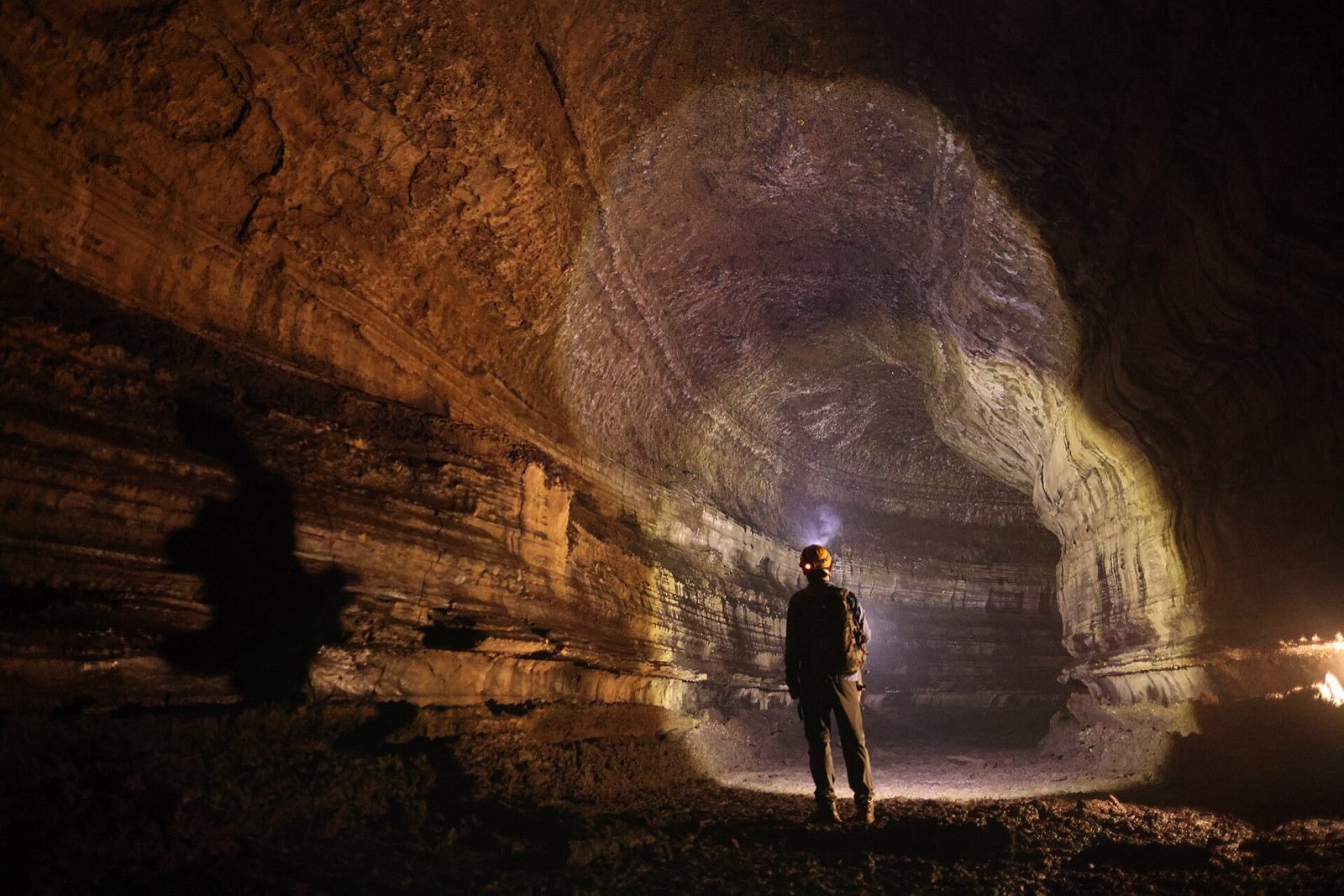 The main passage of Manjanggul. Photo: 강형원 / Wikimedia Commons, CC BY 4.0.
Status: Reopened May 2026
Manjanggul was closed after a rockfall near the entrance in December 2023, and the closure was extended while the route was rebuilt. The cave reopened on 30 May 2026 with viewing decks along the walking route, improved lighting and safety fittings at higher-risk spots. Because the cave is a protected natural site, partial closures after heavy rain or inspections can still happen, so check the Jeju World Natural Heritage Center notices through Visit Jeju the day before.
Hours and Fees (as of 2026)
- Hours: 09:00 to 18:00, last entry around 17:00.
- Closed: the first Wednesday of each month.
- Adults: approximately KRW 4,000. Teens and children: approximately KRW 2,000.
- Parking: free.
- Reservations: not required for general entry. Pay at the booth.
The Open Section
You enter by stairs through the second entrance, then walk about 1 km along a flat deck to the lava column, a 7.6 metre pillar formed by lava dripping through a ceiling hole. The roof and walls show the features that make the tube famous: lava benches along the sides, ropy lava floors, drip lines and “lava turtle” shapes. Allow 40 to 60 minutes round trip. There is no loop, so you turn around at the column and walk back. The stairs at the entrance make the cave hard for wheelchairs and awkward with strollers.
The interior holds a near-constant 11 to 12 degrees Celsius, so it is a relief in July and cold in January. Take a jacket year-round, wear shoes with grip, and expect drips.
Getting There
- By car: roughly 30 to 40 minutes from Jeju City. Parking is free. See our Jeju car rental guide and getting around Jeju.
- By bus: bus 201 runs along the northeast main road and stops near the Manjanggul entrance junction, but the last stretch of about 2.5 km is poorly served, so most visitors without a car take a taxi from the junction. Verify the current stop and timetable on Naver Map or Kakao Map on the day.
- By tour: east-coast day tours usually combine Manjanggul with Seongsan Ilchulbong and Udo. Compare options on Jeju tours and activities on GetYourGuide.
Combine With Gimnyeong Beach
The cave sits close to the north coast village of Gimnyeong, so the logical next stop is Gimnyeong Seongsegi Beach, a short drive away (roughly 3 km from the cave). It has a public car park, toilets and showers, and calm water in the swimming season. Just below the cave car park is Gimnyeong Maze Park, a 1 km hedge maze that takes 15 to 20 minutes to exit; entry is approximately KRW 9,900 for adults. A good half-day order: cave in the morning while it is quiet, a seafood lunch in Gimnyeong, then the beach.
Further east, Woljeongri Beach is another 10 minutes by car, and the road continues to Seongsan Ilchulbong and the ferry for Udo Island. For more sand, see our best beaches in Jeju guide.
Where to Stay
For the north-east coast, Jeju City is the most practical base for car-free travellers, while Seongsan-ri suits an early Ilchulbong start. Search hotels in Jeju on Booking.com for current rates. The overall plan for the island is in our Jeju Island travel guide and Jeju things to do.