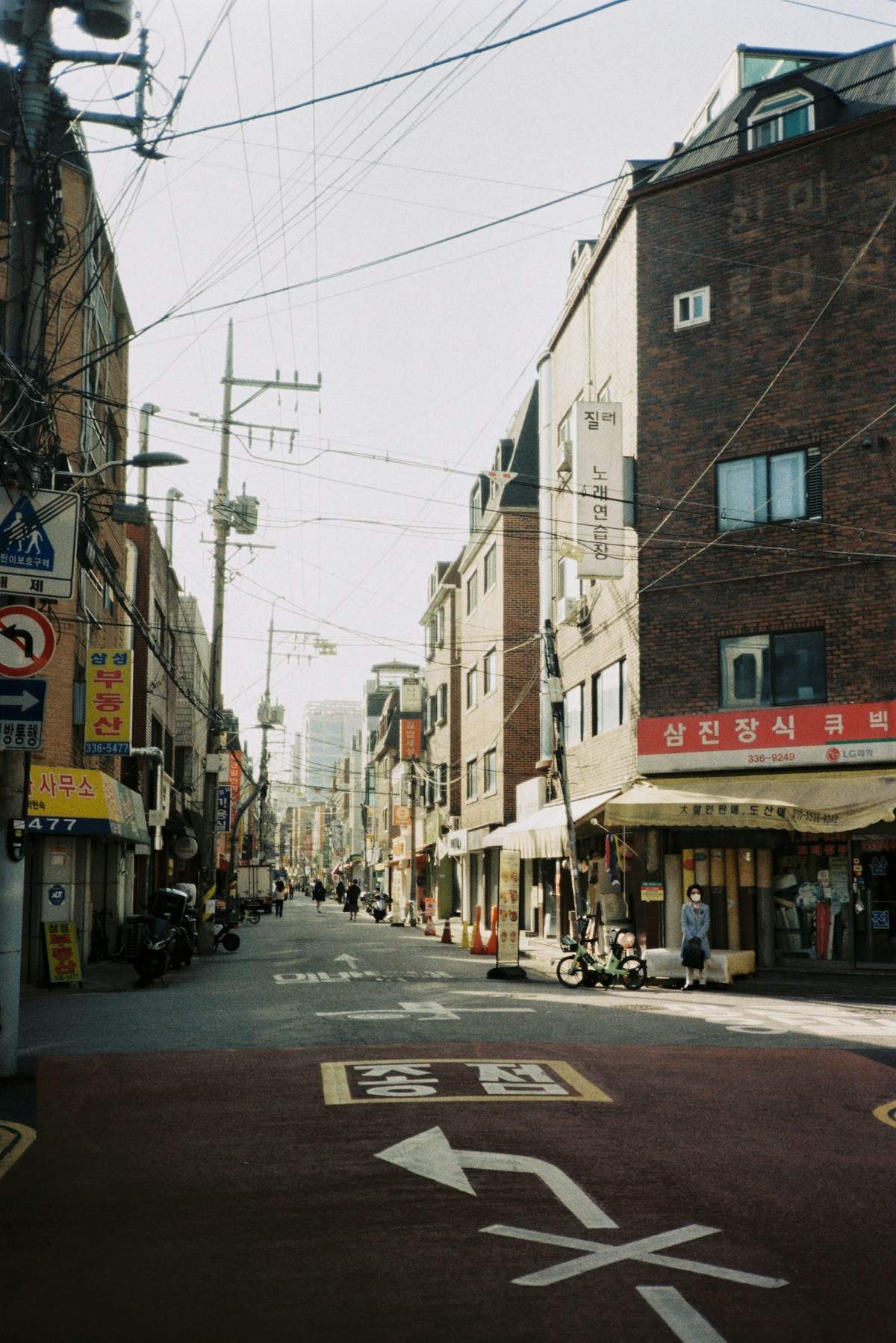
Seoul is not one city but a series of distinct urban villages layered across 605 square kilometres. The district you stay in shapes the Seoul you experience - Hongdae and Myeongdong are tourist-facing and convenient; Seongsu and Jongno are more lived-in and nuanced. This guide covers the six neighbourhoods that matter most for visitors.
Hongdae (홍대)
Named for Hongik University nearby, Hongdae built its identity around the university’s fine arts programme. What remains is a neighbourhood of independent music venues, street performance, mural-covered alleys, and clubs that open at midnight and close at sunrise.
Character: Young, creative, loud. The main drag between Hongik University Station and the Gyeongui Line Forest Park is perpetually busy on weekends.
Best for: Nightlife, indie music, cheap eats, street fashion.
Transport: Metro line 2 (Hongik University Station) + Airport Rail Express stop for Incheon Airport access.
Hotel picks:
- L7 Hongdae by Lotte - design hotel at around KRW 150,000–200,000 per night (2026), rooftop bar included.
- Hotel The Designers Hongdae - mid-range, well-located, approximately KRW 90,000–130,000 per night.
- RYSE Autograph Collection - lifestyle hotel, approximately KRW 180,000–250,000 per night.
Eat: Yeonnam-dong neighbourhood (just east of Hongdae) has shifted from student cheap eats to artisan brunch cafes and small-batch wine bars.
Gangnam (강남)
Gangnam means “south of the river” - it’s the generic term for Seoul’s affluent southern districts, though the name is most often used for the Gangnam-gu area around Gangnam Station and Apgujeong.
Character: Upscale, polished, office-heavy during the week, quieter than expected on weekends. The Apgujeong-Cheongdam strip has international luxury brands and Seoul’s highest concentration of plastic surgery clinics. Sinsa-dong (Garosu-gil) is the more liveable, tree-lined fashion district.
Best for: Luxury shopping, fine dining, K-beauty clinics, business travel.
Transport: Metro lines 2, 3, 7, 9 serve the Gangnam area - Gangnam Station itself is a major interchange.
Hotel picks:
- InterContinental Seoul COEX - approximately KRW 250,000–350,000 per night, attached to the COEX mall and aquarium.
- The Shilla Seoul - Seoul’s flagship luxury hotel, KRW 400,000+ per night.
- Novotel Ambassador Seoul Gangnam - mid-range for the area, approximately KRW 180,000–220,000 per night.
Myeongdong (명동)
Seoul’s most concentrated tourist district and one of the city’s most expensive shopping strips. Myeongdong is best treated as a hub rather than a destination - it excels at convenience.
Character: Busy, commercial, excellent transport links. The street food stalls along Myeongdong street run every evening with egg bread (계란빵), tteokbokki, and skewered foods.
Best for: First-time visitors, families, shopping, easy metro access.
Transport: Metro line 4 (Myeongdong Station) + line 2 at Euljiro 1-ga.
Hotel picks:
- Lotte Hotel Seoul - flagship property, approximately KRW 280,000–400,000 per night.
- Tmark Hotel Myeongdong - compact, well-priced for the location, approximately KRW 100,000–150,000 per night.
- Philstay Myeongdong Central - guesthouse-style, approximately KRW 60,000–90,000 per night.
Jongno / Insadong (종로 / 인사동)
Jongno is Seoul’s historical core - the Joseon dynasty’s administrative capital. It contains the main palace complexes (Gyeongbokgung, Changdeokgung), Bukchon Hanok Village, and the old merchant district of Insadong.
Character: Cultural, layered, older demographic during the day, younger at the Ikseon-dong alley complex at night.
Best for: History, palaces, traditional crafts, hanbok experience.
Transport: Metro lines 1, 3, 5 (Jongno 3-ga is the central hub).
Hotel picks:
- Hanok stays in Bukchon - traditional guesthouses (게스트하우스) start from KRW 80,000–150,000 per night; Rak-Ko-Jae and Rakkojae Seoul are among the most-reviewed.
- JW Marriott Dongdaemun Square Seoul - luxury, approximately KRW 250,000–350,000 per night.
- Ibis Ambassador Seoul Insadong - reliable mid-range, approximately KRW 100,000–140,000 per night.
Itaewon (이태원)
Itaewon developed as an international district adjacent to the former US military base (Yongsan Garrison, now a public park). It remains Seoul’s most genuinely multi-ethnic neighbourhood.
Character: Recovering but alive. The main strip between Itaewon Station and Noksapyeong Station has diverse restaurants, vintage clothing shops, and bars with a more international crowd than most Seoul neighbourhoods.
Best for: Food diversity, LGBTQ+ venues (Homo Hill area), antique shopping, a break from Korean-only menus.
Transport: Metro line 6 (Itaewon Station, Noksapyeong Station).
Hotel picks:
- Grand Hyatt Seoul - sits above Itaewon with a celebrated outdoor pool, approximately KRW 350,000–500,000 per night.
- Hamilton Hotel - Itaewon institution, central location, approximately KRW 130,000–180,000 per night.
Seongsu (성수동)
Seongsu is Seoul’s fastest-evolving neighbourhood - a former light industrial district that has become the city’s most design-conscious area without fully losing its workshop identity.
Character: Industrial-chic, independent, increasingly expensive. Repurposed factories house coffee roasters, design showrooms, and weekend pop-ups. The area is compact enough to walk entirely.
Best for: Design culture, independent cafes, photo-worthy interiors, feeling contemporary Seoul rather than tourist Seoul.
Transport: Metro line 2 (Seongsu Station, Ttukseom Station).
Hotels: Seongsu has fewer hotel options than other areas; staying in Hongdae or Jongno and visiting for the day works well. The Hyundai Heritage (hotel arm near Seongsu) is one option at approximately KRW 200,000+ per night.
Book guided tours and activities in Seoul through GetYourGuide.
Pick up an eSIM for South Korea through Airalo to stay connected.
Which to Choose
- First visit, want convenience: Myeongdong or Jongno
- Nightlife focus: Hongdae
- Business travel: Gangnam
- Cultural immersion: Jongno/Insadong
- Contemporary Seoul feeling: Seongsu + Hongdae
For a full overview of Seoul’s attractions and city logistics, the Seoul city guide covers palace tickets, transport from Incheon, and neighbourhood food scenes in more depth.