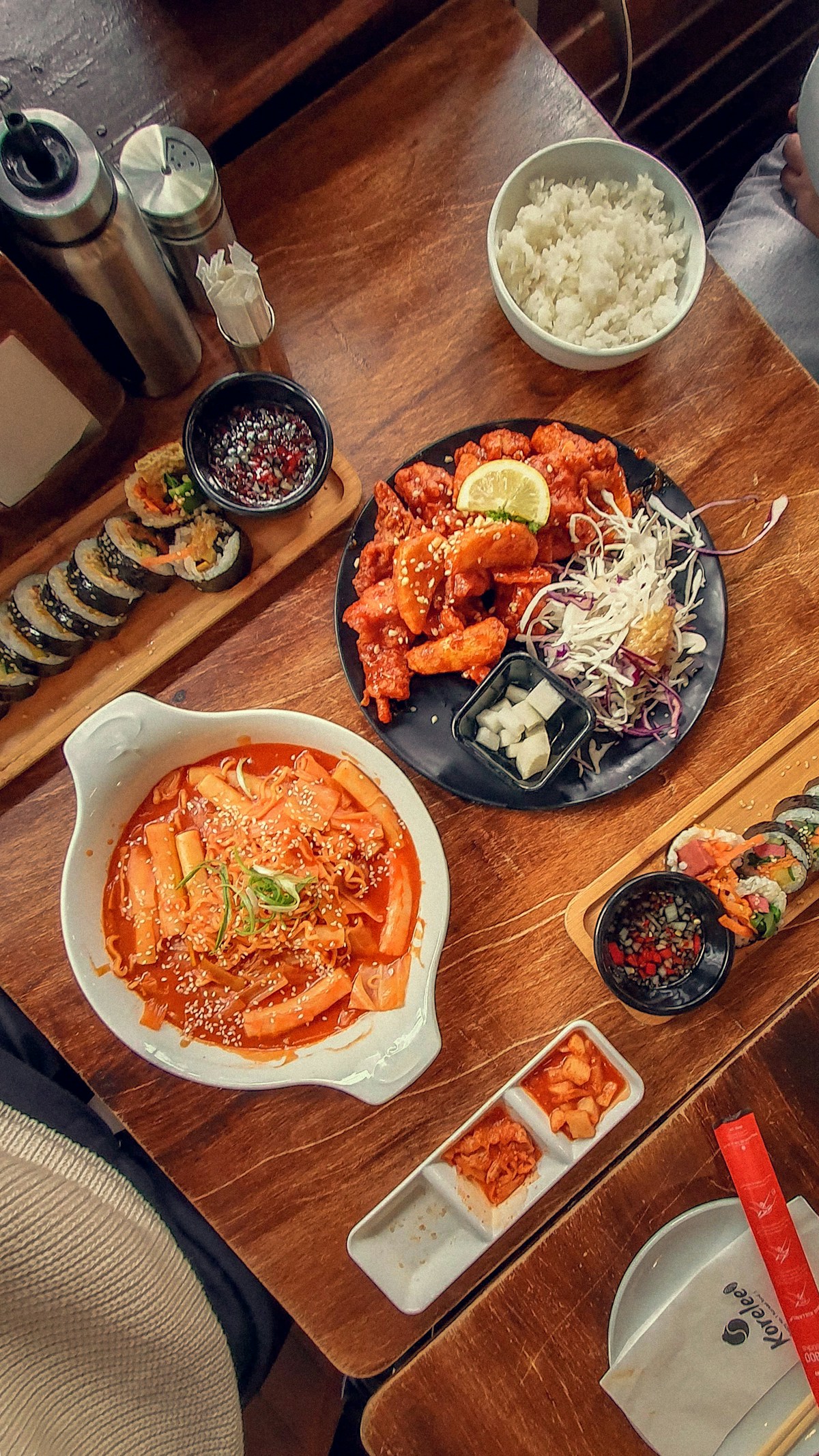
Jeju Island has a distinct food identity built on ingredients that come almost entirely from the island itself — the volcanic soil, the surrounding ocean, and traditional farming and fishing practices that date back centuries. The three things every visitor should eat are black pork BBQ, haenyeo-caught seafood, and hallabong citrus. Everything else flows from those anchors.
Jeju Black Pork (흑돼지)
Black pork is Jeju’s most famous food export and its most important restaurant category. The Jeju Black pig is a heritage breed that nearly went extinct in the 20th century and has been revived through deliberate conservation breeding programs. The pigs are raised primarily in the island’s highland pastures and fed on grain and vegetation rather than industrial feed, which produces the firmer texture and distinctive flavour.
The taste difference: Compared to standard Korean BBQ pork (mostly commercial Duroc or Landrace breeds), black pork has a firmer bite, less marbling but cleaner-tasting fat, and a slightly sweeter finish. The skin, when included, crisps differently on the grill — many diners consider it the best part.
Where to eat it:
Heuk Dwaeji Sikdang (흑돼지식당) on Heuk Dwaeji Road (Black Pig Street) in the Yeon-dong area of Jeju City — a cluster of restaurants all serving certified black pork, easily reached from Jeju Airport (10 minutes by taxi). Prices run KRW 15,000–20,000 per 200g serving of samgyeopsal (thick-cut belly) or moksal (shoulder). Most restaurants have a minimum order of 2 portions. Side dishes (banchan), rice, and ssamjang wrapping paste are included. A filling meal for two costs approximately KRW 50,000–70,000.
Jeju Heuk Pig House near Dongmun Market — popular with both locals and visitors, slightly more English-friendly menus, similar pricing.
Ordering tip: The standard cut for black pork BBQ is samgyeopsal (belly) or moksal (neck/shoulder). Ask specifically for 제주산 흑돼지 (Jeju-origin black pig) to ensure you are getting the authentic product and not regular pork described vaguely as “black.” Certified restaurants display the 제주흑돼지 certification mark.
Haenyeo Seafood (해녀 해산물)
The haenyeo are Jeju’s legendary female free-divers — women who learned to harvest shellfish and sea vegetables by diving without breathing equipment, often multiple times per day, to depths of 10 metres or more. The practice is now recognised by UNESCO as Intangible Cultural Heritage. At peak, there were around 30,000 haenyeo on Jeju; today approximately 3,500 remain, mostly older women who learned the skill in their youth.
Their daily catch depends on season and dive conditions. Common items include:
- Jeongbok (전복, abalone): Grilled whole, served in the shell. KRW 15,000–25,000 per piece depending on size. The flavour is briny and firm — closer to scallop than oyster. Abalone porridge (전복죽, jeonbok-juk) is a Jeju staple, available at markets and restaurants for KRW 12,000–15,000 per bowl.
- Soona (소라, turban shell): Boiled and served with a vinegar soy dipping sauce. KRW 5,000–8,000 per serving. Sweet, chewy texture.
- Sea urchin (성게, seongge): Served raw over rice (성게비빔밥, seongge bibimbap) — intensely savoury and sweet simultaneously. KRW 15,000–25,000 per bowl depending on the season and size of portion.
- Octopus (문어, muneo): Boiled and sliced, often served as an anju (drinking snack). KRW 20,000–35,000 depending on size.
Where to find haenyeo seafood:
- Hamdeok Beach area: haenyeo seafood stalls operate near the beach entrance, particularly in the morning after diving hours. Walk toward the rocky northern end of the beach.
- Hwado coastal area (east Jeju, near Kimnyeong): smaller villages where haenyeo still dive regularly. Less tourist infrastructure, more authentic pricing.
- Seogwipo Maeil Olle Market: indoor-outdoor market in Seogwipo city with haenyeo stalls selling fresh catch. Also good for abalone porridge.
Hallabong and Jeju Citrus (한라봉)
Hallabong is a mandarin variety unique to Jeju, a cross between Unshu mandarin and Trovita orange developed on the island in the 1980s. The skin is bright orange with a characteristic bumpy protrusion at the stem end (the “봉” — peak — like Hallasan). The flesh is sweeter and more complex than standard mandarins, with lower acidity and more juice.
Season: December through March. During this window, hallabong is unavoidable — every market, roadside stall, convenience store, and tourist shop sells it. A 5 kg box (approximately 10–15 fruit) costs KRW 10,000–20,000 at markets; tourist shops charge more. The best place to buy is Dongmun Market or from roadside farm stalls in the citrus-growing areas of the west and south coast.
Outside season: Jeju’s food producers have created a wide range of hallabong derivative products sold year-round: cold-pressed juice (KRW 5,000–8,000 per bottle), hallabong chocolate (KRW 8,000–15,000 per box), hallabong wine (KRW 15,000–25,000), and cosmetic products using hallabong extract. These make practical souvenirs.
Other Jeju citrus: Hallabong is the most famous but not the only variety. Cheonhyehyang (천혜향, “paradise fragrance”) and Red Pearl (레드향) are two newer varieties with similar season and sweetness. Jeju tangerines (귤, gyul) are the most common — season October to December, much smaller and cheaper than hallabong, sold in 3 kg bags for KRW 5,000–8,000.
Where to Eat: Market and Restaurant Recommendations
Dongmun Traditional Market (동문시장), Jeju City: Central Jeju City market running from early morning to late evening. Good for raw fish (hoe) sold by weight at ground-floor fish stalls — a mixed sashimi platter for two runs KRW 20,000–35,000. The evening street food section activates around 17:00 with vendors selling hotteok (sweet pancakes, KRW 1,000), mandu (dumplings, KRW 3,000), and various grilled items. Hallabong juice from the fresh juice stalls: KRW 3,000–4,000.
Seogwipo Maeil Olle Market (서귀포 매일올레시장): The southern city’s main indoor-outdoor market. More produce-focused than Dongmun. Look for the seafood section on the first floor with haenyeo stalls, and the small restaurant corridor on the upper level serving abalone porridge and bibim-hoe (raw fish bibimbap, KRW 12,000–18,000).
Hyeopjae Beach area: A strip of seafood restaurants operates behind Hyeopjae and Geumneung beaches. The standard offering is a mixed raw fish platter served with soju — KRW 30,000–50,000 for two depending on fish type. Haenyeo-caught shellfish is sometimes sold directly at the beach perimeter.
Jeju Speciality Dishes to Order
| Dish | Korean | Description | Typical price |
|---|---|---|---|
| Black pork BBQ | 흑돼지구이 | Grilled certified black pork belly | KRW 15,000–20,000 / 200g |
| Abalone porridge | 전복죽 | Slow-cooked rice porridge with abalone | KRW 12,000–15,000 |
| Sea urchin bibimbap | 성게비빔밥 | Mixed rice with raw sea urchin | KRW 15,000–25,000 |
| Samcheonpo skate | 옥돔구이 | Grilled saltwater snapper, Jeju style | KRW 20,000–30,000 |
| Bing-su (Jeju version) | 흑임자빙수 | Shaved ice with black sesame — Jeju’s popular dessert | KRW 10,000–15,000 |
| Hallabong juice | 한라봉주스 | Fresh-pressed hallabong mandarin juice | KRW 3,000–5,000 |
Food Tours
A guided Jeju food tour covers more ground in a single session than independent exploration — particularly useful for navigating markets where language is a barrier. Tour operators typically visit Dongmun Market, a black pork restaurant, and a haenyeo seafood stall in 3–4 hours. Prices start around KRW 60,000–80,000 per person including food. Book via Jeju food and culture tours.
For the full Jeju island overview including accommodation and attractions, see the Jeju Island guide.