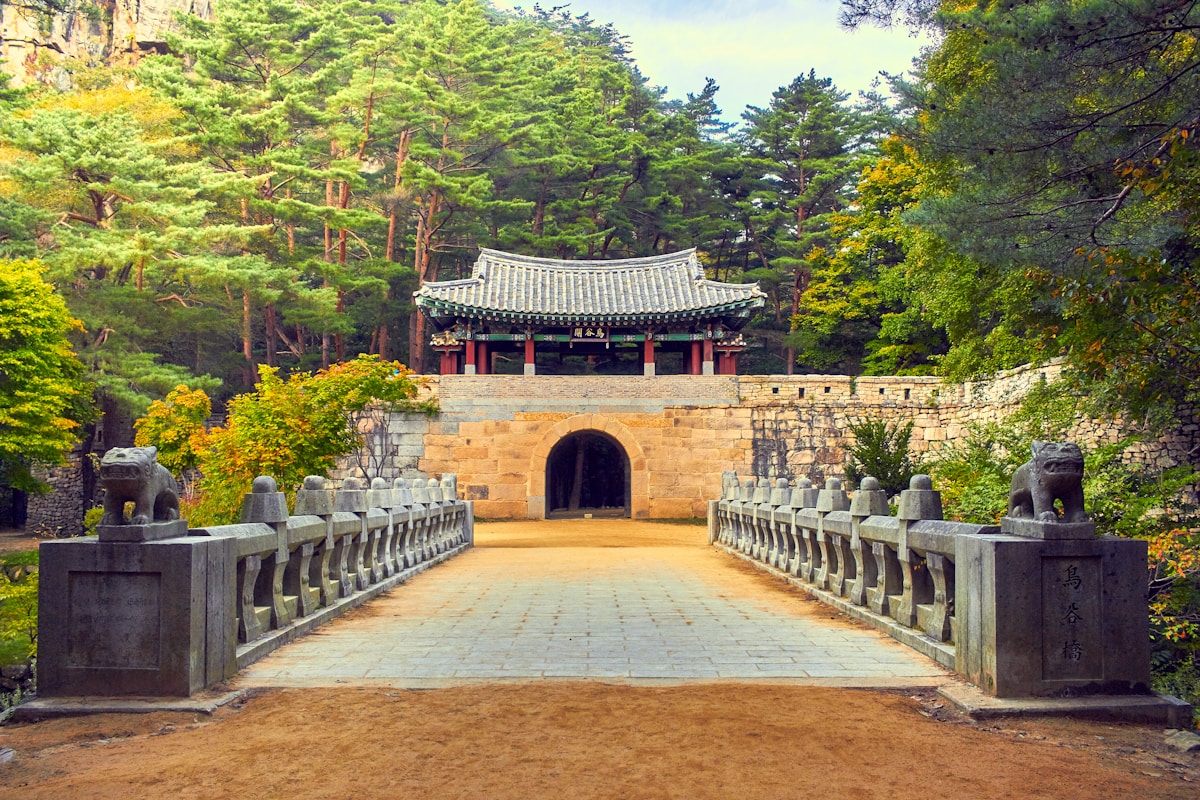
Suwon is Gyeonggi Province’s largest city - a bustling satellite city south of Seoul anchored by one of Korea’s most impressive pieces of Joseon-era military architecture. Hwaseong Fortress, a UNESCO World Heritage site built in the 1790s under King Jeongjo, runs for nearly 5.7 km around the city’s historic centre, punctuated by gates, watchtowers, and command posts. The fortress is Suwon’s main draw, and accommodation choices largely orient around access to it and to the major transport hub at Suwon Station.
Near Suwon Station
Suwon Station is the city’s primary transport hub - the end of Seoul Subway Line 1 (direct from Seoul City Hall, around 50 minutes), a KTX stop, and the intercity bus connection point. The surrounding streets have the densest accommodation supply in the city across all price tiers.
Budget: Korean motel chains and smaller guesthouses near the station start from approximately KRW 50,000–80,000 per night (USD 36–57) as of 2026. Rooms are functional, with private bathrooms and Wi-Fi. Clean and predictable, if characterless.
Mid-range: Ramada by Wyndham Suwon offers a reliable international mid-range standard near the station area, with rates typically from approximately KRW 130,000–200,000 (USD 93–143) as of 2026. L’art Hotel Suwon is a Korean-brand option in a similar tier with good room sizes and a central location. Both are solid choices for visitors who want consistent facilities without paying Novotel prices.
Luxury: Novotel Ambassadeur Suwon is the clear top-tier option in the city - a full international business hotel with gym, restaurant, and bar, running from approximately KRW 200,000–350,000 (USD 143–250) as of 2026. If you are visiting on business or want the full amenity set, this is the default choice.
Near Hwaseong Fortress (Paldamun / Haenggung Area)
The area immediately inside and around the fortress walls - particularly the Paldamun Gate neighbourhood and the streets near Hwaseong Haenggung Palace (the palace constructed as a secondary royal residence alongside the fortress) - has a smaller cluster of guesthouses, boutique lodgings, and hanok-style stays.
These properties run approximately KRW 70,000–150,000 (USD 50–107) as of 2026 and offer the advantage of being within the fortress precincts or immediately adjacent to them. Staying here means walking the ramparts at dawn before any tour groups arrive - the fortress is accessible 24 hours and is particularly atmospheric in early morning light.
The trade-off is that this area has fewer dining options than the station zone and requires a short taxi or bus ride to access the station.
Ingye-dong and the University Area
The neighbourhood around Ajou University and Gyeonggi Provincial Museum, southwest of the fortress, is a lively area with a high density of cafés, restaurants, and relatively affordable guesthouses and boutique hotels targeting younger visitors and students.
Accommodation in Ingye-dong runs approximately KRW 60,000–120,000 (USD 43–86) as of 2026 and offers good value. It is a 15–20 minute walk or short bus ride from both Suwon Station and the fortress southern wall. An appealing option for visitors who want proximity to both main points of interest and a more local neighbourhood atmosphere.
Practical Transport Notes
From Seoul: Seoul Subway Line 1 (Suwon Station) from Seoul City Hall takes approximately 50–60 minutes and runs frequently throughout the day - the most convenient public transport connection in Korea for a city of Suwon’s size. KTX also stops at Suwon, and intercity buses run from several Seoul terminals.
Getting around Suwon: The fortress itself is walkable once you reach it - the full 5.7 km circuit takes 2–3 hours on foot. The main gate attractions (Janganmun, Hwahongmun water gate, Haenggung Palace) are connected by the tourist tram (Yonggeocha) that runs along the fortress perimeter for a small fee.
Combination trips: Suwon pairs well with a day in Seoul - many visitors base themselves in Seoul and take the subway south to Suwon for the day, or add a Suwon overnight at the beginning or end of a Seoul trip rather than on its own.
For tours in Suwon covering Hwaseong Fortress, Haenggung Palace, and organised day tours from Seoul that include Suwon, guided options are available through GetYourGuide.