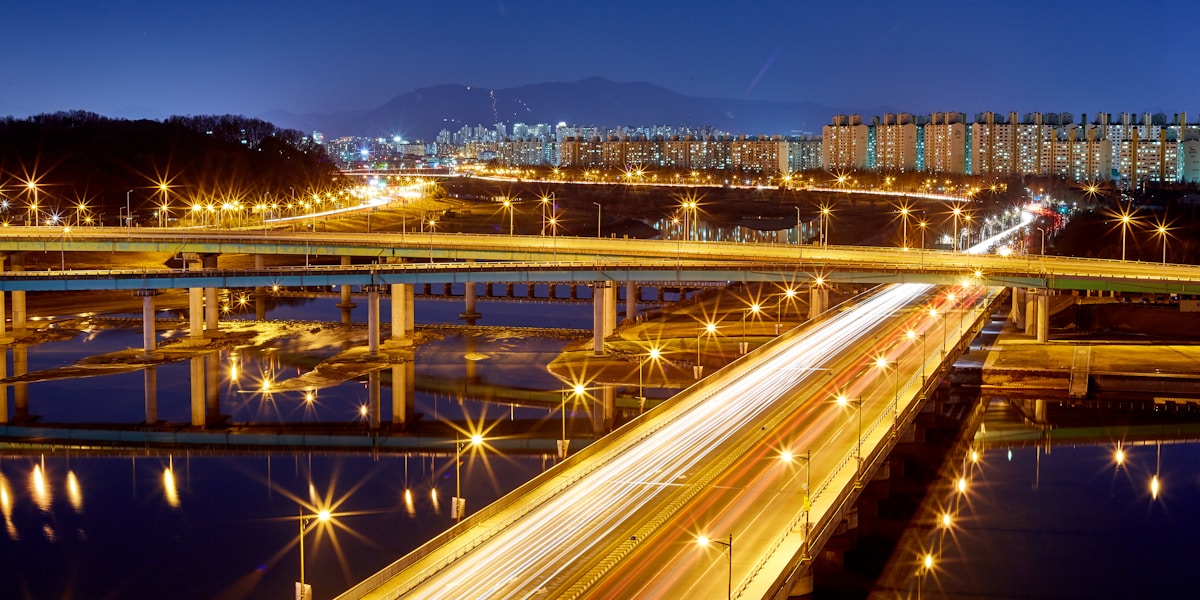
Daejeon sits at South Korea’s geographic centre, roughly midway between Seoul and Busan on the KTX corridor. For most of its visitors it is a transit city - a stop between destinations rather than a destination itself. That undersells it. Daejeon has the Yuseong hot spring district, one of the few urban areas in Korea where you can stay in a hotel that pipes geothermal oncheon water directly to the bathing floors, and it has enough science, nature, and hiking infrastructure to fill two to three days without rushing.
Accommodation divides clearly into two zones: Yuseong (the hot spring district, west of the city) and Dunsan (the modern business and commercial centre). A third option - staying near Daejeon Station (the KTX hub in the city’s southeast) - is the most convenient for rail travellers passing through.
Yuseong Hot Spring District
Yuseong (유성구) is not simply a hotel zone - it is a neighbourhood built around geothermal water. The alkaline oncheon (온천) spring source has been channelled into hotels, public bathhouses, and guesthouses since the Japanese colonial period, and the tradition has continued. Staying here means access to hot spring baths that are not available in any equivalent urban district in Korea.
The district is about 15 minutes by metro from Dunsan and 25 minutes from Daejeon Station.
Budget in Yuseong: Small oncheon guesthouses (온천여관) operate throughout the district, offering private rooms with access to communal hot spring floors for approximately KRW 60,000–90,000 per night (roughly USD 43–64) as of 2026. These are functional Korean-style lodgings - don’t expect polished interiors - but the water access is the same as in the expensive hotels.
Mid-range in Yuseong: Riviera Yuseong Hotel is the area’s most prominent property, with rooms from approximately KRW 180,000–250,000 per night (USD 129–179) as of 2026. Multiple hot spring bath floors are open to guests, and the on-site restaurant is a practical option for dinner. The building’s design is dated but the bathing facilities are well-maintained.
Yuseong Hotel (유성호텔) is the other long-standing spa property in the district, with an indoor mineral spring pool, sauna, and an on-site restaurant serving Korean cuisine. Rated 8.0 by 230+ guests as of 2026. The property also has a golf course — unusual for a city-centre hotel. Both properties cater primarily to Korean domestic travellers and offer Korean-language service as standard; English assistance is limited but available at front desks.
Dunsan District
Dunsan (둔산동) is Daejeon’s modern civic and commercial hub - government buildings, the express bus terminal, shopping malls, and the largest concentration of restaurants in the city. Metro connections here reach the Expo Science Park, the National Science Museum, and Hanbat Arboretum without transfers.
Budget in Dunsan: The Toyoko Inn Daejeon offers clean, compact rooms from approximately KRW 70,000–100,000 per night (USD 50–71) as of 2026. The chain applies consistent standards across Korea and is a reliable choice for budget travellers who want predictable quality. Near the Dunsan-dong government district with metro access.
Mid-range in Dunsan: Lotte City Hotel Daejeon is the most prominent branded mid-range property in this zone, with rooms typically from approximately KRW 130,000–180,000 (USD 93–129) as of 2026. Fitness centre, in-house restaurants, and a well-connected location in the business district. Hotel ICC Daejeon runs slightly lower at approximately KRW 100,000–150,000 (USD 71–107) as of 2026 and has decent metro proximity.
Upscale in Dunsan: Hotel Interciti Daejeon is the city’s most complete upscale property, with rates from approximately KRW 200,000–280,000 (USD 143–200) as of 2026. Conference facilities, multiple restaurants, and a fitness centre make it the default for corporate stays and events.
Near Daejeon Station (KTX)
The area immediately around Daejeon Station has a cluster of business hotels from approximately KRW 60,000–120,000 per night as of 2026. The station is the KTX hub, with trains to Seoul in roughly 50 minutes and to Busan in about 1 hour 20 minutes. Staying here is only practical if you are catching an early train or arriving late by rail - the neighbourhood is functional but has little character, and it is further from both the hot spring district and the main Dunsan attractions.
What to Know Before You Book
Hot spring access outside your hotel: Even if staying in Dunsan, you can visit the Yuseong hot spring public bathhouses as a day visitor for approximately KRW 8,000–15,000 as of 2026. This separates accommodation budget from the oncheon experience if needed.
Weekend pricing: Hotels in Yuseong see higher rates on Fridays and Saturdays, when Korean domestic travellers make spa weekend trips from Seoul and Busan. Midweek stays run noticeably cheaper across the district.
Science and nature proximity from Dunsan: The Expo Science Park (엑스포 과학공원) and National Science Museum are 15–20 minutes by bus from Dunsan. Hanbat Arboretum and Bomunsan hiking trails are within 30 minutes. The city is greener and more walkable than its reputation as a transit stop suggests.
For guided tours in Daejeon covering the science parks and surrounding area, GetYourGuide lists day-trip options that work well as additions to a longer Korea itinerary.