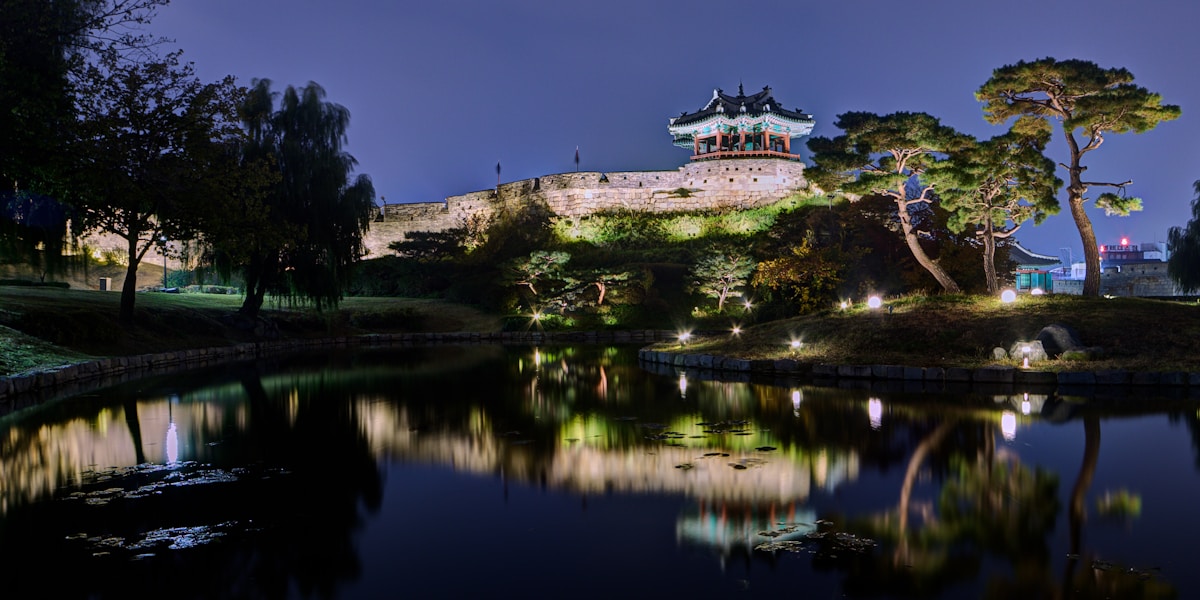
Suwon Travel Guide: Hwaseong Fortress, the 5.7km City
Suwon's Hwaseong Fortress is a 5.7km UNESCO city wall with four grand gates and a palace complex - reachable in 40 minutes from Seoul on the subway.
Guides for Suwon
Suwon is the capital of Gyeonggi Province and the largest city in the province after its absorption of surrounding municipalities. It sits about 30 km south of Seoul and functions partly as a commuter city for the capital. For travellers, its primary draw is Hwaseong Fortress - a UNESCO World Heritage Site built between 1794 and 1796 under the direction of King Jeongjo of the Joseon dynasty.
The fortress is unusually well-documented for its era: a detailed administrative record called the Uigwe recorded every aspect of its construction, including materials, labour costs, and architectural decisions. This documentation made restoration after wartime damage far more accurate than at most comparable sites.
Getting to Suwon
From Seoul: Metro Line 1 (Gyeongbu Line) runs directly to Suwon Station. The journey from central Seoul stations (Seoul Station, City Hall) takes around 50–65 minutes. The Bundang Line offers an alternative route from the southeastern Seoul area, connecting at Mangpo Station.
From Incheon Airport: Direct buses and trains connect the airport to Suwon. The journey takes around 1.5 hours by bus.
Suwon is a straightforward day trip from Seoul - most visitors arrive in the morning and return in the afternoon or evening.
Hwaseong Fortress
Built between 1794 and 1796, Hwaseong (which translates roughly as “Brilliant Fortress”) encloses the old city centre of Suwon within 5.7 km of walls. The design combined Korean fortress-building traditions with Chinese and Western military architecture and was intended as a new administrative centre for the dynasty.
Walking the walls: The wall circuit passes four main gates (Janganmun in the north, Paldalmun in the south, Hwaseomun in the west, and Changnyongmun in the east), several watchtowers, command posts, and archery platforms. The northern section around Banghwasuryujeong Pavilion is particularly photogenic. The full circuit takes 2–3 hours.
Haenggung Palace: Inside the fortress walls, this detached royal palace served as a temporary residence for the royal family. It is the largest detached palace outside the capital. A guard-changing ceremony in Joseon-era costumes runs at set times on weekends and public holidays.
Fortress admission: The wall walk is largely free; access to specific towers and structures, including the Haenggung Palace, requires tickets.
Other Things to See
Paldalmun Gate and the old market area - the southern gate of the fortress sits at the entrance to a traditional market district. The Yeongdong Market and surrounding streets have a good concentration of street food, including the area’s association with galbi (grilled short ribs). Suwon galbi has a national reputation.
Suwon Hwaseong Museum - near Janganmun Gate, this museum covers the history and construction of the fortress with scale models and documents including pages from the original Uigwe.
Where to Stay in Suwon
For accommodation options across all budgets, see our Suwon hotels guide.
Food and Drink
Suwon galbi - a specific preparation of marinated beef short ribs grilled over charcoal - has a strong association with the city and is served in restaurants clustered in the Yeongdong area near Paldalmun Gate. The cuts used in Suwon galbi are typically longer than in standard galbi preparations. This is a mandatory dish if visiting the city.
The traditional market areas near the fortress gates have good street food options including tteokbokki (spicy rice cakes), hotteok (sweet filled pancakes), and various fried snacks.
Book guided tours of Hwaseong Fortress to get more context on the site’s history and architecture.
Explore Suwon in Detail
- Things to do in Suwon - Hwaseong Fortress, Haenggung Palace, Korean Folk Village, and Paldalmun Gate with entry fees and timings
- Best hotels in Suwon - Novotel Ambassador to ibis Budget and boutique fortress-area options
- Suwon food guide - Paldalmun galbi, Tongdak fried chicken, sundae gukbap, and Paldalmun market street food
Wondering whether Suwon justifies an overnight stay or is better as a day trip from Seoul? Our Suwon vs Seoul comparison covers what Suwon offers that the capital cannot match - and when staying in Suwon makes more sense than basing yourself in Seoul.
Upcoming Events in Suwon
Jinju Lantern Festival 2026
Jinju Lantern Festival 2026 runs 3 to 12 October on the Nam River. Paper lanterns mark the 1592 Battle of Jinju: tickets, schedule, and how to get there.
Frequently Asked Questions
- How do I get from Seoul to Suwon?
- Metro Line 1 connects Seoul to Suwon Station in around 1 hour from central Seoul stations. The journey from Gangnam-area stations via the Bundang Line takes slightly longer. Trains run frequently throughout the day.
- How long does it take to walk the full Hwaseong Fortress wall?
- The complete circuit of the fortress wall is approximately 5.7 km and takes 2–3 hours at a moderate walking pace. The route passes four main gates, watchtowers, and command posts. Sections can be walked individually if a full circuit is too much.
- Is there anything else to see in Suwon beyond the fortress?
- Suwon is primarily a day trip destination centred on Hwaseong. The Haenggung Palace inside the fortress walls adds to the visit. The old market streets near Paldalmun Gate are worth exploring for street food after a fortress walk.
Book an experience
Top experiences in Suwon
Explore the best tours and activities in Suwon, with instant confirmation and free cancellation on most bookings.