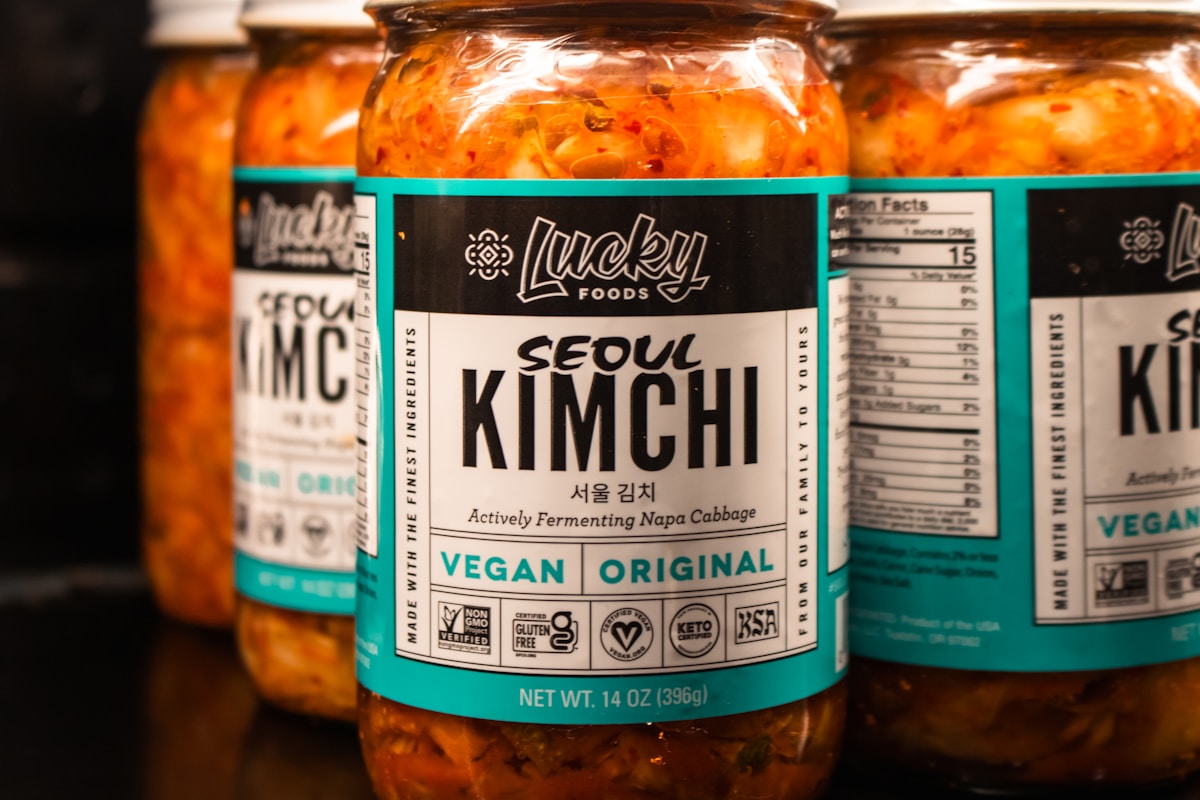
Daejeon occupies the geographic heart of South Korea, which has some culinary consequences. As a transit city and administrative centre, it draws food influences from across the peninsula without developing the extreme regional identity of coastal cities like Busan or historical capitals like Jeonju. What it has instead is solid, honest Korean food - good markets, reliable galbi restaurants, an active makgeolli culture, and university-area eating that reflects the city’s large student population.
Daejeon Sundae (Blood Sausage) at Jungang Market
Sundae - Korean blood sausage stuffed with glass noodles, barley, and various fillings inside steamed or grilled intestine - is a standard fixture of traditional Korean markets everywhere. At Jungang Market in the old downtown area of Daejeon, the sundae vendors are a long-established part of the market food culture.
Daejeon’s version tends toward the traditional preparation - steamed rather than grilled, served with a sprinkling of salt and ground dried chilli on the side. Portions at the market stalls cost approximately KRW 5,000–8,000 as of 2026. The accompanying offal platter (모듬순대 - modum sundae), which includes sundae alongside pork liver and lung, is a common order at around KRW 8,000–12,000 per serving.
The market is at its busiest on weekday mornings and lunchtimes. Accessible from Daejeon Station by bus or on foot in about 20 minutes.
Fresh Tofu Near University Areas
The areas surrounding major university campuses in Daejeon - particularly around Chungnam National University in Yuseong-gu and KAIST in the Daedeok area - have a concentration of small tofu restaurants (두부전문점 - dubu jeonmunjeomp) serving freshly made silken tofu.
Fresh sundubu (soft tofu) in spicy soup (sundubu jjigae) is the most common preparation - a red, deeply flavoured broth with egg, seafood or pork, and a block of uncurdled, custard-soft tofu that absorbs the broth. A bowl costs approximately KRW 8,000–12,000 as of 2026. The quality difference between fresh-made tofu and the packaged variety is significant - the fresh version has a clean, mild flavour that holds up well against the aggressive chilli broth.
These university-area restaurants are typically open from around 11:00 to 21:00 and are busier at lunchtime during the academic year.
Galbi (Grilled Short Ribs)
Galbi restaurants are present across Daejeon, with a concentration in the Dunsan commercial area and around Suseong-gu-equivalent streets in the city’s outer districts. Grilled pork galbi (돼지갈비 - dwaeji galbi) is particularly popular - marinated short ribs cooked over charcoal or gas at the table, eaten with lettuce wraps, kimchi, garlic, and various side dishes.
Prices for a galbi meal run approximately KRW 12,000–20,000 per person as of 2026, including side dishes and rice. Beef galbi is available at higher prices (KRW 20,000–35,000 per person). The format is social - best with two or more diners sharing meat and wrapping combinations.
Budae Jjigae (Army Base Stew)
Budae jjigae is a post-Korean War fusion dish that originated near American military bases, combining Korean kimchi, gochujang paste, and vegetables with American processed foods - Spam, baked beans, hot dog sausages, and instant ramen noodles - in a single bubbling communal pot.
It is eaten widely across Korea, but Daejeon’s university areas have a particularly strong budae jjigae culture - the hearty, cheap, calorie-dense dish suits the student demographic. A pot for two served at the table costs approximately KRW 15,000–20,000 as of 2026. Some restaurants offer an all-you-can-refill noodle add-on. The dish tastes better than its description suggests.
Yuseong Area Restaurants
The Yuseong district, built around its hot spring hotels, has a secondary restaurant culture catering to spa hotel guests and visitors. The restaurants here tend toward more elaborate Korean set meals (한정식 - hanjeongsik) - multi-course meals with numerous small dishes - and upscale Korean BBQ rather than street food and quick-service options.
A hanjeongsik set for one at a Yuseong restaurant costs approximately KRW 20,000–40,000 as of 2026, including an extensive array of side dishes, soup, and main courses. This is one of the better contexts in which to try this style of formal Korean dining outside Seoul.
Makgeolli Culture
Daejeon has a well-developed makgeolli (traditional Korean rice wine) drinking culture. The city’s university population has helped sustain a network of makgeolli bars where the fizzy, slightly sour rice wine is served by the litre jug alongside pajeon (spring onion pancakes) and kimchi side dishes.
Makgeolli in Daejeon is typically produced from local breweries - the Chungcheong region has a tradition of rice wine production. A one-litre jug costs approximately KRW 3,000–5,000; pajeon runs KRW 8,000–12,000 per portion. The combination is excellent value for an evening out.
Look for makgeolli bars (막걸리집 - makgeolli jip) near the university areas and in the older streets around Daejeon Station.
Book guided tours and activities in Daejeon through GetYourGuide.
Pick up an eSIM for South Korea to stay connected throughout your trip - Airalo offers easy top-up plans.
Street Food at Jungang Market
Beyond sundae, Jungang Market has the standard array of Korean traditional market street food: tteokbokki (spicy rice cakes, KRW 3,000–5,000), hotteok (sweet pancakes, KRW 1,000–2,000), odeng (fish cake skewers in broth, KRW 500–1,000), and bindaetteok (mung bean pancakes, KRW 5,000–7,000).
The market is busiest in the mornings and slows through the early afternoon. Some stalls close by 15:00–16:00 depending on day and season.
For where to sleep while you explore the food scene, see our Daejeon where to stay guide. For attractions and hiking, read our Daejeon things to do guide.