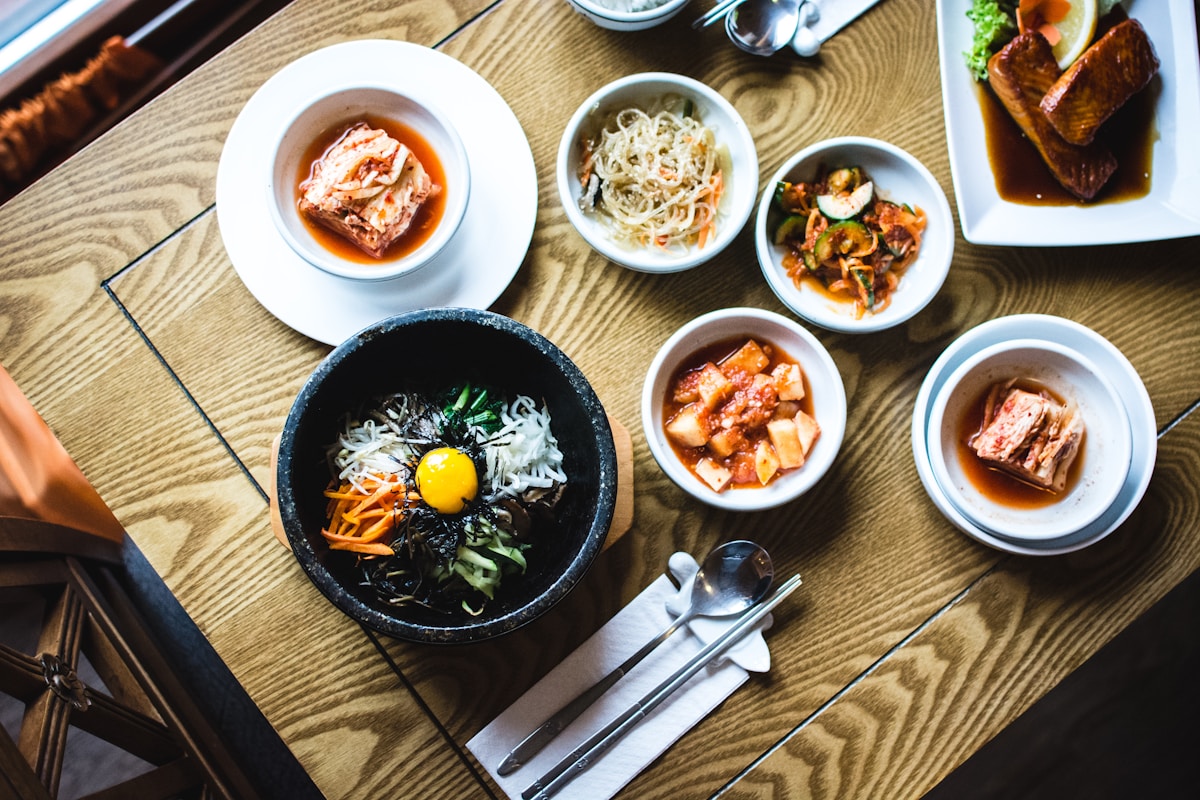
Seoul’s food scene spans street stalls and late-night grill restaurants, traditional market halls and contemporary tasting menus. The city has around 100,000 licensed restaurants in its boundaries - orientation requires knowing which areas and formats match what you are looking for.
Markets
Gwangjang Market (Jongno-gu) - one of the oldest and most celebrated traditional food markets in Seoul, operating continuously since 1905. The interior food court has stalls with fixed seating serving the dishes the market is most associated with: bindaetteok (crispy mung bean pancakes cooked on a griddle), mayak gimbap (small seaweed rolls, called “narcotic” gimbap for their addictive quality), and yukhoe (raw beef with sesame oil, egg, and pear). The market is busy from around 10:00 until late evening. Crowds peak at weekends. A guided Seoul food tour that includes Gwangjang Market is worth considering - a local guide knows which stalls have the best bindaetteok and can navigate the ordering process in Korean.
Noryangjin Fish Market - a 24-hour wholesale and retail fish market in Dongjak-gu. The market floor has tanks of live seafood - including king crab, sea urchin, abalone, and various fish - that can be purchased and taken upstairs to restaurants that prepare them to order. Best in the early morning when the commercial wholesale activity is happening. The market has two sections following a partial renovation.
Namdaemun Market - one of Seoul’s largest traditional markets with a significant food section concentrated at the inner market stalls. Galchi jorim (braised hairtail fish), bibimbap, and various stew dishes are the staples here. Less specifically famous for food than Gwangjang but busier and more varied in overall offering.
Mangwon Market (Mapo-gu) - a neighbourhood market less touristed than Gwangjang, popular with locals for daily shopping and affordable street food. Tteokbokki, bindaetteok, and seasonal vegetable side dishes are its main draws. Best in the afternoon before it closes in the early evening.
Korean BBQ Areas
Mapo Galmaegi-sal Alley - a street in Mapo-gu near Mapo Bridge famous for restaurants specialising in galmaegi-sal (pork skirt meat), a cheaper and more flavourful cut than samgyeopsal. The alley fills from early evening with diners at long communal tables outside. Extremely Korean in character - the kind of place that requires no English.
Jongno BBQ (Jongno 3-ga and surrounds) - traditional charcoal-grilled beef restaurants in the older parts of Jongno. The area around Tapgol Park and the streets off Jongno 3-ga have old-school galbi and bulgogi restaurants that have been operating for decades. More expensive than pork-focused BBQ but the quality of beef and the traditional atmosphere are distinct.
Hongdae and Sinchon - the university districts have the highest density of BBQ restaurants at accessible prices, catering to students and young Seoul residents. Good value, reliably busy, less atmospheric than older districts but easy to navigate with English menus widely available.
Noodle and Soup Restaurants
Euljiro cold noodle district - the stretch of Euljiro and the surrounding streets has a concentration of naengmyeon (cold buckwheat noodle) restaurants, including some of Seoul’s most established names like Eulji Myeonok. The area retains an old Seoul character that contrasts with the development happening around it.
Dongdaemun-area galbi-tang - the area around Dongdaemun Market has a cluster of restaurants serving galbi-tang (short rib soup) and ox bone broth (seolleongtang), open from early morning. These plain, direct soup restaurants represent a long tradition of Korean restorative food culture.
Contemporary and Specialty
Seoul has a substantial fine dining scene concentrated in Gangnam, particularly the Cheongdam-dong area. Korean tasting menus drawing on traditional ingredients and techniques have a strong presence. Many restaurants require advance booking, sometimes weeks ahead for the most sought-after tables.
The Yongsan and Mangwon areas, and parts of Seongsu-dong (the “Brooklyn of Seoul”), have the city’s most interesting independent restaurant scene - a mix of Korean regional cooking, international cuisines, and chef-driven casual restaurants.
Cafés and Desserts
Seoul’s café culture deserves its own consideration. Specialty coffee is taken seriously - Beansbins, Fritz Coffee, Namusairo, and dozens of independent roasters operate throughout the city. The Insadong and Bukchon areas have traditional teahouses (dakhang) serving Korean teas and rice desserts. Bingsu (shaved ice with various toppings including red bean, condensed milk, and seasonal fruit) is the essential summer dessert, served at both traditional and contemporary cafés.
For guided food tours and cooking classes in Seoul, booking ahead is recommended for the most popular options.
More Food Guides
- South Korea Food Guide - a country-wide overview of Korean cuisine, regional specialities, and dishes to try everywhere
- Jeonju Food Guide - the culinary capital of Korea, home of bibimbap and kongnamul gukbap