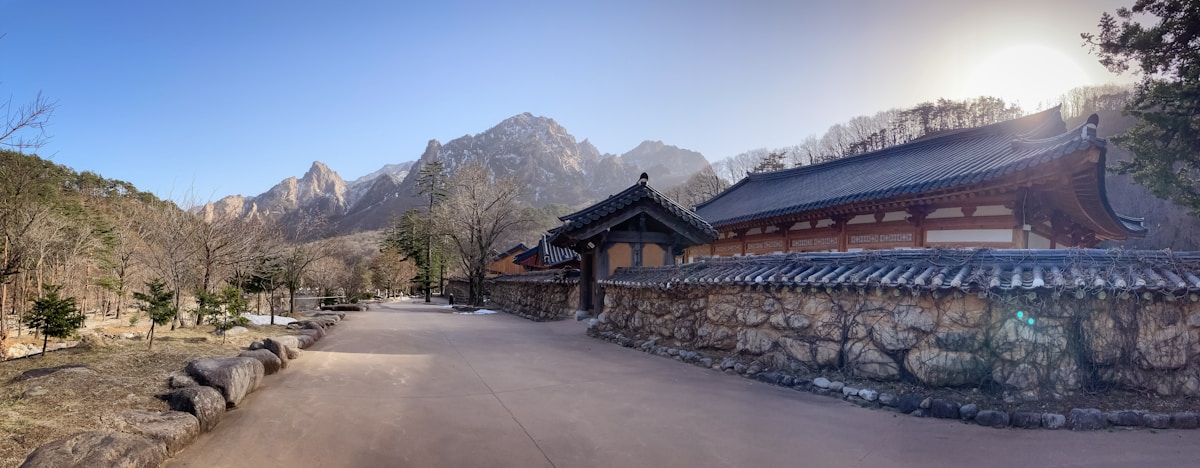
Sokcho’s accommodation divides clearly between two zones: Seorakdong at the foot of Seoraksan National Park, and the city centre near Sokcho Beach and Cheongchoho Lake. Each has a distinct character, and the right choice depends on whether you are prioritising early trail access or the coastal and food experience.
Seorakdong: The Hikers’ Base
Seorakdong (설악동) is the village that sits at the main entrance to Seoraksan National Park, approximately 12 km from central Sokcho. It is the most practical base if hiking is your primary reason for visiting - you can walk to the park ticket office in under 5 minutes, start Ulsanbawi or Biseondae Rock trails at first light, and return in the afternoon without losing time to the bus.
Budget in Seorakdong: Family-run guesthouses and pensions in the village run from approximately KRW 70,000–100,000 per night (USD 50–72) in shoulder season (spring and autumn) as of 2026. Shared bathrooms are common in the lower price range. Facilities are basic and functional - this is an outdoor-activity town, not a resort.
Mid-range in Seorakdong: Several larger pensions and small hotel-style properties in the village run approximately KRW 100,000–160,000 (USD 72–115) as of 2026. These typically offer private bathrooms, Wi-Fi, and some with mountain views. Hanwha Resort Seoraksan is the most established larger property in the area, operating as a resort-style complex with multi-room facilities, indoor pool access, and structured amenities. Rates are higher than the smaller pensions but include access to a wider range of facilities.
Peak season: July and August are the busiest months at Sokcho Beach, but October - when Seoraksan’s foliage turns red and orange - is the busiest period specifically for Seorakdong. Book 4–6 weeks ahead for October weekends.
Central Sokcho: Beach and Seafood
Central Sokcho - the area around Sokcho Beach (속초해수욕장), Cheongchoho Lake, and Abai Village - is the more complete city experience. The Abai Village is a historically significant settlement established by North Korean refugees after the Korean War; the narrow boat crossing from the opposite bank is one of Sokcho’s most photographed moments. The fish market near Dongmyeong Port is the best place in the city for snow crab.
Budget here: Korean motels and smaller guesthouses in central Sokcho run from approximately KRW 60,000–90,000 (USD 43–65) as of 2026. The beach area has the highest density of budget accommodation, with quality ranging widely - read recent reviews.
Mid-range here: Mid-range business hotels and pensions in the Sokcho Beach and Cheongchoho areas run approximately KRW 100,000–200,000 (USD 72–143) as of 2026. Several properties have sea-facing rooms with views of the East Sea and the lake behind the beach. The Hotel Sokcho by Best Western Signature Collection is one of the most consistently rated options in this zone — a 4-star property a 7-minute walk from Sokcho Beach with sea-view rooms, family suites, private parking, and a 24-hour concierge desk. Couples rate the location 9.0.
Getting to Seoraksan from Central Sokcho
Bus 7 from Sokcho Bus Terminal runs to Seorakdong throughout the day. Journey time is approximately 20 minutes; fare approximately KRW 1,500–2,500 as of 2026. The first buses typically run from around 07:00, which is early enough for sunrise trail starts if you move promptly.
Taxis are faster (about 15 minutes) and more convenient with heavy hiking kit - cost is approximately KRW 10,000–13,000 as of 2026.
Combined Gangwon Coast Itinerary
Sokcho pairs naturally with Gangneung (approximately 1 hour south by intercity bus). Visitors doing the Gangwon east coast route typically spend one to two nights in each city - Gangneung for the beaches and coffee culture, Sokcho for the national park and seafood. Both cities are accessible directly from Seoul, so you can travel the coast in either direction.
For a full accommodation breakdown including named properties, price comparisons, and seasonal timing tips, see our Sokcho where to stay guide.