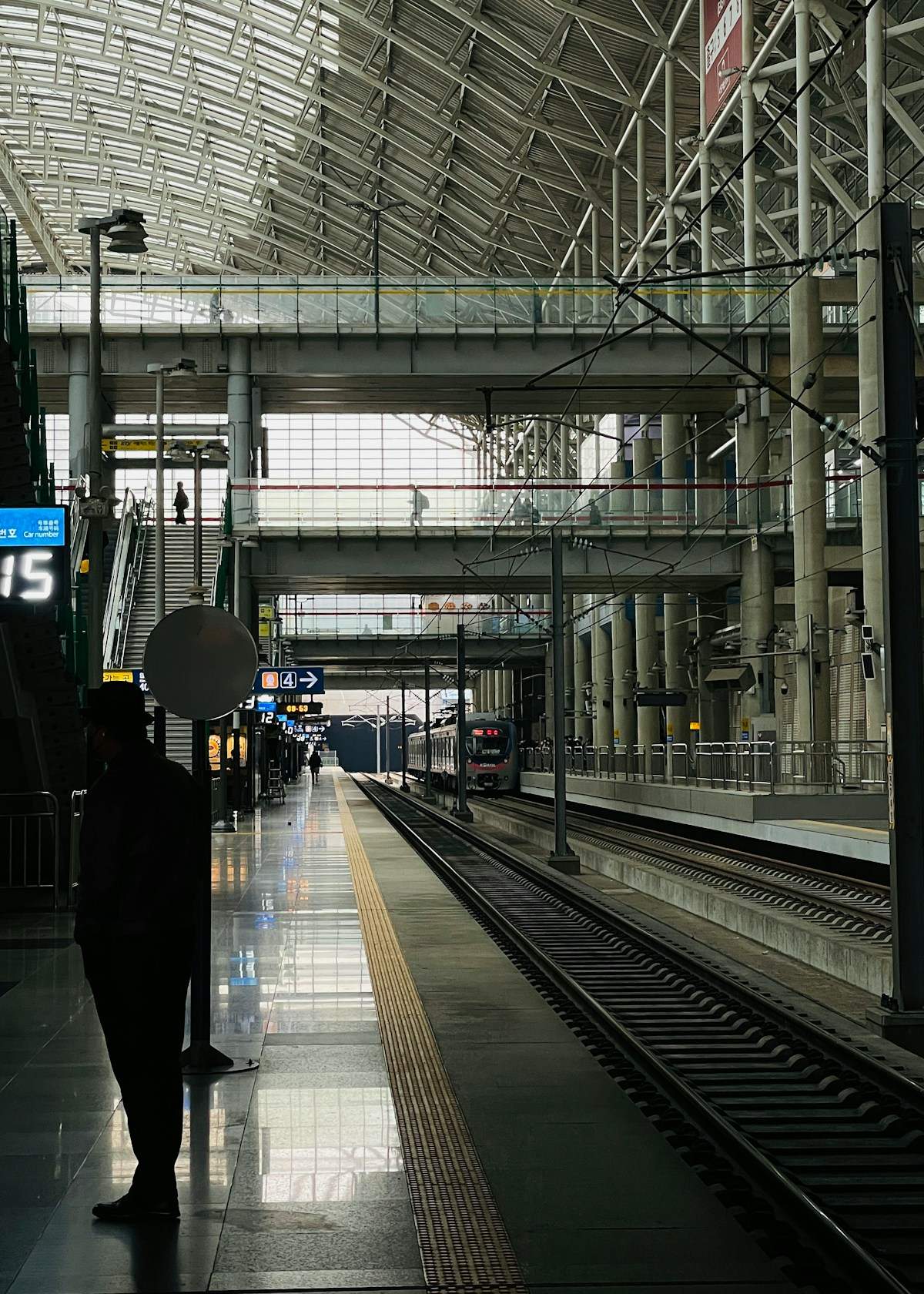
Gwangju is the regional hub of South Korea’s Honam (Jeolla) area, located approximately 270 km south of Seoul. It is well connected by both high-speed rail and express bus, making it one of the easier provincial cities to reach from the capital. Here is a summary of transport options with journey times and approximate fares as of 2026.
From Seoul by KTX or SRT
The fastest option from Seoul is the KTX from Seoul Station to Gwangju-Songjeong Station (광주송정역). Note that Gwangju-Songjeong is a different station from Gwangju Station - the high-speed terminal is in the Songjeong suburb, not in the city centre. From Gwangju-Songjeong, Metro Line 1 connects to the city centre (Culture Complex Station / ACC area) in approximately 20 minutes.
Journey time Seoul to Gwangju-Songjeong: approximately 1 hour 40 minutes to 2 hours depending on the service. Fares: approximately KRW 38,000–46,000 for a standard seat as of 2026. KTX departures from Seoul Station operate roughly every 30–60 minutes throughout the day.
SRT services depart from Suseo Station (수서역, accessible via Metro Line 3 in the Gangnam area) and also reach Gwangju-Songjeong in approximately 1 hour 40 minutes. Fares on SRT are similar to KTX and sometimes slightly cheaper. SRT tickets are booked through the SRT app or srail.kr - foreign credit cards are accepted.
Book KTX via the KORAIL website (letskorail.com) or Korail Talk app. Tickets for popular weekend services sell out quickly; book at least a week in advance during autumn foliage season and public holidays.
From Seoul by Express Bus
Express buses from Seoul Gangnam Express Bus Terminal (강남고속터미널) to Gwangju run frequently throughout the day and are roughly half the price of the KTX, though significantly slower.
Journey time: approximately 3 hours to 3 hours 30 minutes (longer in heavy traffic on Friday evenings). Fares: approximately KRW 18,000–21,000 for a standard seat as of 2026; premium Udeung buses cost approximately KRW 26,000–30,000. Buses depart roughly every 20–30 minutes from approximately 05:30 to 23:00.
Gwangju Express Bus Terminal (유스퀘어, Usquare) is centrally located in the Gwangju city centre and is directly connected to Geugnang-ro Station on Metro Line 1. The terminal building includes a large indoor shopping area and food court.
Book via Kobus (kobus.co.kr) or the Kobus app. Tickets can usually be purchased at the terminal on the day for off-peak services, but weekend and holiday departures fill up quickly.
From Busan
Direct express buses run from Busan Seobu Intercity Bus Terminal (부산 서부시외버스터미널) to Gwangju. Journey time: approximately 2 hours 30 minutes to 3 hours. Fare: approximately KRW 20,000–25,000 as of 2026.
A KTX route also exists via Mokpo (change at Gwangju-Songjeong) but involves a transfer; the direct bus is generally more convenient for Busan-Gwangju travel.
From Jeonju
Jeonju and Gwangju are the two major cities of the Jeolla region and are frequently combined on itineraries. Direct express buses run between Jeonju Express Bus Terminal and Gwangju’s Usquare terminal. Journey time: approximately 1 hour 10 minutes. Fare: approximately KRW 8,000–10,000 as of 2026. Buses run roughly every 30 minutes throughout the day.
Getting Around Gwangju
Gwangju’s Metro Line 1 runs east to west across the city connecting Gwangju-Songjeong Station in the west to Pyeonghwa Station in the east. Key stops include:
- Gwangju-Songjeong (KTX/SRT terminus)
- Usquare (express bus terminal)
- Culture Complex (ACC, near 5·18 Memorial Park)
- Nokdong (Chungjang Road area)
Fare: approximately KRW 1,400 per journey as of 2026 (pay with T-money card or single-use card purchased at the station).
Taxis are metered and inexpensive - most city-centre journeys cost approximately KRW 4,000–8,000 as of 2026. The Kakao T app works in Gwangju for booking taxis in advance. For the May 18th National Cemetery in northern Gwangju, taxis are the most convenient option (approximately KRW 12,000–15,000 from the city centre as of 2026) as the metro does not reach that far north.
To stay connected on arrival, an Airalo eSIM for South Korea can be activated before you land and works across the metro, bus, and Kakao T apps.