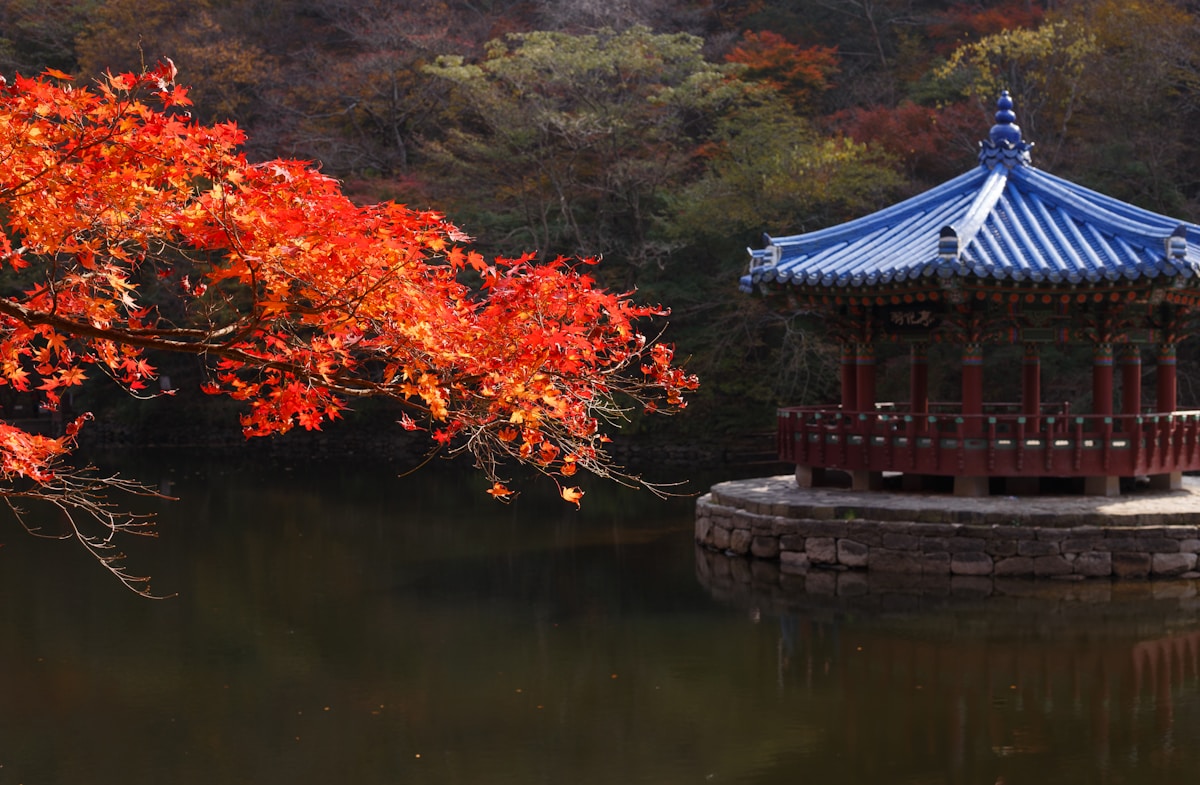
The Jinju Namgang Yudeung Festival (진주 남강 유등 축제) is widely regarded as Korea’s most historically rooted lantern festival, and one of the most visually impressive events in the country’s autumn calendar. It takes place each year along the Nam River (Namgang) in Jinju, South Gyeongsang Province, filling the water with thousands of illuminated lanterns floating against a backdrop of the historic Jinju Fortress.
2027 Dates
Exact 2027 dates will be announced by the Jinju City Office in mid-2027. The festival is consistently scheduled in early-to-mid October, typically for around 10 days. It is timed loosely around the Chuseok holiday period, though the exact overlap shifts each year as Chuseok follows the lunar calendar.
Expected 2027 window: early to mid-October
In 2027, Chuseok falls on 6 October. Historical scheduling suggests the Jinju Lantern Festival will run in the week before or the two weeks following that date. We will update this page when the official programme is announced.
What Makes Jinju Different
Most of South Korea’s lantern events are modern urban festivals. The Jinju festival has a documented origin from the Imjin War of 1592, when Korean commanders floated lanterns on the Nam River during the Siege of Jinju - first as a tactical signal to coordinate troop movements, and later as a way to prevent Japanese forces from crossing the river at night. After the war, the tradition continued as a memorial practice for those who died in the siege.
The lanterns launched on the river during the festival are understood within this historical frame, not simply as decoration. The Jinju Fortress (Jinjuseong) - which held during the First Battle of Jinju in 1592 and was taken in the Second Battle in 1593 - stands directly above the river and is part of the festival site.
What the Festival Covers
The main festival site runs along the southern bank of the Nam River, with Jinju Fortress (Jinjuseong) on the bluff above the north bank. The main viewing areas and activities include:
- Floating lanterns on the Nam River - the central spectacle, with thousands of traditional yudeung lanterns lit and released each night across the river surface
- Jinjuseong fortress illuminations - the fortress walls and pavilions are illuminated each evening; the view from the north bank looking toward the fortress with lanterns on the water below is the festival’s signature image
- Lantern crafting areas - participants can make and launch their own lanterns; fees for materials are approximately KRW 5,000–10,000 as of 2026
- Exhibition pavilions - large-scale thematic installations on the riverside, varying each year
- Reenactment performances - daytime and evening performances related to the 1592 Battle of Jinju, including mock battle scenarios staged on the riverbank
Entry: Entry to the main festival grounds costs approximately KRW 7,000–10,000 for adults and KRW 4,000–5,000 for children as of 2026. Prices are announced each year with the official programme.
Evening hours: The festival runs from late afternoon into the night, with the illuminations most effective after dark from approximately 19:00 onwards.
Getting to Jinju
Jinju is in South Gyeongsang Province (Gyeongnam), roughly midway between Busan and the southern coast. It is not on a KTX main line, but express services connect well from the major hubs.
From Busan:
- Express bus from Busan Seobu Bus Terminal: approximately 1 hour 20 minutes, roughly KRW 8,000–9,000. Buses run frequently throughout the day.
- Intercity train (ITX) from Busan Station via Jinju Line: approximately 1 hour 40 minutes.
From Seoul:
- KTX from Seoul Station to Jinju (via Gyeongjeonseon): approximately 3 hours, from approximately KRW 47,000 as of 2026. Several daily services.
- Express bus from Seoul Nambu Terminal to Jinju: approximately 3 hours 30 minutes.
From Jinju Bus Terminal or Jinju Station, the Nam River festival site is approximately 3 kilometres. Taxis are readily available at approximately KRW 7,000–9,000 for the transfer. During the festival, local buses also run directly to the riverside area.
Where to Stay in Jinju
Jinju is a mid-sized city with a good range of hotels and guesthouses. Booking accommodation for the festival period well in advance is strongly advised - the event draws visitors from across Korea and the hotel stock close to the riverside fills quickly.
Hotels on the north bank of the Nam River (closest to Jinjuseong) offer views toward the fortress. The city centre and the area around Jinju Station are also practical bases with dining options within walking distance.
If Jinju hotels are sold out, Sacheon (30 minutes by bus) and Changwon (45 minutes by bus) are viable alternatives.
The 1592 Siege: Brief Background
The Siege of Jinju in October 1592 is one of the significant engagements of the Japanese invasions of Korea (Imjin War). A Korean garrison held the fortress against a much larger Japanese force under Hosokawa Tadaoki and others, preventing the advance into the Jeolla Province - which contained much of the country’s food supply. The victory was later reversed in the Second Siege of 1593, when the fortress fell after a week-long assault and an estimated 60,000 Koreans were killed. The annual festival honours both the victory of 1592 and the losses of 1593.
Jinjuseong itself is free to enter outside festival hours and includes a museum dedicated to the battles and the Imjin War period. The fortress grounds contain the original pavilion of Chokseongnu (촉석루), which has stood above the river for over 600 years in various forms.
Planning Ahead
The Jinju Lantern Festival is busy but significantly less crowded than Seoul events. Weekday evenings during the festival period are noticeably quieter than weekends. The combination of the fortress, the river, and the historical context makes it one of the more distinctive travel experiences in southern Korea.
If you’re building a wider autumn trip around the festival, our South Korea itinerary guides cover multi-day routes through the south, and the things to do section includes options for combining Jinju with Gyeongju, Busan, or the Jirisan hiking area.
Official 2027 dates will be published at the Jinju City tourism portal and Korean cultural festival directories. Announcement is typically made by August each year.