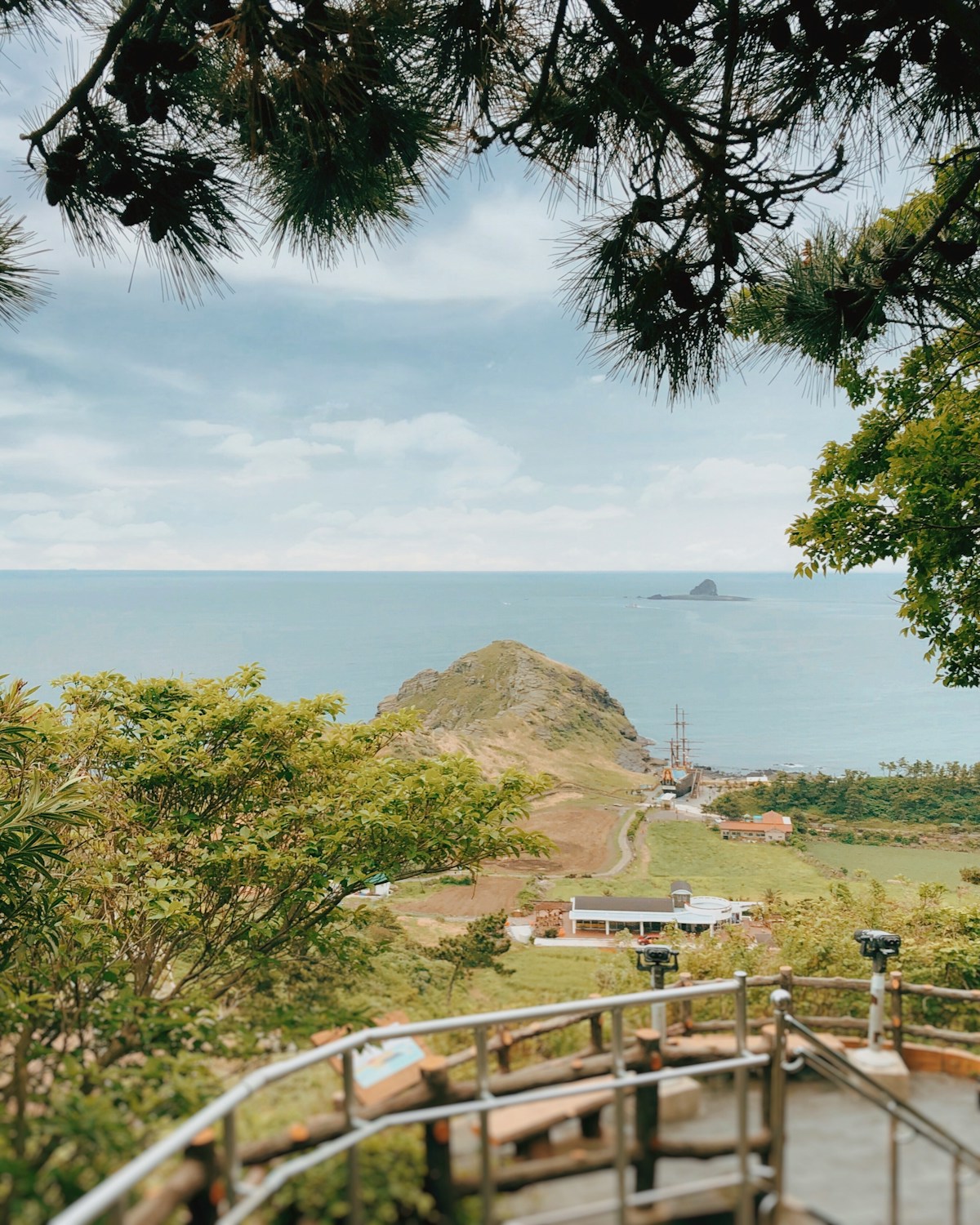
Seogwipo sits on Jeju’s southern coast, where the landscape is wilder and more dramatic than the north. Basalt cliffs drop to the sea, two waterfalls tumble to the ocean within walking distance of town, and citrus orchards surround the inland roads. It is the island’s second city but in character it feels like a small town with good seafood — a very different proposition from resort Jungmun 15 km to the west.
Understanding Seogwipo’s Accommodation Zones
Downtown Seogwipo is the city itself — the fishing harbour, Maeil Olle Market, Cheonjiyeon Falls (a 10-minute walk from the market), and the Seogwipo Olle Market. Guesthouses, pension-style accommodation, and a handful of mid-range hotels are scattered through the city streets and along the coastal road. This is the best base for visitors who want authentic Jeju character, access to the south coast Olle Trail, and proximity to the city’s restaurants.
Jungmun Resort Area (Jungmun-dong, about 15 km west of downtown Seogwipo) is Jeju’s planned luxury tourism zone, developed in the 1980s as a deliberate resort complex. The major hotel brands are concentrated here: Lotte, Hyatt (now Parnas), Shilla, and Marriott properties. Jungmun Saekdal Beach is a short walk from most hotels. There are water parks, a golf course, and walking access to Cheonjeyeon Falls (a different waterfall from Cheonjiyeon in downtown Seogwipo). The atmosphere is self-contained and managed — comfortable for families and package travellers.
Coastal and rural pensions — Jeju’s pension culture (privately operated guesthouse-style stays, often with full kitchen facilities and outdoor spaces) is most developed along the south and east coast roads around Seogwipo. Many are designed for couples or small families and offer a more intimate alternative to the resort hotels. They require a car to access but provide good value and genuine seclusion.
Budget Hotels: From Approximately KRW 40,000–90,000 Per Night (USD 30–68)
Seogwipo Guesthouse Scene — Small family-run guesthouses near the Seogwipo Maeil Olle Market and Cheonjiyeon Falls area offer the most affordable bases. Dorm beds from approximately KRW 20,000–35,000, private rooms from approximately KRW 45,000–80,000 as of 2026. English-language signs are limited but most guesthouses have experience hosting international visitors on the Olle Trail.
Pension options near Donnaeko Valley — Further inland toward the Donnaeko Valley (famous for cherry blossoms in April), basic pension-style stays rent from approximately KRW 50,000–90,000 per night for a private room or small apartment unit as of 2026.
What to Expect at the Budget End
Seogwipo’s budget accommodation skews toward Korean domestic visitors. Standards are generally clean, and in-room ondol (heated floor) sleeping is common in older guesthouses. Air conditioning is standard in summer. Booking ahead for July–August and the late March cherry blossom period is essential — independent guesthouses have low room counts and fill quickly.
Mid-Range Hotels: From Approximately KRW 100,000–280,000 Per Night (USD 75–210)
Seogwipo KAL Hotel (Downtown Seogwipo) — One of the city’s established mid-range hotel options, with ocean-facing rooms overlooking the cliffs above Seogwipo Bay. Multiple restaurant outlets, a pool, and decent room sizes. Well positioned for walking to both Cheonjiyeon Falls and the city seafood market. From approximately KRW 120,000–250,000 per night as of 2026.
Haevichi Hotel and Resort (Pyoseon, East Coast) — Technically outside Seogwipo city, this mid-to-upper resort property on the east coast has a large beach, good spa facilities, and packages that include golf. It suits travellers using east Jeju (Seongsan, Pyoseon beach) as their primary destination while keeping Seogwipo accessible by car. From approximately KRW 150,000–320,000 per night as of 2026.
Hotel Monica Jeju (Downtown Seogwipo) — A clean, well-regarded hotel in the Seogwipo city centre with modern interiors and close proximity to the harbour and market. Consistently strong guest ratings for its price bracket. From approximately KRW 110,000–200,000 per night as of 2026.
Prince Hotel Jeju (Jungmun Area) — An older property in the Jungmun zone at mid-range pricing, offering pool access and resort amenities at a lower cost than the flagship luxury hotels. Rooms are dated by current standards but facilities are functional. From approximately KRW 120,000–220,000 per night as of 2026.
Luxury Hotels: From Approximately KRW 300,000–900,000+ Per Night (USD 225–680+)
Lotte Hotel Jeju (Jungmun) — The landmark property in Jungmun’s resort complex, with a large outdoor pool, direct beach access, casino facilities (non-Korean nationals only), and multiple dining venues. A consistently professional operation with full resort amenities. From approximately KRW 350,000–700,000 per night as of 2026.
Parnas Hotel Jeju (Jungmun, formerly Hyatt Regency) — A well-established luxury resort with strong pool facilities, good dining variety, and reliable service. Popular with families and business groups attending Jeju conventions. From approximately KRW 380,000–750,000 per night as of 2026.
The Shilla Jeju (Jungmun) — A premium option within the Jungmun cluster, valued for its quieter atmosphere and spa. Good sea views from upper-floor rooms. From approximately KRW 300,000–600,000 per night as of 2026.
Ananti at Jeju (Gujwa-eup, East Jeju) — A design-led luxury boutique retreat on the east coast, with private pool options and architecture that is genuinely distinctive. Further from Seogwipo but attractive for couples seeking seclusion. From approximately KRW 500,000–950,000+ per night as of 2026.
Getting to Your Hotel from Jeju Airport
All hotels in Seogwipo and Jungmun are reached from Jeju International Airport (CJU) in the north of the island. The journey takes approximately 30–40 minutes by car or taxi, or 50–70 minutes by bus.
Taxi: To downtown Seogwipo approximately KRW 28,000–40,000. To Jungmun resort area approximately KRW 25,000–38,000 as of 2026. Taxis are metered and plentiful at the airport.
Airport limousine bus: Route 600 (City Bus 600) connects the airport to Jungmun and downtown Seogwipo, running every 20–30 minutes. Fares approximately KRW 4,000–5,000 as of 2026.
Car rental: Desks are inside Jeju Airport terminal. Booking in advance is strongly recommended for July and August. Picking up at the airport gives you immediate access to the full island.
Getting Around Seogwipo
Car: The most flexible option. Seogwipo city streets are drivable and parking is available near the harbour and markets. Roads to Hallasan’s southern trailheads (Donnaeko, Yeongsilgiam) require a car or taxi.
Local taxis: Metered taxis run throughout the city. Downtown Seogwipo to Jungmun costs approximately KRW 12,000–18,000.
City buses (Route 510, 520): Local buses cover the main downtown routes, the coastal road, and connections toward Jungmun. Frequency decreases in the evening.
Walking: Downtown Seogwipo is compact — Cheonjiyeon Falls, the harbour, and Maeil Olle Market are all within 15 minutes on foot from central hotels.
Booking Tips for Seogwipo
Peak season (July–August) requires six to eight weeks advance booking for Jungmun resort hotels; the best rooms sell out faster. Downtown guesthouses have shorter booking windows but still fill for summer weekends. The cherry blossom and canola season (late March to early April) is the next busiest period for Seogwipo specifically — Donnaeko Valley and the Olle Trail sections near town attract significant crowds.
Shoulder season (late September through November) offers the most favourable combination of rates and weather. Winter is quiet, cold on higher ground, and best for visitors coming specifically for Hallasan snow hiking.
For activities — the Olle Trail, Manjanggul Lava Tube, diving packages, and day trips around the island — see our Seogwipo activities guide.