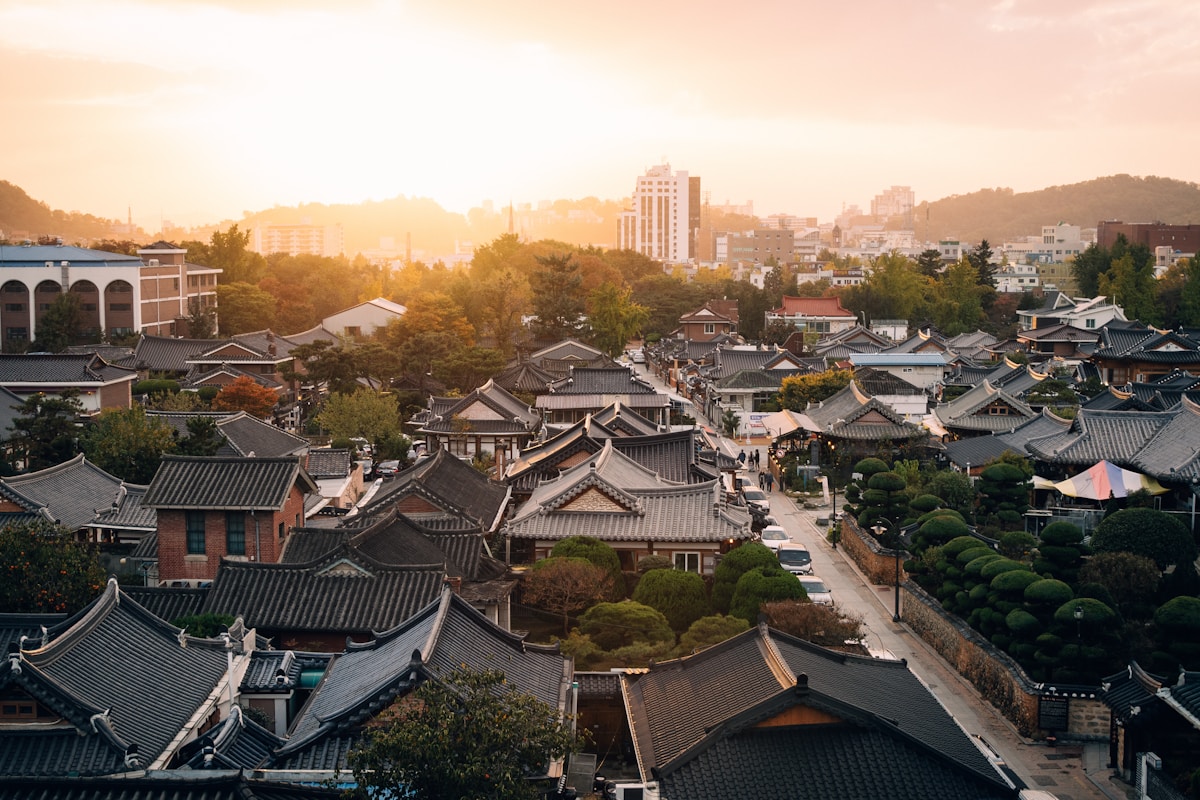
Gyeongju earned the title of “museum without walls” for good reason - its burial mounds, temples, stone pagodas, and observatory are woven directly into the city’s streets and fields. The Silla Kingdom ruled Korea from here for nearly a thousand years, and the density of UNESCO-listed heritage is extraordinary. Where you sleep has a direct bearing on how easily you access those layers of history: the right neighbourhood puts ancient tombs within walking distance; the wrong choice adds 20 minutes each way to every excursion.
Understanding Gyeongju’s Accommodation Zones
Historic Core (Downtown / Hwangnam area) is the stretch of town centred on Tumuli Park (the royal burial mounds), the Cheomseongdae Observatory, Wolseong Palace site, and the Gyeongju National Museum. The Hwangnam neighbourhood immediately east of the tumuli is particularly atmospheric, with hanok-style guesthouses lining narrow streets. Anapji Pond and the bustling central market are both walkable. This is the best base for independent travellers who want to cover the main historic sites on foot without depending on buses or taxis.
Bulguksa Area (eastern hillside, approximately 16 km from downtown) sits at the foot of Tohamsan mountain, near the two most visited heritage sites in the region - Bulguksa Temple and Seokguram Grotto. Accommodation here is quieter and more rural in character, mainly guesthouses and small minbak (Korean homestay accommodation). It is an excellent choice for early-morning temple visits before tour groups arrive, but requires transport to reach the downtown sights.
Bomun Lake Resort (Bomun-dong, east of downtown) is a planned leisure zone developed in the 1970s, with artificial lakeside hotels, golf courses, and entertainment. The major upmarket hotel brands are concentrated here. The zone has a clean, resort-package character well suited to families and groups, but it lacks the street-level history and density of the city centre.
Downtown Transit Zone (Gyeongju Station / Bus Terminal area) has a cluster of mid-range business hotels and motels that suit overnight transit visitors arriving and departing by train or bus. Convenient and priced for single-night stays, with less character than the Hwangnam district.
Budget Hotels and Guesthouses: From Approximately KRW 40,000–100,000 Per Night (USD 30–75)
Hwangnam Hanok Guesthouses - The Hwangnam neighbourhood has the most appealing budget accommodation in Gyeongju. Several guesthouses offer ondol-floor rooms in traditional-style buildings within a 5-minute walk of Tumuli Park. Atmospheres vary from carefully restored to simply practical, but the location is unmatched for walking access to the sights. From approximately KRW 55,000–100,000 per night as of 2026.
Gyeongju Station area motels - Budget motels cluster around Gyeongju Station (KTX/ITX) and the intercity bus terminal. Clean, functional, and priced competitively for one-night transit stays. From approximately KRW 35,000–70,000 per night as of 2026. English is limited but sign language and translation apps work reliably.
Bulguksa guesthouses - Small minbak and pension-style guesthouses near the Bulguksa bus stop are available for approximately KRW 50,000–90,000 per night as of 2026. Booking ahead for autumn (October–November) is necessary, as the area’s maple foliage draws heavy domestic traffic.
What to Expect at the Budget End
Gyeongju is a popular domestic tourism destination - Korean visitors make up the majority of budget guesthouse traffic. English-language services improve each year but are still limited in smaller guesthouses. The Hwangnam hanok options justify their pricing premium with atmosphere that more modern guesthouses cannot match.
Mid-Range Hotels: From Approximately KRW 100,000–280,000 Per Night (USD 75–210)
The K Hotel Gyeongju (Bomun Lake Resort) - A well-regarded mid-range property in the Bomun zone with good facilities including a pool, multiple restaurants, and clean modern rooms. The Bomun lakeside location is pleasant for evening walks. From approximately KRW 120,000–260,000 per night as of 2026.
Commodore Hotel Gyeongju (Bomun Lake Resort) - An established property in the Bomun complex, consistently rated for its service standards and reasonable pricing for the zone. Multiple dining options and recreation facilities. From approximately KRW 110,000–240,000 per night as of 2026.
Gyeongju Chosun Hotel (Bomun Lake Resort) - A classic Korean-brand hotel property within the resort zone, with a traditional garden aesthetic and reliable service. Popular with Korean domestic travellers for its combination of heritage atmosphere and modern facilities. From approximately KRW 130,000–280,000 per night as of 2026.
Boutique hotels in the Historic Core - A small number of independently operated boutique hotels have opened in the downtown district in recent years, combining modern interiors with proximity to the main sights. These tend to sell out faster than the Bomun resort hotels, particularly in autumn. From approximately KRW 110,000–220,000 per night as of 2026.
Luxury Hotels: From Approximately KRW 280,000–600,000+ Per Night (USD 210–450+)
Hilton Gyeongju (Bomun Lake Resort) - The flagship luxury property in Gyeongju, with a large indoor and outdoor pool complex, a spa, multiple dining venues, and polished service. Well-maintained and consistently the highest-rated hotel in the Bomun zone. From approximately KRW 280,000–500,000 per night as of 2026.
Hotel Hyundai Gyeongju (Bomun Lake Resort) - A large resort hotel with a convention centre component and extensive recreation facilities. The scale suits group and family visits. Views over Bomun Lake from higher-floor rooms. From approximately KRW 250,000–450,000 per night as of 2026.
Luxury hanok-style pensions - A niche market of upscale traditional-style pension accommodation has grown around Gyeongju’s heritage district. These properties offer premium ondol suites, private courtyard spaces, and breakfasts incorporating local ingredients. Rates from approximately KRW 200,000–400,000 per night as of 2026. Supply is limited - book early for autumn.
Getting to Gyeongju
By KTX/ITX from Seoul: KTX trains run from Seoul Station to Singyeongju Station (approximately 2 hours). Singyeongju Station is on the outskirts of the city - taxis and local buses connect to downtown and Bomun (approximately 10–15 minutes, KRW 6,000–10,000 taxi). ITX-Saemaeul from Seoul to Gyeongju Station (the central station) takes approximately 3 hours and deposits you in the heart of downtown.
By bus from Busan: Intercity buses from Busan (Nopo or Seobu terminal) reach Gyeongju Intercity Bus Terminal in approximately 50–70 minutes. Busan is the most common gateway for international visitors arriving at Gimhae Airport.
By car from Seoul: Approximately 4 hours via the Gyeongbu Expressway. Driving is practical if you plan to explore the broader North Gyeongsang Province area around Gyeongju.
Getting Around Gyeongju
Walking: The historic core is compact. From central hotels, Tumuli Park, Cheomseongdae, Wolseong, and the National Museum are all within 20–30 minutes on foot. Anapji Pond is a 15-minute walk from the downtown guesthouses.
Bicycle rental: Gyeongju is one of the best cycling cities in Korea. Flat roads connect the major tumuli and palace sites, and bike rental shops operate near the bus terminal and Tumuli Park. Daily rental approximately KRW 8,000–15,000 as of 2026.
Local buses: Routes 10, 11, and 600 cover the main destinations including Bulguksa Temple, Bomun Lake, and Yangdong Folk Village. Timetables are available on Naver Maps.
Taxi: Plentiful downtown, less available at the Bulguksa area. Downtown to Bulguksa approximately KRW 15,000–22,000, downtown to Bomun approximately KRW 8,000–14,000 as of 2026.
Booking Tips for Gyeongju
Autumn (late October to mid-November) is peak season - Gyeongju’s maple and ginkgo foliage is exceptional, particularly around Bulguksa Temple and the Namsan hiking trails. Book six to eight weeks ahead for this period. Cherry blossom season (late March to early April) around Bomun Lake and the university boulevard is the second busiest window. Summer is busy with Korean domestic visitors; winter is quiet and rates fall sharply.
For Gyeongju’s key heritage experiences - Bulguksa and Seokguram guided tours, Donggung Palace night visits, Namsan hiking - see our Gyeongju activities guide.