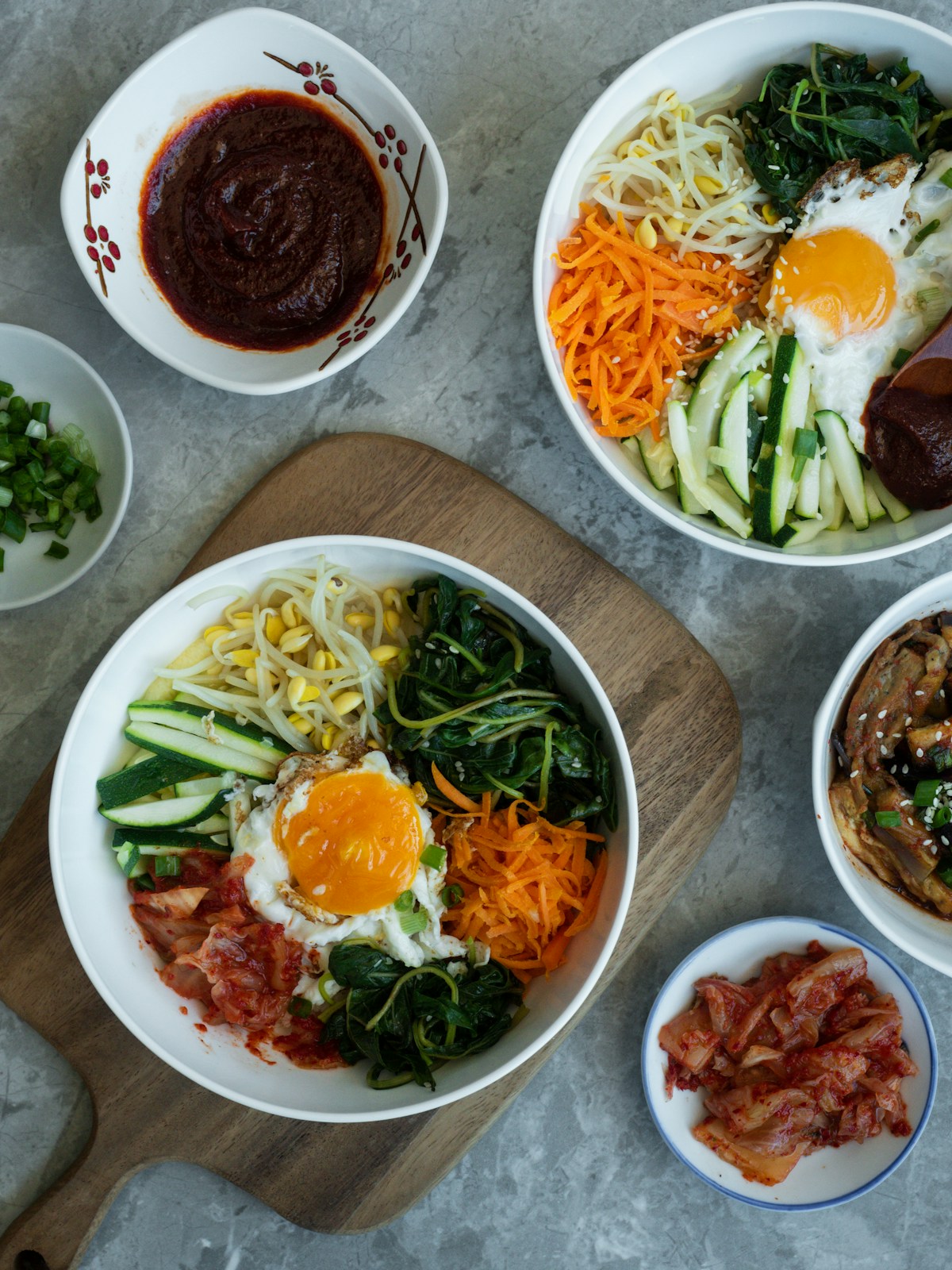
Jeonju’s food reputation is the most consistent thing about the city. The bibimbap claim is not marketing - the dish originated here, and the restaurants in the city serving it are operating under the weight of that comparison every time. The makgeolli bars have a culture of free anju that is genuinely unusual in its generosity. The Nambu Market kongnamul gukbap breakfast has regulars who drive 90 minutes from Seoul to eat it.
For where to stay in the city, see our Jeonju accommodation guide. For sights and activities, see things to do in Jeonju.
Jeonju Bibimbap
The origin dish and the reason most visitors care about the food here. Jeonju bibimbap uses a specific combination of ingredients: short-grain rice grown in the Jeolla region, seasoned bean sprouts (kongnamul), sautéed mountain vegetables (spinach, bracken fern, courgette, mushrooms), thin-sliced seasoned beef or beef tartare (yukhoe), a fried egg on top, and gochujang paste mixed in at the table.
The dolsot version - served in a heavy stone bowl that continues to cook the rice at the table, creating a crispy rice crust (nurungji) at the bottom - is the premium version. Worth ordering over the standard bowl.
Pricing: approximately KRW 12,000–20,000 for a dolsot bibimbap at well-regarded restaurants as of 2026. Some establishments charge separately for the side dishes (banchan) - confirm before ordering.
Where to eat bibimbap in Jeonju:
- Gogung (고궁) - one of the most visited and most consistent bibimbap restaurants near the Hanok Village entrance. Queue at weekends. Prices approximately KRW 15,000–18,000 per person as of 2026.
- Hanilkwan (한일관) - long-established restaurant with a more formal setting than the village market stalls. Known for including yukhoe (beef tartare) in the standard bibimbap.
- Jungang Hoegwan (중앙회관) - a local institution on the streets near Nambu Market, less visible to first-time visitors but well-regarded among Korean food writers.
- Village market stalls: Several stalls around the Hanok Village serve simplified bibimbap at lower prices (approximately KRW 8,000–12,000) - functional rather than exceptional.
Kongnamul Gukbap - Bean Sprout Broth Soup
A bowl of clear bean sprout broth with short-grain rice added directly to the soup, served with kimchi and a raw egg to drop into the hot broth. Light, savoury, and restorative. In Jeonju it is eaten as breakfast, as a hangover cure, and as a straightforward weekday lunch.
Pricing: approximately KRW 7,000–9,000 per bowl as of 2026.
Where to eat it:
- The streets around Nambu Market (south of the Hanok Village) have several restaurants that open early - from approximately 06:00–07:00 - specifically for the kongnamul gukbap breakfast crowd. Hyundai Okdol Sikdang near the market is frequently cited by Korean food media.
- Several kongnamul gukbap restaurants operate at the Hanok Village market - functional versions for visitors who don’t want to walk to Nambu Market.
Makgeolli - Jeonju Rice Wine Tradition
Makgeolli is a milky, slightly fizzy unfiltered rice wine, typically 6–8% alcohol. The Jeonju makgeolli-jip (rice wine bar) tradition has a specific character: the free anju system. When you order your first jug of makgeolli, a small set of side dishes arrives. As you order more jugs, more anju follows - typically escalating from simple kimchi and dried vegetables to pancakes, stew, and more substantial dishes. At a good Jeonju makgeolli bar, a long evening generates a significant spread of food.
The Samcheon-dong area (samcheong-dong in some romanisations), south of the Hanok Village on the far side of Omokdae hill, has the highest concentration of traditional makgeolli bars. The streets here are low-lit, primarily local, and significantly less tourist-facing than the main village streets.
Pricing: approximately KRW 4,000–7,000 per jug (1 litre) of makgeolli as of 2026. The anju arrives free or at nominal cost alongside.
Other areas: Some makgeolli bars operate within the Hanok Village, though these tend toward a more polished tourist experience. The Samcheon-dong bars have more local atmosphere.
Nambu Market
The main traditional market south of the Hanok Village. Active daily from early morning through to the late afternoon.
Inside the market:
- Fresh produce, tofu, banchan (prepared side dishes), dried goods
- Street food stalls: tteokbokki (spicy rice cakes), sundae (blood sausage), hotteok (sweet pancakes), corn dogs
- Sit-down restaurants at the back of the market serving kongnamul gukbap, bibimbap, and doenjang jjigae (soybean paste stew) at local prices (KRW 6,000–12,000)
The market has a roof and is active in all weather. It is a working market rather than a tourist attraction, and prices here are noticeably lower than the village-facing restaurants.
Choco-Pie at the Hanok Village
An unusual but persistent Jeonju food trail item: warm choco-pies (chocolate-coated marshmallow sandwiches, a ubiquitous Korean snack) served fresh and warm from street stalls in the Hanok Village. The stalls heat them on a griddle, which makes them genuinely different from the packaged factory version - warm, melted chocolate, soft marshmallow interior.
Approximately KRW 1,000–1,500 per piece as of 2026. Multiple stalls compete in the village; quality is similar across vendors.
Makgeolli Bread and Hanok Village Cafés
The Hanok Village has accumulated a significant number of cafés serving creative takes on traditional ingredients - makgeolli-flavoured bread, hallabong-infused drinks, and sesame-based pastries alongside the standard café menu. These are primarily targeted at the domestic Korean tourist market rather than reflecting historical Jeonju food culture, but they are well-executed and the settings in converted hanok buildings are good.
A makgeolli bread loaf from the Hanok Village café circuit costs approximately KRW 8,000–14,000 as of 2026 and travels well as a take-home item.
Where to Eat by Meal
Breakfast: Kongnamul gukbap at Nambu Market, or a simple Korean breakfast at your hanok guesthouse if included.
Lunch: Bibimbap at Gogung or Hanilkwan (expect queues at weekends). Or Nambu Market for a faster, cheaper version.
Afternoon: Choco-pie and a café stop in the Hanok Village.
Evening: Makgeolli at Samcheon-dong, with escalating anju.
For food tours and cultural experiences in Jeonju - including guided market walks, bibimbap cooking classes, and makgeolli tasting sessions with English-speaking guides - advance booking is recommended.