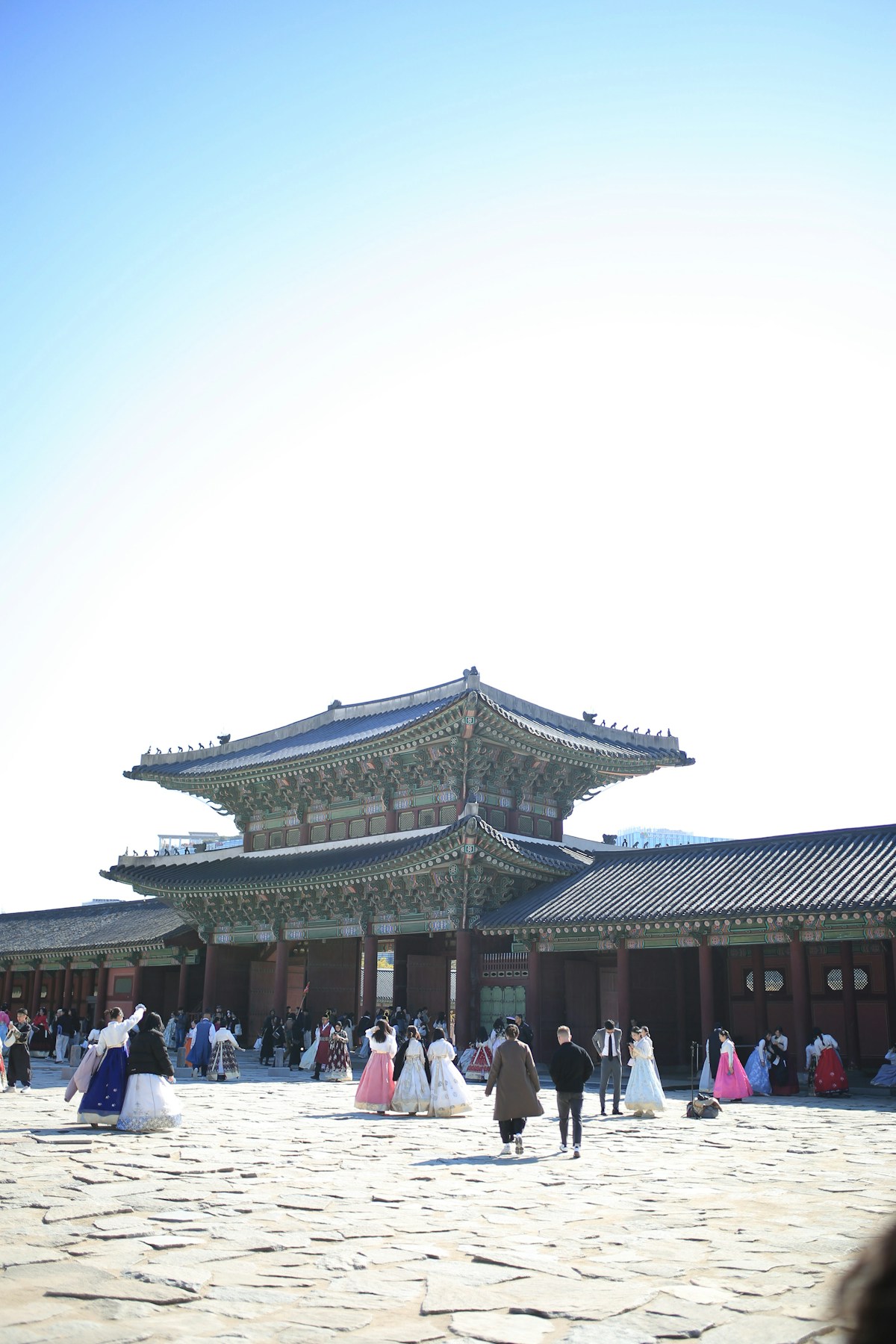
Gyeongju has more UNESCO-listed heritage sites per square kilometre than almost anywhere else in Korea, and unlike many heritage cities, the sites here are genuinely integrated into the urban landscape - you turn a corner in a residential street and find a 1,500-year-old royal burial mound. The city was the capital of the Silla Kingdom from 57 BCE to 935 CE, and it shows.
For accommodation context, see our where to stay in Gyeongju guide. For the full city overview, see the Gyeongju travel guide.
Daereungwon Tumuli Park (Royal Tombs)
The most distinctive sight in central Gyeongju: a walled park containing 23 large circular burial mounds (tumuli) built for Silla royalty and aristocracy, primarily between the 4th and 5th centuries CE. The largest mounds stand up to 22 metres high and 80 metres in diameter.
- Entry fee: approximately KRW 3,000 for adults (as of 2026)
- Opening hours: 09:00–22:00 (summer); reduced in winter - confirm on site
- Location: central Gyeongju, walkable from the bus terminal and main guesthouses
One tomb, Cheonmachong, is open to enter and has reproductions of the artefacts excavated from within it (the originals are in the National Museum). The gold crown, gold belt, and birch-bark paintings discovered inside Cheonmachong are among the finest Silla-era metalwork found anywhere.
The mounds themselves are free to walk around in the surrounding park area outside the walled enclosure. The combination of the organic green shapes against the surrounding residential streets is Gyeongju’s defining visual image.
Cheomseongdae Observatory
A 7th-century bottle-shaped stone tower - one of the oldest surviving astronomical observatories in East Asia, built during the reign of Queen Seondeok around 632 CE. It stands 9.4 metres high and is constructed from 362 granite blocks, one for each day of the lunar year.
- Entry fee: approximately KRW 3,000 for adults (as of 2026) - covered by the combined ticket with Tumuli Park at some ticket counters; confirm at entry
- Opening hours: 09:00–22:00
- Location: 10–15 minutes’ walk from Tumuli Park; in open parkland with good all-around views
The tower cannot be entered - views are from the surrounding field. Its significance is in the construction precision and age, not the interior. Lit at night during peak seasons.
Bulguksa Temple
A Buddhist temple complex on the slopes of Mount Toham, approximately 15 km southeast of central Gyeongju. Built in 751 CE during the height of Unified Silla cultural achievement and largely rebuilt after systematic destruction during the Japanese invasions of the 1590s. UNESCO listed.
- Entry fee: approximately KRW 6,000 for adults (as of 2026)
- Opening hours: 07:00–18:00 (17:30 in winter)
- Getting there: City bus No. 10 or No. 11 from Gyeongju Bus Terminal (approximately 40 minutes); taxi approximately KRW 15,000–18,000 one way
The main courtyard contains two stone pagodas - Dabotap and Seokgatap - considered masterworks of Silla stone craftsmanship. Seokgatap appears on the South Korean 10-won coin. The complex has multiple courtyards and halls at different levels connected by stone stairs and bridges.
Seokguram Grotto
A granite cave temple above Bulguksa containing a central seated Buddha figure carved in 774 CE, considered one of the finest examples of Buddhist stone sculpture in Asia. UNESCO listed.
- Entry fee: approximately KRW 6,000 for adults, or combined with Bulguksa at approximately KRW 10,000 (as of 2026 - confirm at ticket counter)
- Opening hours: 06:30–18:00 (earlier opening to catch sunrise views from the ridge path)
- Getting there: City bus to the Seokguram stop from Gyeongju, or 3.5 km walk/taxi from Bulguksa
The grotto is enclosed in a modern protective structure, and the central figure is viewed through glass. This restricts the experience somewhat but the quality of the stonework - the precise musculature of the figure and the relief carvings on the surrounding wall - is visible from the viewing position. Allow 30–45 minutes.
Anapji Pond (Donggung Palace and Wolji Pond)
A reconstructed 7th-century Silla royal pleasure garden featuring a pond, three islands, three pavilions, and surrounding garden walls. Excavations from the 1970s recovered over 33,000 artefacts from the pond floor.
- Entry fee: approximately KRW 3,000 for adults (as of 2026)
- Opening hours: 09:00–22:00 (later in peak seasons - confirm on site)
- Night visits: The best time to visit. The pavilions are lit from approximately 19:30 and the reflections on the water are striking.
The site is named Anapji locally but officially renamed Donggung and Wolji Pond in 2011. Both names are in active use.
Gyeongju National Museum
The largest collection of Silla-era artefacts in South Korea, covering gold crowns, jewellery, pottery, weapons, and architectural fragments from the Silla period.
- Entry fee: Free
- Opening hours: 10:00–18:00 (20:00 on Saturdays); closed Mondays
The Divine Bell of King Seongdeok (Emille Bell) - cast in 771 CE and weighing approximately 18.9 tonnes - is housed in the outdoor sculpture garden. At 3.3 metres tall, it is one of the largest bronze bells in Asia. The museum’s main hall has the gold crowns and jewellery; the Wolseong Hall has more recent archaeological finds.
Wolseong Palace Site
The former site of the Silla royal palace, between Cheomseongdae and Anapji Pond. The palace no longer stands, but archaeological excavation continues across the site. The ice storage building (Seokbinggo) from the Joseon era is intact on the site.
- Entry: included with Cheomseongdae/park area ticket; confirm at entry
- Active excavations are sometimes visible from the surrounding paths
Bicycle Route Along the Historic Core
The central cluster of Gyeongju’s heritage sites - Tumuli Park, Cheomseongdae, Wolseong Palace, and Anapji Pond - are within a 2 km radius and connected by flat paths suitable for cycling.
Bicycle hire is available near the Tumuli Park entrance and at several rental spots in the old city centre. Day rental costs approximately KRW 5,000–8,000 for a standard bicycle as of 2026. Cycling the route allows you to stop at each site without the walking time between them and covers Cheomseongdae, the pond, and the outer edges of the palace grounds in a relaxed two hours.
Yangdong Folk Village
About 15 km north of central Gyeongju, Yangdong is a UNESCO-listed Joseon-era village of 160 traditional houses, inhabited continuously for 500 years by members of two clans. Unlike some reconstructed village sites, Yangdong is a living residential area.
- Entry fee: approximately KRW 4,000 for adults (as of 2026)
- Getting there: local bus from Gyeongju Bus Terminal (approximately 30 minutes); taxi approximately KRW 15,000 one way
It is quieter and less visited than the central sites. The stone walls, thatched and tile-roofed houses, and surrounding rice paddy landscape give a genuine sense of long-term rural continuity.
For guided cultural tours in Gyeongju, including temple stays and heritage site tours with English-speaking guides, advance booking is recommended.